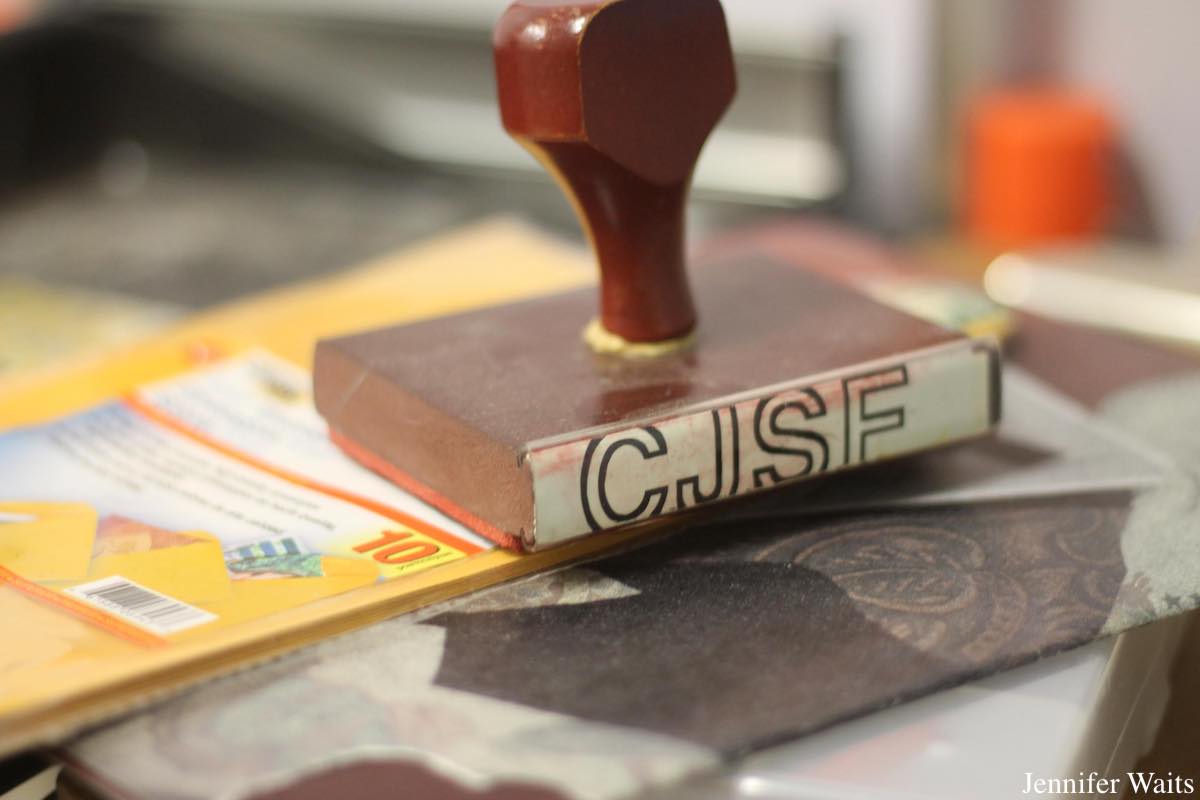
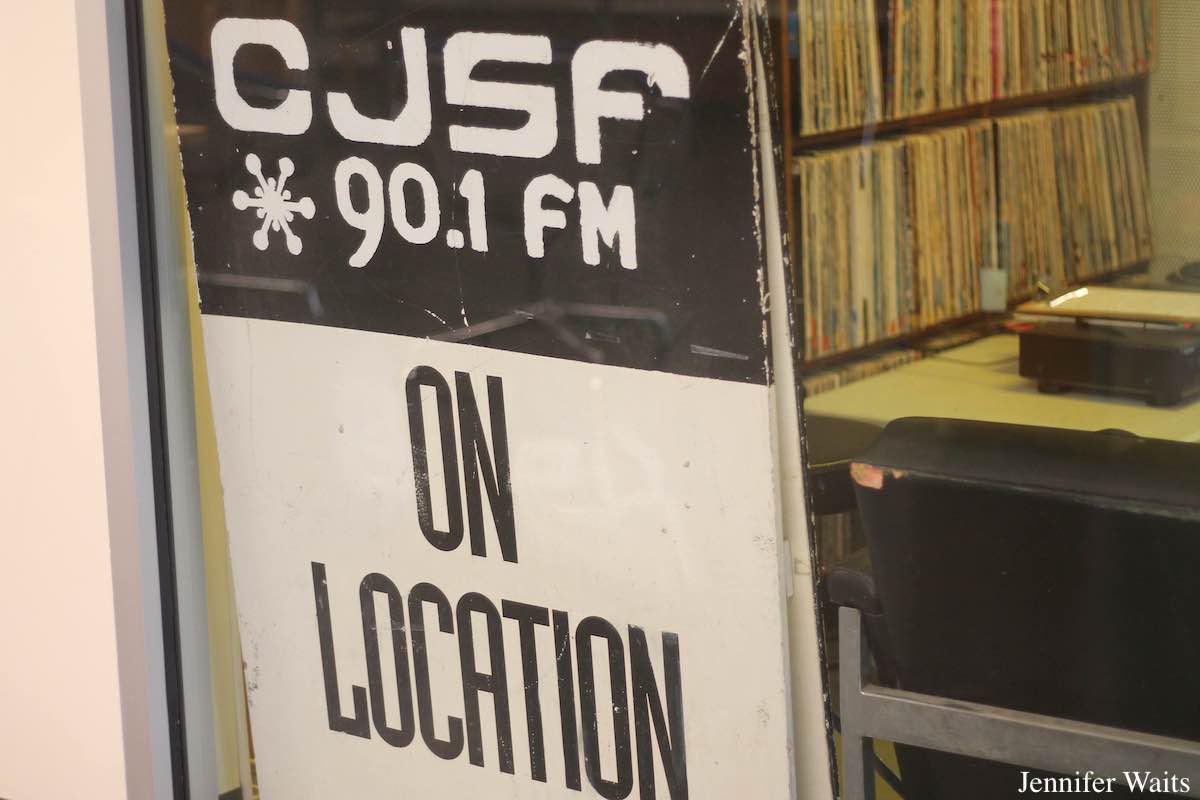
Treasure hunt is the best way to describe the whirlwind afternoon that I spent at campus and community radio station CJSF 90.1 FM at Simon Fraser University (SFU) in Burnaby, British Columbia, Canada in June 2025. Every inch of the station tells a story. Guided by Music Coordinator Connor Ashton and Programming Coordinator Jesse Wentzloff, we toured through shelves of records, checked out drawers of 7″s, peered into boxes of early community radio conference documents, and reminisced about bands and events.
Touring CJSF’s Living Archive
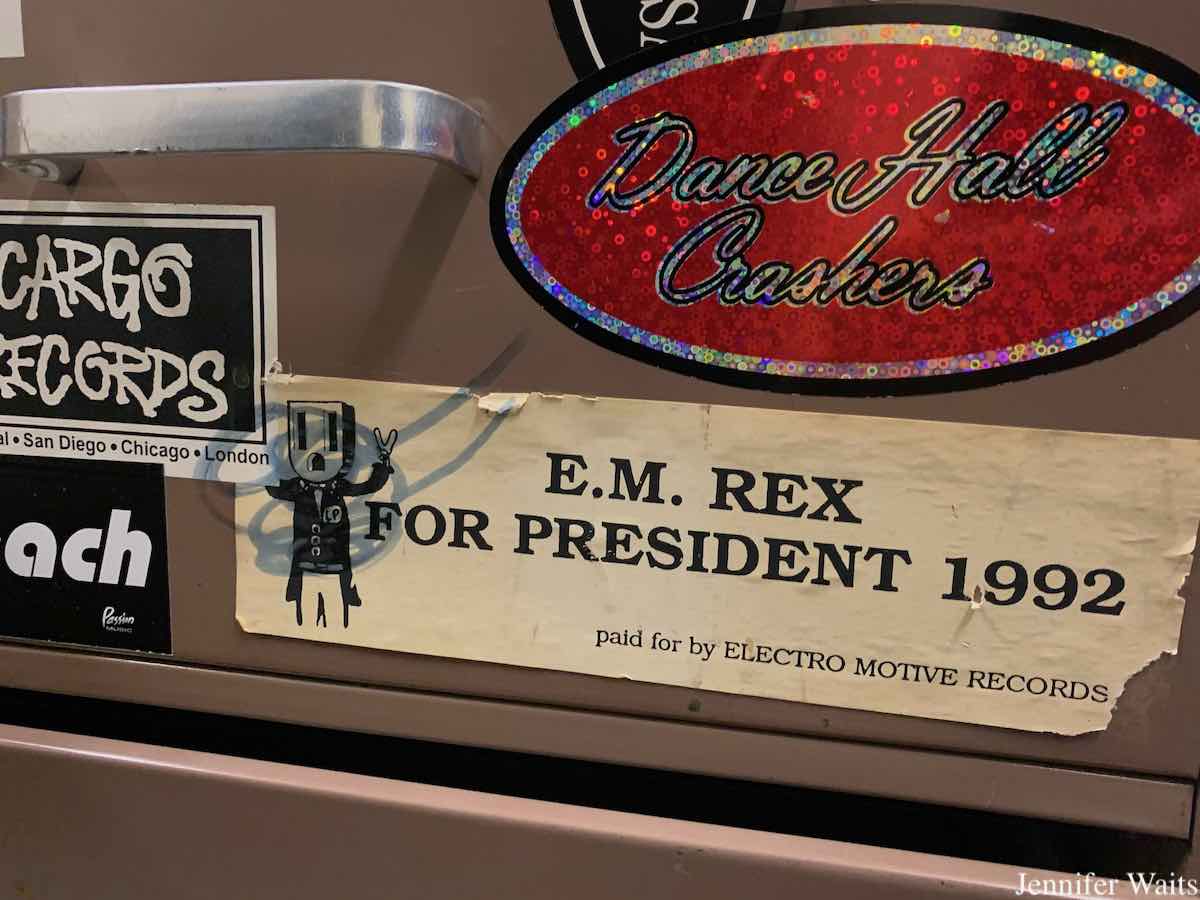
Even though CJSF moved to its current basement space in the Student Union Building just five years ago in 2021, the station feels lived in and full of history. Thankfully, CJSF brought tens of thousands of records into its new home, along with amazing archival material and objects from its many decades of existence, including sticker-covered cabinets.
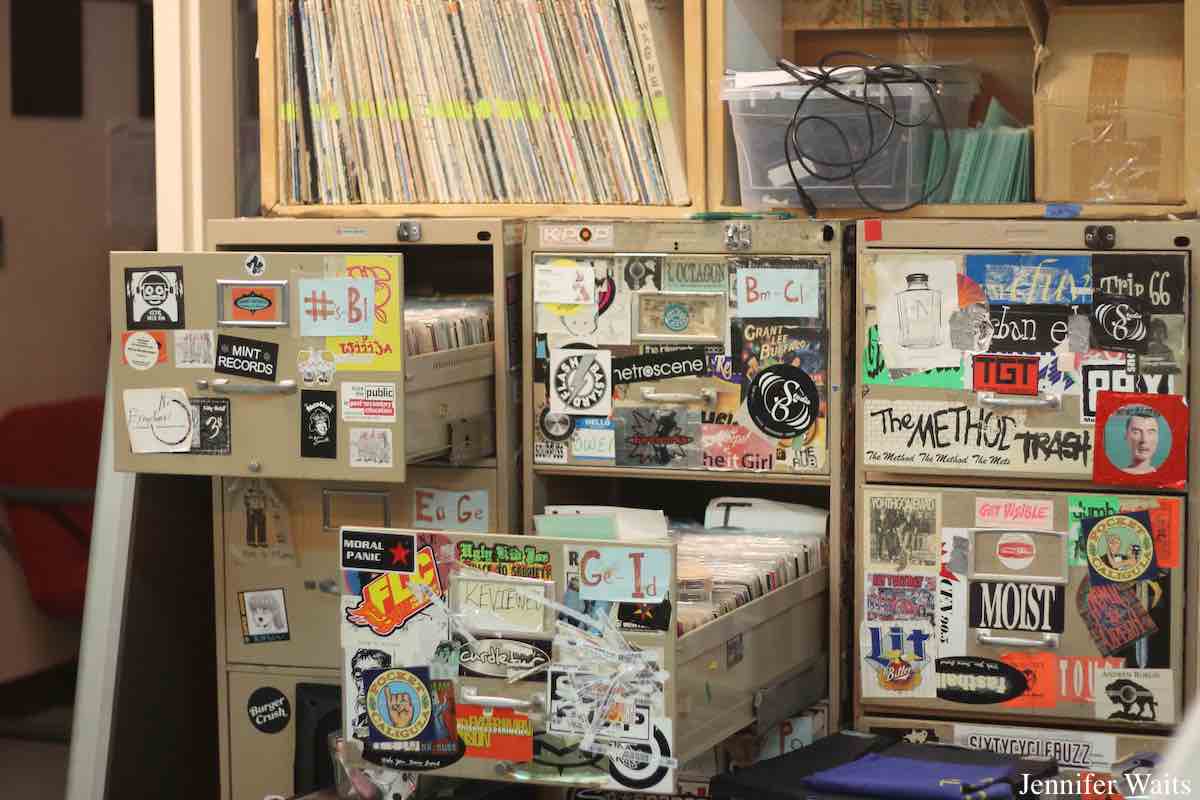
However, not all the stickers made it to the new location. “One of our biggest losses in the move was that the door to the studio was just covered in a multi-layer patina of the stickers. And…we couldn’t bring it with us because it didn’t fit in,” Wentzloff shared. Despite that loss, there are still plenty of sticker-covered shelves and cabinets at CJSF. Within the layers of decals, I was shocked to see one from the early 1990s from a friend’s obscure record label, Electro Motive Records. And then after searching within the station’s music database, we found a few releases from that label from the same vintage.
Cassettes in the CJSF Archives
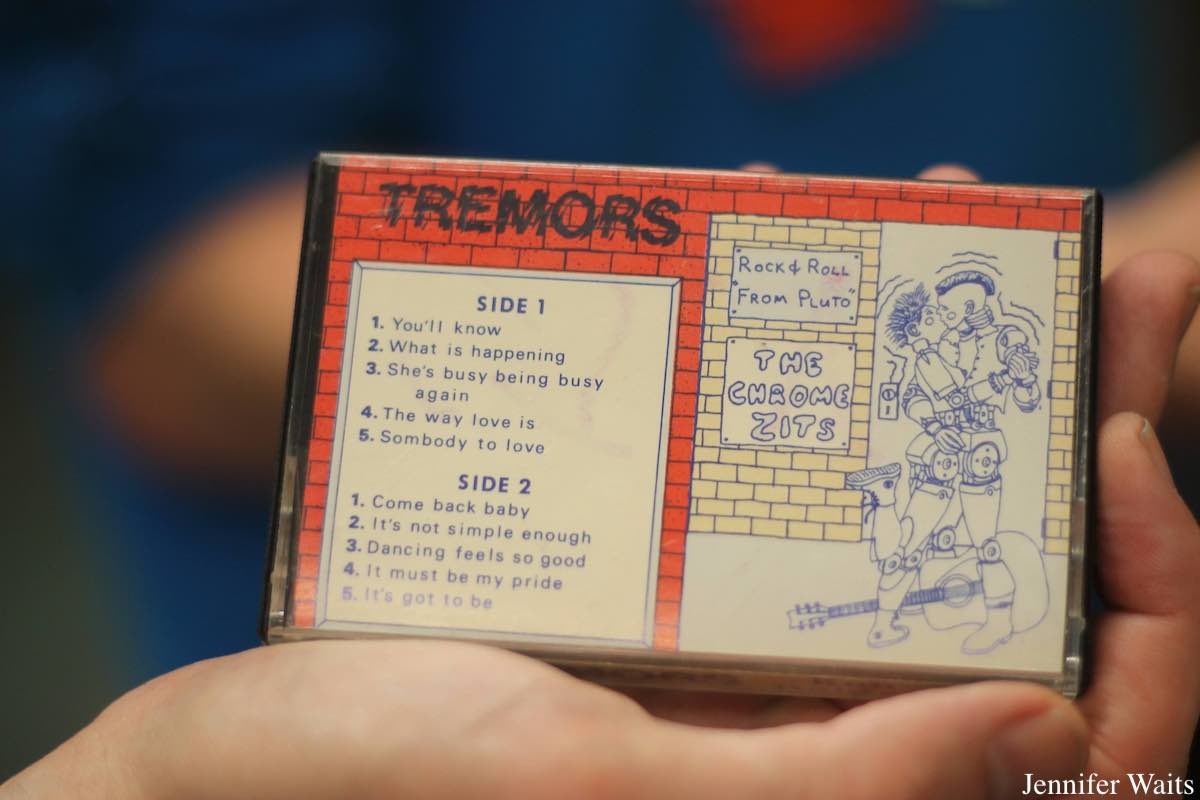
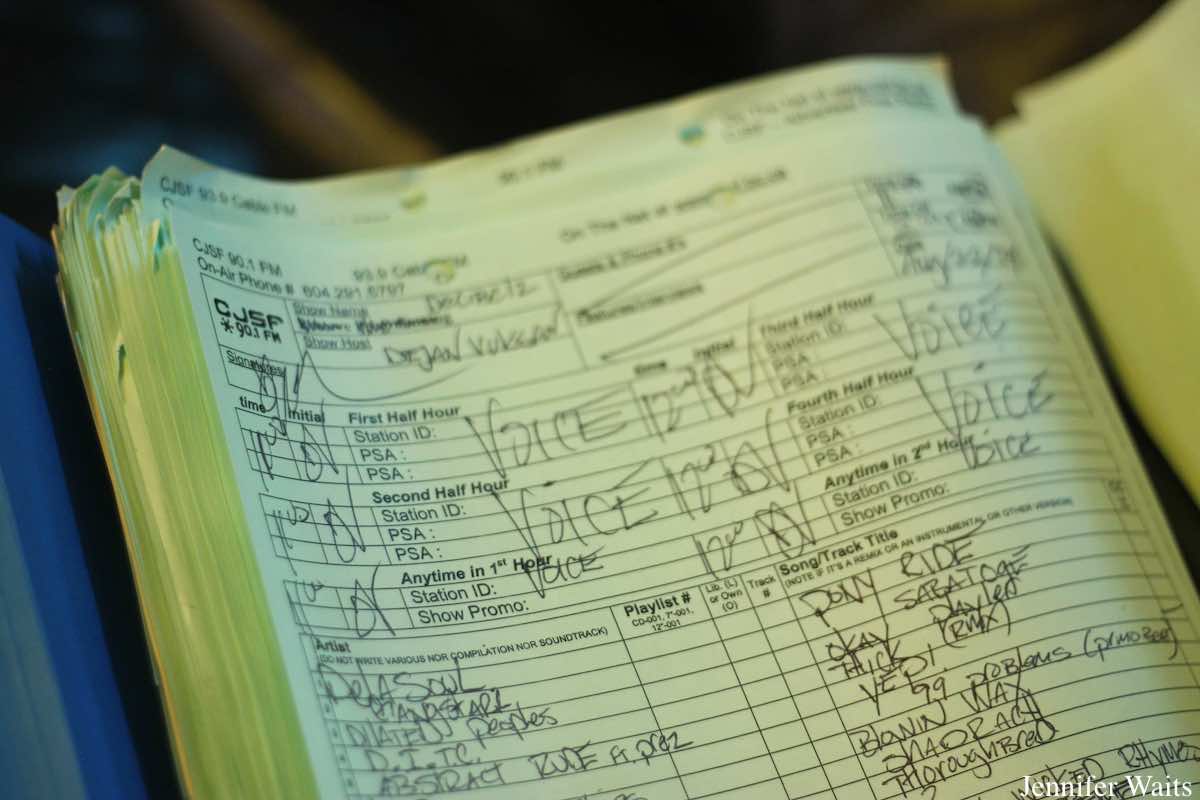
So much material within the walls of CJSF reflects various moments of college radio’s trajectory — from music magazines to cassettes documenting local bands to hand-written playlists to promotional flyers to board meeting minutes transmitted in the beginning days of email. All of that history is lovingly cared for at CJSF. Wentzloff noted that 1990s era cassettes had recently been unearthed from storage, prompting a project to organize them and even feature some on air. The resulting show, “Analog Archives,” was in the works at the time of my visit and led to the production of episodes highlighting gems from the CJSF collection.
CJSF’s Large Physical Music Library
CJSF maintains a massive music library with around 92,000 items, including approximately 50,000 CDs, 25,000 vinyl records, around one thousand cassette tapes, and the remainder digital music files. Ashton said that CJSF receives around 400 to 500 albums a month and adds perhaps 150 to 200 of them. Volunteers help to review incoming music and Ashton happily shared, “I have a cadre of wonderful folks who listen and tag.” Additionally, a weekly CJSF record club utilizes a dedicated listening station at CJSF. Similar to a book club, this group meets to chat about and listen to music.
Music Discovery in the CJSF Library through Color Codes
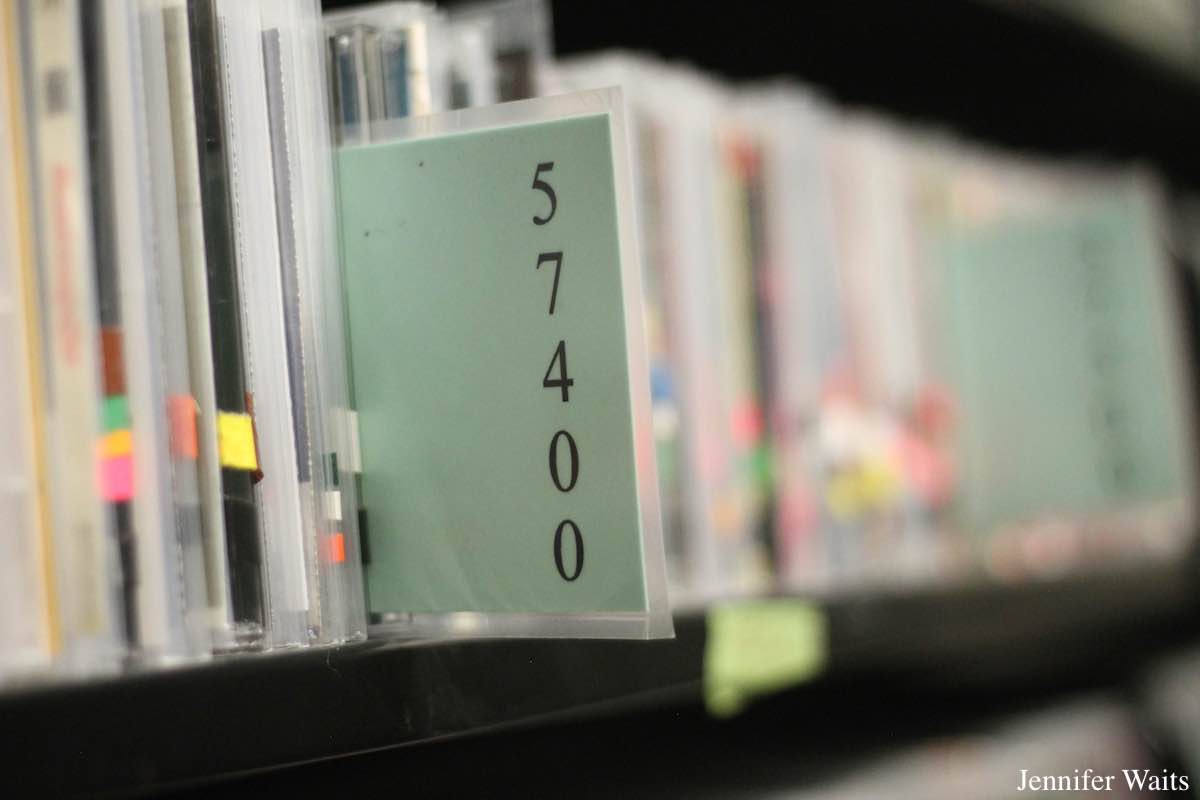
While the vinyl collection is filed alphabetized, the CDs are given code numbers and are arranged chronologically, in the order that they were added to the library. Staff and volunteers can locate specific releases by searching through a database to find the corresponding code numbers. Ashton articulated the care taken with the library, saying, “We do our best to keep things organized, and I harp on putting things back where they should be, not just where you found them.”
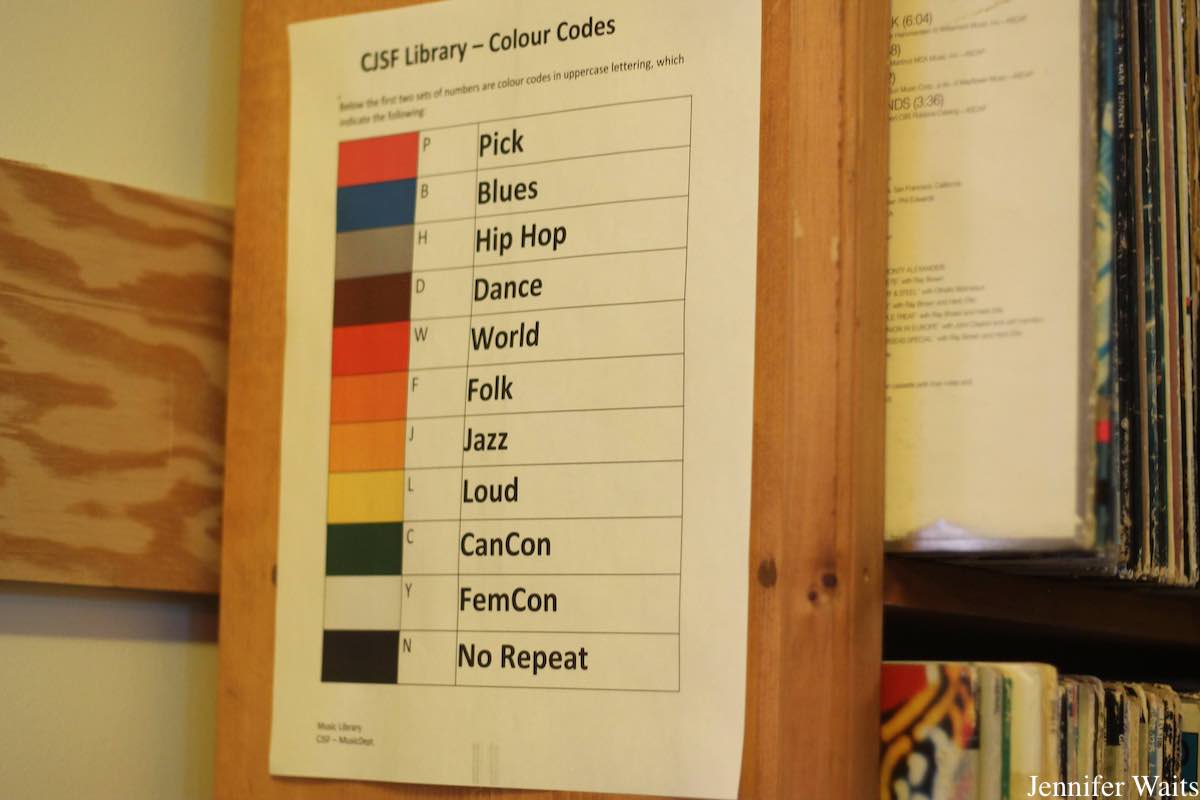
Additionally, DJs can get a sense of genres and other categories of interest by looking at color codes affixed to record spines. Posters on display at CJSF break down the color codes, which encompass not only genres but also station recommendations (“pick of the week”), Canadian content, Vancouver content, and material by female artists. CJSF also notes items that it considers “fair play” selections from under-represented groups including people of color, LGBTQ+, local indigenous artists, and folks with disabilities. Describing some of these category stickers as “discoverability tags,” Ashton explained that they hope to indicate “more than just what type of music it is, but also how it would relate to society and culture.”
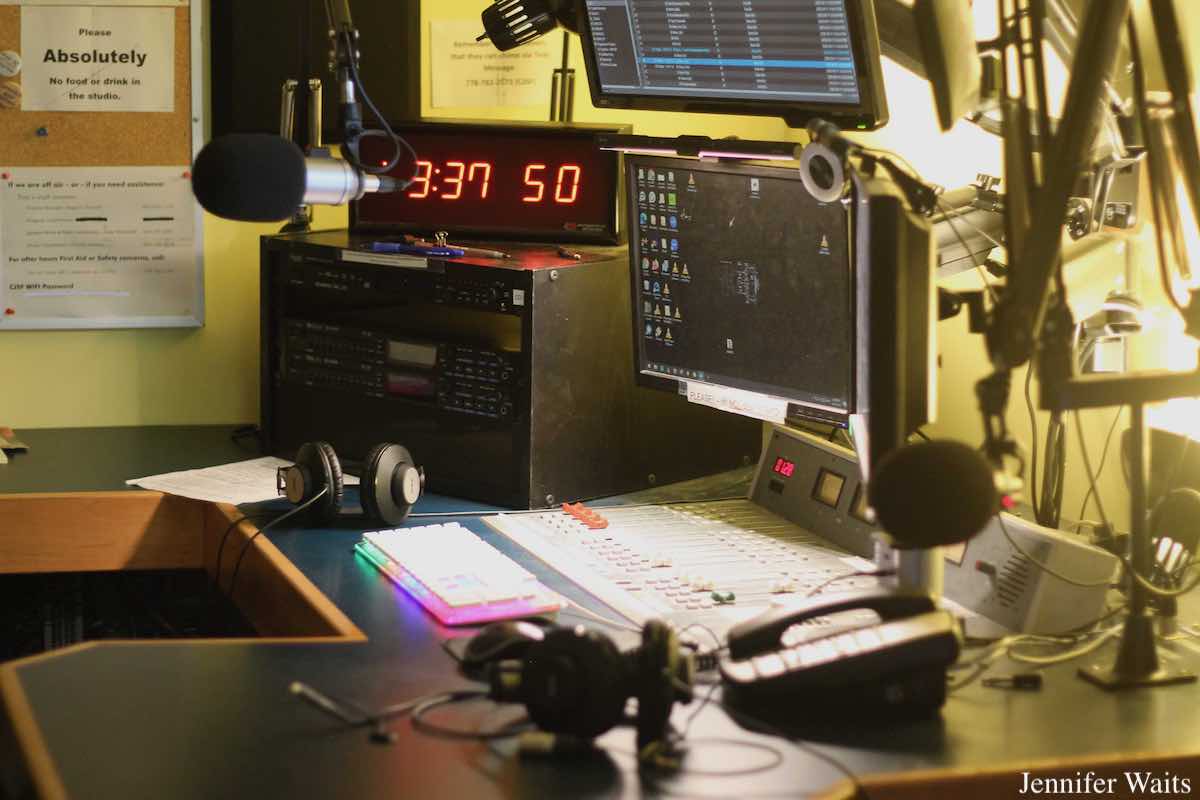
With so much physical media, CJSF encourages DJs to utilize the library, which they do. Vinyl gets played and the studios are outfitted with working turntables, cassette decks and CD players, as well as bluetooth and DJ mixing tools.
CJSF Schedule includes Mix of Music and Talk Shows
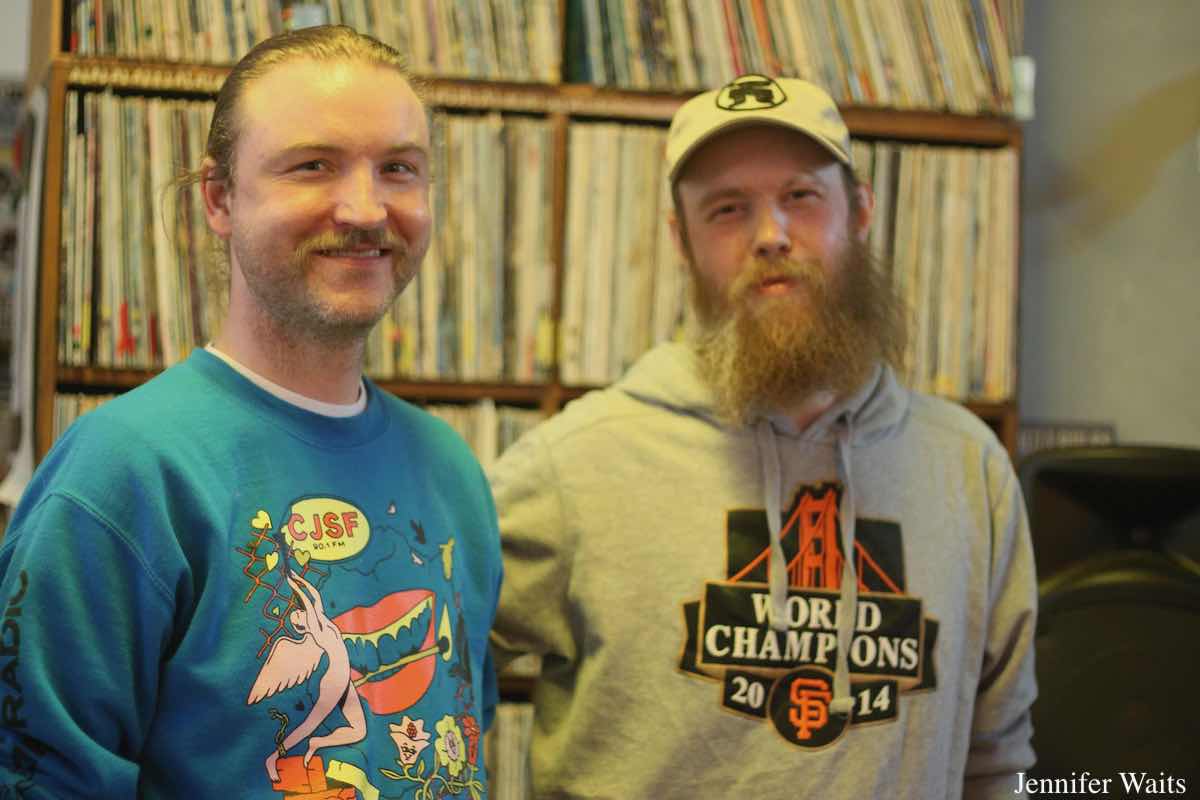
CJSF welcomes both student and non-student members. Currently there are around 80 to 90 volunteers, with about 50 percent students. Both Wentzloff and Ashton are long-time participants and show hosts, with Wentzloff starting off as a volunteer in 2009, before eventually moving into various staff positions. He’s one of the hosts of “Vancouver Mix Tape,” which focused on the Vancouver independent music scene. Ashton hosts a chiptune/video game music show, “Bitcouver.” He has been in his role in the music department for 4 years and has been a volunteer for over 8 years.
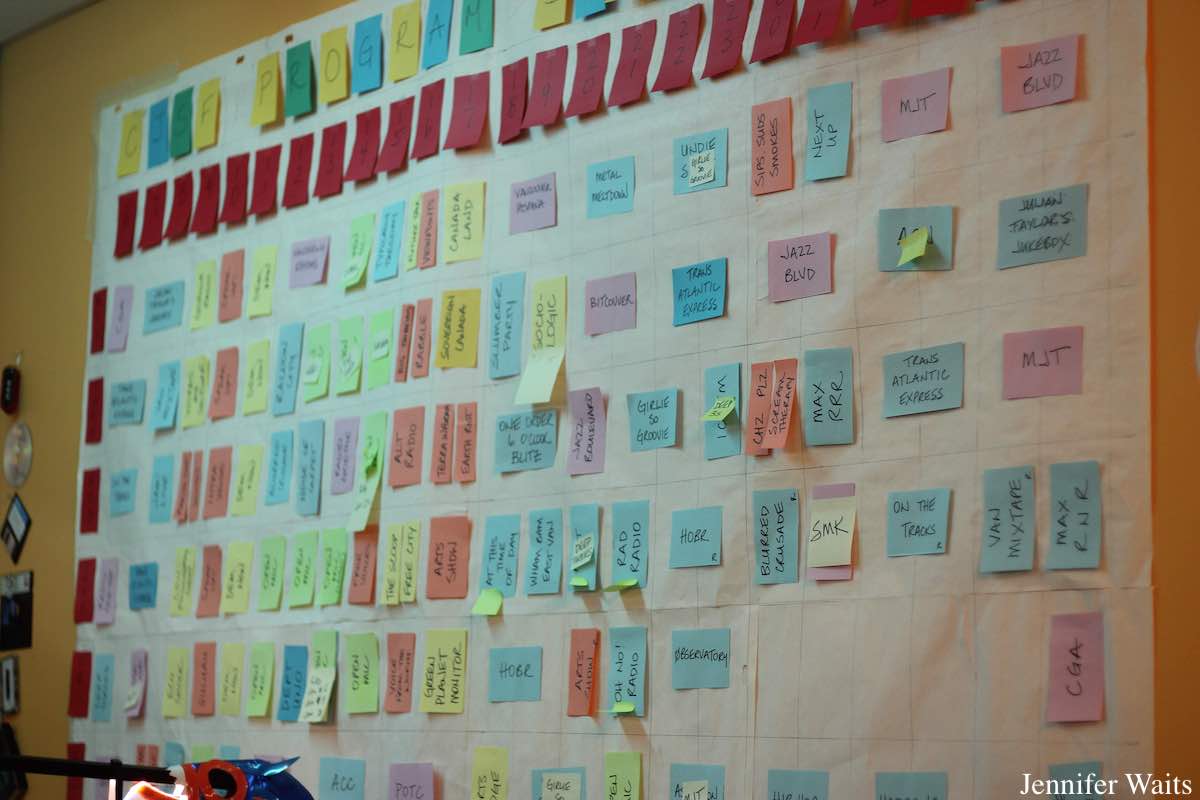
Ever since the move to the Student Union building, CJSF has had to restrict live shows to between the hours of 9am and 10pm. That means that from 10pm to 9am all the programming must be pre-recorded. Shows are a mix of music and spoken word, including some syndicated programming. The range of music played includes metal, jazz, hip-hop, experimental, punk, post-punk, screamo, local independent music and more. Talk programming includes syndicated shows like “Democracy Now” and “Alternative Radio,” as well as a number of CJSF-produced shows focusing on the arts (“The Arts Show”), news, and more. “Speak Up!“, an hour-long public affairs and talk magazine show produced by CJSF, airs three mornings a week. Recent episodes include interviews with artists, pieces about recent local protests, and guests sharing details about Black History Month events.
Digging into the History of CJSF
Today, CJSF broadcasts reach the greater Vancouver area over 90.1 FM and cover the world through its internet stream. However, in the early years of campus radio at Simon Fraser, transmissions were limited to the college. According to a station history on the CJSF website, “CJSF Radio has been around since the early days of Simon Fraser University, first as a music club, then an oddball, unlicensed radio station that was heard from a series of speakers placed around the campus.”
CKSF Launches in Fall 1966 as Closed-Circuit Station
Brian Antonson helped launch the first radio station at SFU in fall 1966. In a piece for the university website, he shares his recollections, writing, “I was a brand new 1st-year student…To my delight, nobody had yet started a campus radio station at SFU, which was then only a year old.” He quickly worked with other students to organize a meeting, obtain equipment, and get permission to use a janitor’s closet as the station’s home. Using CKSF as their call letters (for “Canadian Kilocycles, Simon Fraser” according to a piece from the Canadian Communications Foundation), members of the station initially played records for people who congregated in the nearby Rotunda. The broadcasts were carried by wire to speakers. In it first year, programming aired on weekdays from 10am to 4pm at the minimum, including music shows, news, interviews, and reports from rallies and speeches. By 1973, CKSF’s schedule was packed with shows from 9am to midnight on weekdays.
1970s: Simon Fraser Campus Radio Society and CSFU Continue Campus-Only Broadcasts
In 1974 the Simon Fraser Campus Radio Society was established. In Fall 1976, SFU’s student newspaper The Peak wrote of the former CKSF’s return to the air (after a six month absence) with new call letters CSFU. By 1980, the station could be heard in a few places on campus. As described in a September 30, 1980 article in The Peak, the station “operates on a broadcasting system known as ‘in-house distribution.’ This permits them to be heard only in the rotunda, the South court lounge, the East concourse cafeteria, the CNIB, and hopefully soon, the Pub.” Ever since CKSF’s launch in 1966, plans were afoot to expand even further, with the goal of switching to campus-only AM carrier current and eventually to FM.
1980s: Call Letter Change to CJIV, Launch of AM Carrier Current Transmissions and Cable FM
In the summer of 1981, carrier current was on the horizon for the station. In preparation, it announced in an article in The Peak that its call letters were changing to CJIV, with plans to begin broadcasts that September. It’s unclear if it met that deadline, but in September 1982 The Peak reported that CJIV could be heard in campus residences over 650 AM. A few years later CJIV was approved for cable FM and was expected to launch over 94.5 FM in November 1985. Schedules from 1986 indicate that CJIV was broadcasting sporting events and playing alternative music over cable FM as planned. A June 1986 CJIV Top 40 list includes albums from Butthole Surfers, The Connells, Big Black, Cocteau Twins, and more.
1992 and Beyond: Call Letters Change to CJSF, with Debut of 90.1 FM Broadcasts in 2003
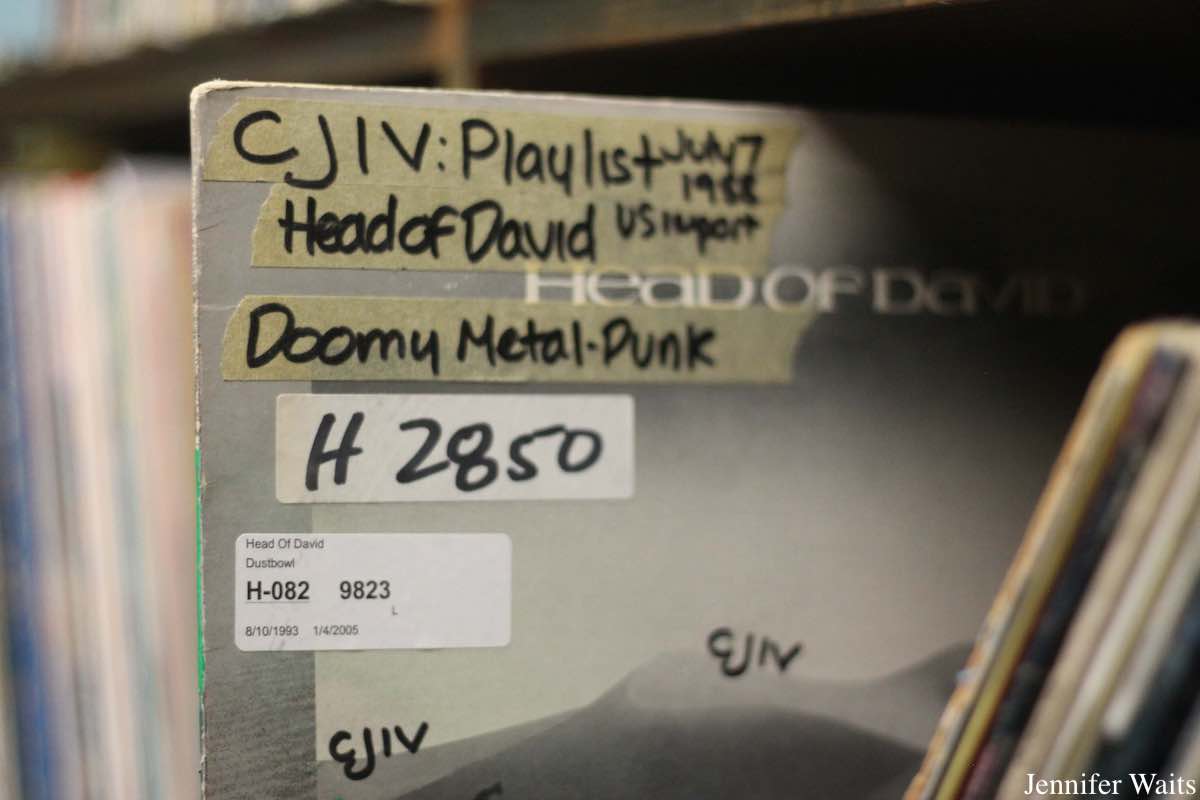
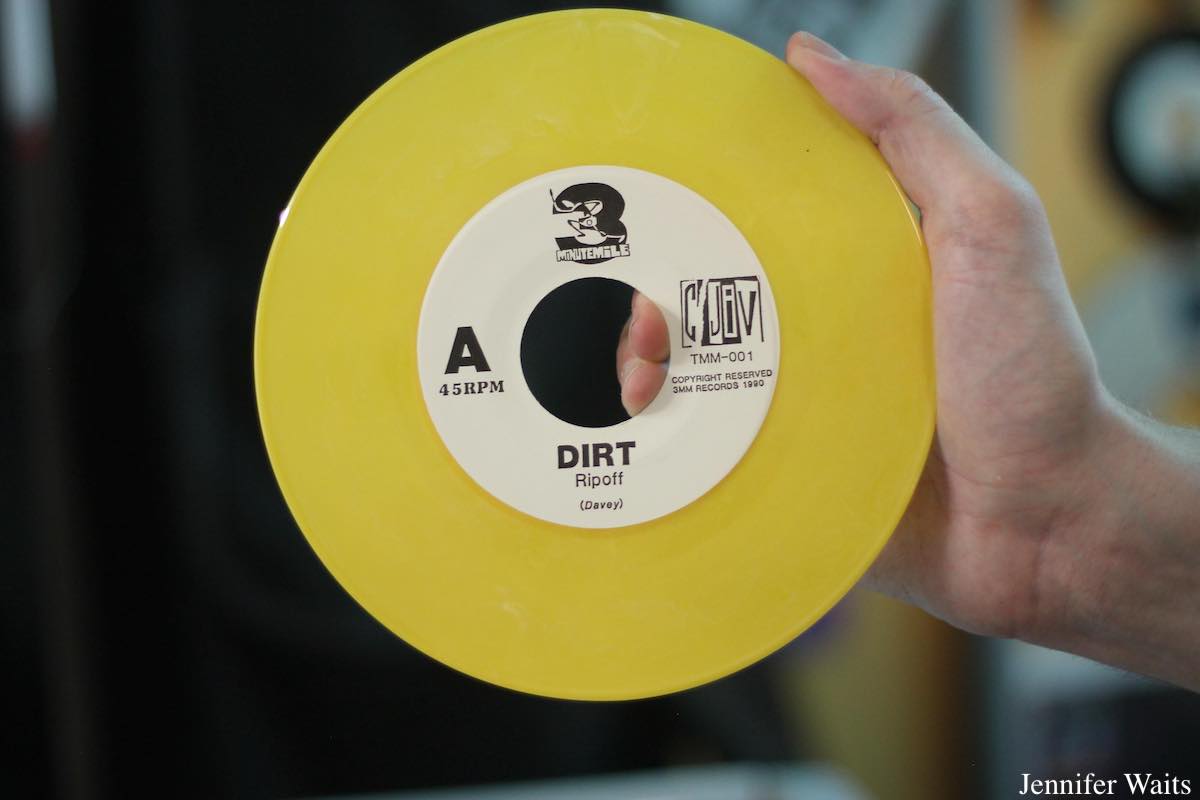
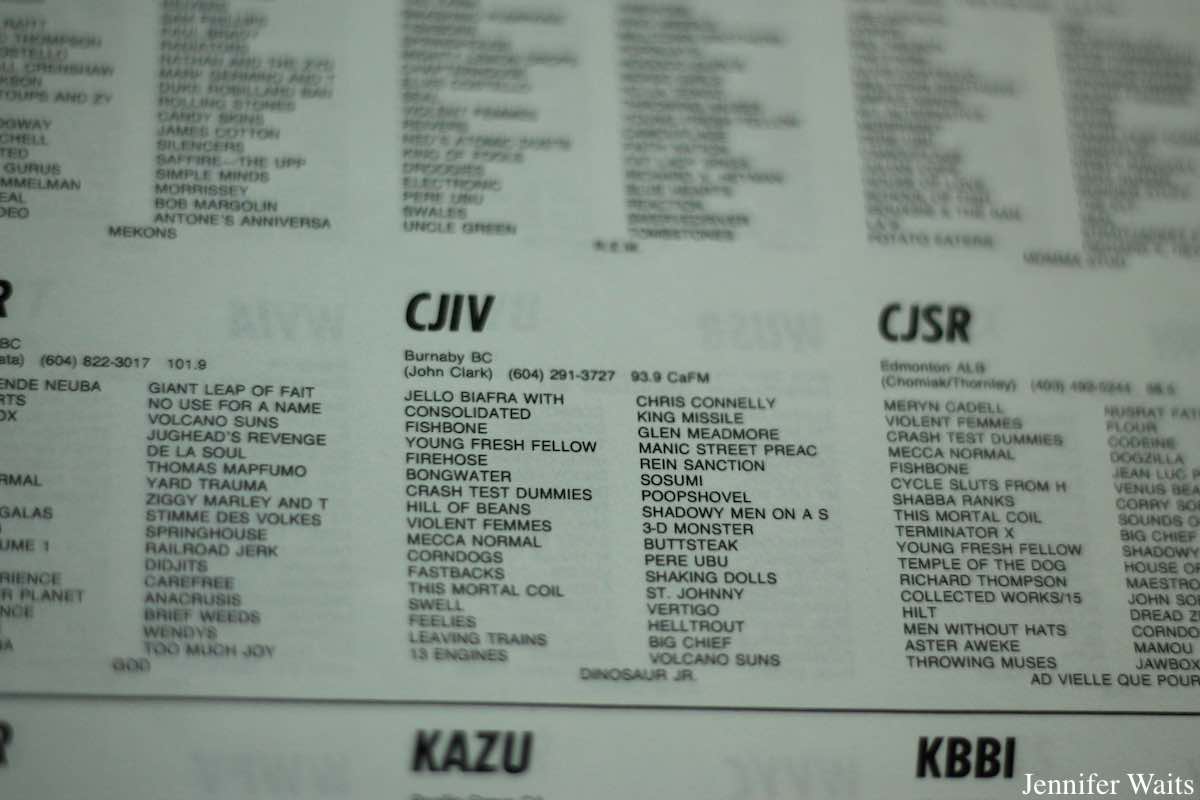
In January 1992, CJIV changed its call letters to CJSF “in an effort to be taken more seriously” and was broadcasting over 93.9 cable FM. And in 2003, CJSF reached another milestone when it finally hit the terrestrial airwaves at 90.1 FM, after securing an FM license. Evidence of the station’s shifting call letters and frequencies can be seen while looking through the record library in particular, with “CJIV” scrawled on albums from the 1980s. During the CJIV era, the station also ran a label called Three Minute Mile Records. We spotted a few of the early 7″s from the label on our tour, including brightly colored singles from Cat’s Game and Dirt.
While wandering through the collection of materials at CJSF, Ashton and Wentzloff reflected back on the wide variety of events, promotional items, and traditions from the station’s past. In some cases they are hoping to bring back things that used to happen, such as a regular feature in the student newspaper highlighting CJSF charts and album reviews.
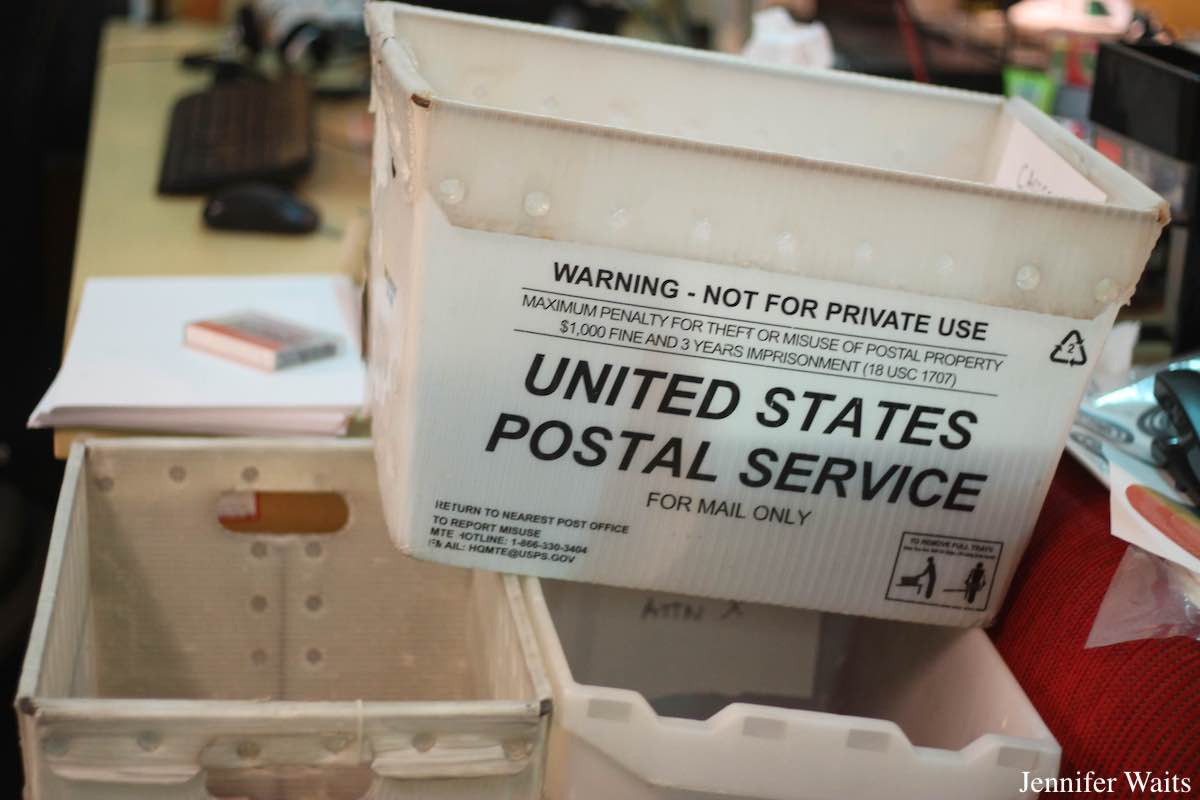
Near the end of the visit, I was amused to see that amongst the typical college radio station staples (couches, disco ball, sticker-covered shelves, hand-made signage related to policies, etc.) there were also a number of plastic U.S. Postal Service mail bins being used for incoming and outgoing mail and to store music. Ashton remarked that they had dozens of them because they are “nice and sturdy” and are “good boxes for sorting and everything.” I see them used for those purposes at stations throughout the United States, but was surprised to see them in active use in Canada. Ashton wasn’t sure if Canada Post still made bins like that, but after looking around a bit, we saw a few similar ones at CJSF.
Thanks to CJSF + Station Tour Archive
Thanks to Connor Ashton and Jesse Wentzloff for the delightful dig through CJSF. This is my 194th radio station tour report and my 135th college radio station tour. You can view the entire collection of my radio station visits in numerical order or by station type in our archives.