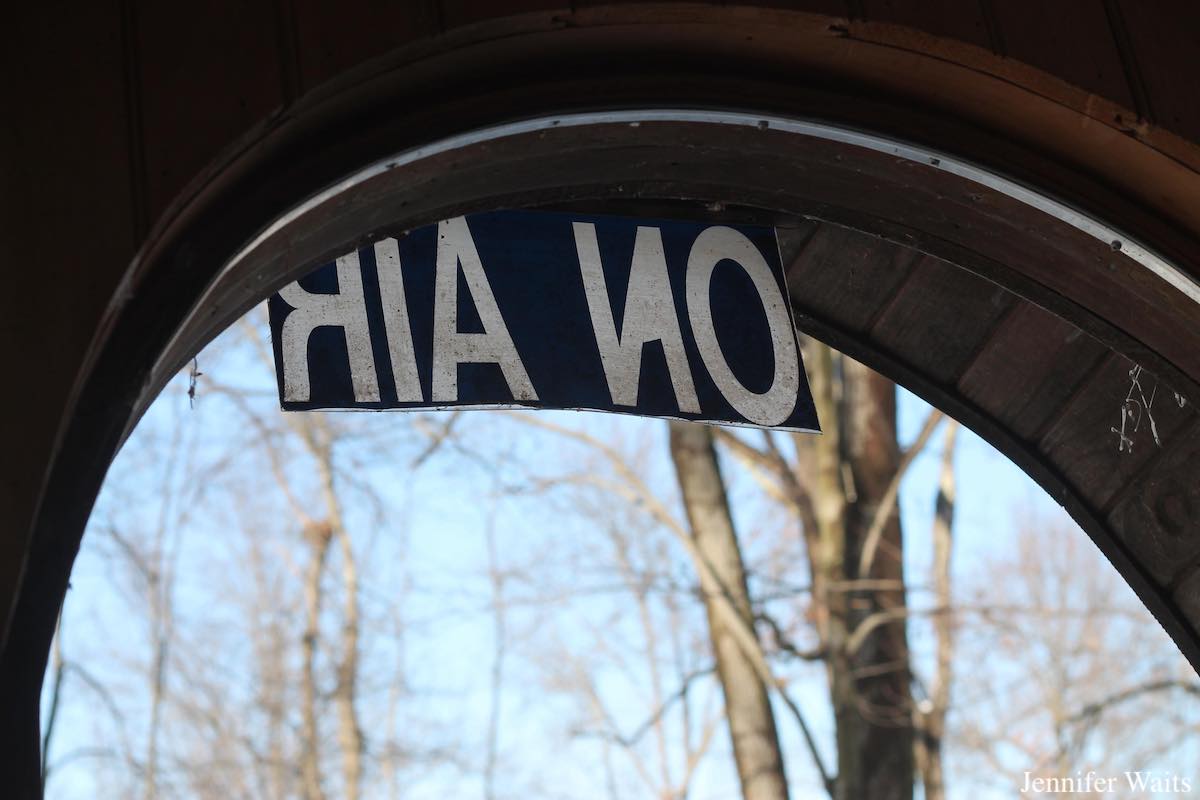
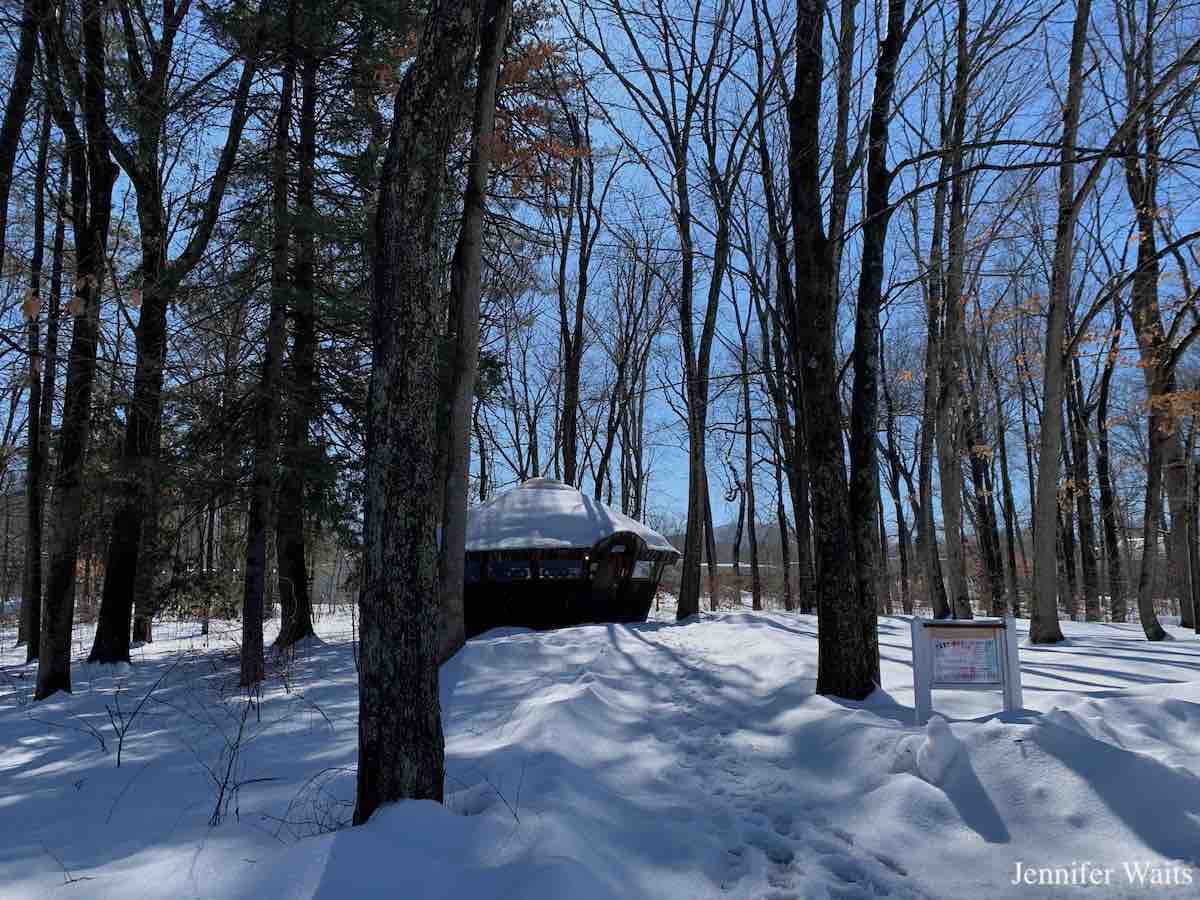
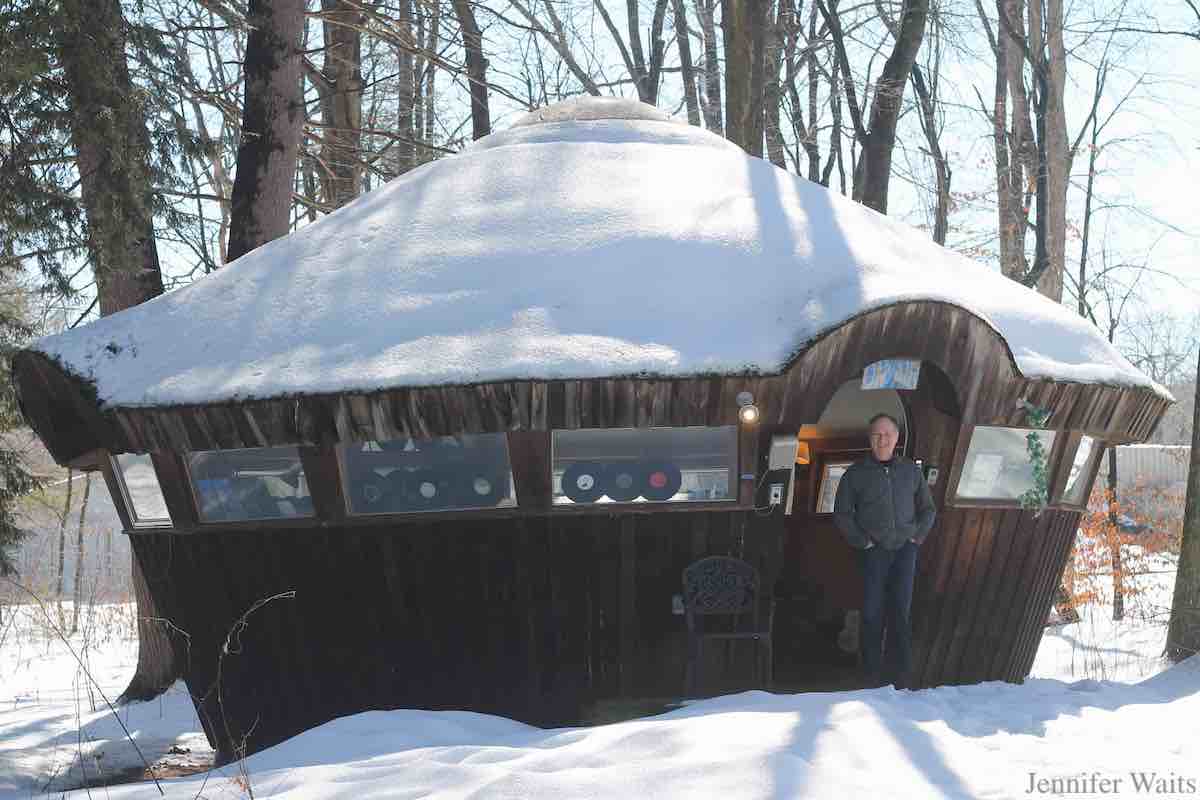
Every college campus is an adventure, requiring advance planning on my part so that I am able to navigate as quickly as possible to radio stations that are often in hidden-away locations. Before my visit to Hampshire College radio station Yurt Radio, its staff advocate John Bruner emailed specific directions. In light of the recent winter storm, he added, “I will do my best to shovel a path.” The impossible-to-miss brown wooden Yurt sat majestically within a snowy forest at the liberal arts college in Amherst, Massachusetts. As I approached, I heard music emanating from speakers affixed near the slanted door to the Yurt and saw Bruner greeting me from the doorway.
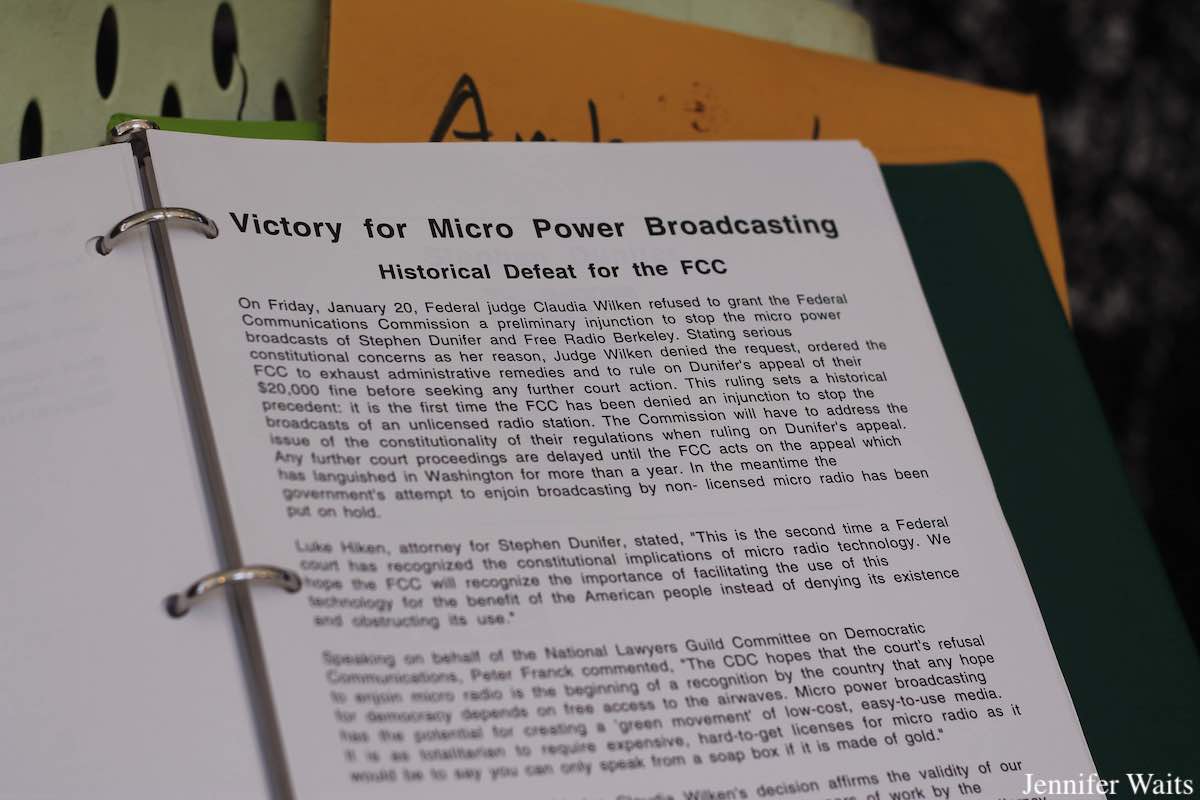
Bruner was the perfect guide for my visit, as a pirate radio class that he co-taught as a student (along with David Murphy) served as the inspiration for the creation of the Hampshire College campus radio station. The January term class was initially offered in 1994. For Bruner, the goal was to explore electronics and circuit building, while his co-teacher’s emphasis was on radio. Students were so enamored with the class, that there was a groundswell of support to launch a radio station. With licenses becoming available for low power FM (LPFM), that was investigated as an option, as were other campus-only transmission methods, including radiant FM. An experimental antenna may or may not still be perched in one of the trees nearby. Ultimately, the station decided to stick to internet streaming and got permission to outfit the Yurt for its studio.
Also a student-built project, the Yurt was conceptualized and constructed in the 1990s. By 1998 the Yurt was completed and opened as a common space for students. At the time it was open 24/7 for meetings, drum circles and other impromptu gatherings. Soon after, the radio group presented a successful proposal to create a station within the Yurt. Shelving was added and equipment secured, before Yurt Radio began transmissions that initially aired only over the campus internet. Today the station streams to the world and continues to be a student-led project in a student-managed space.
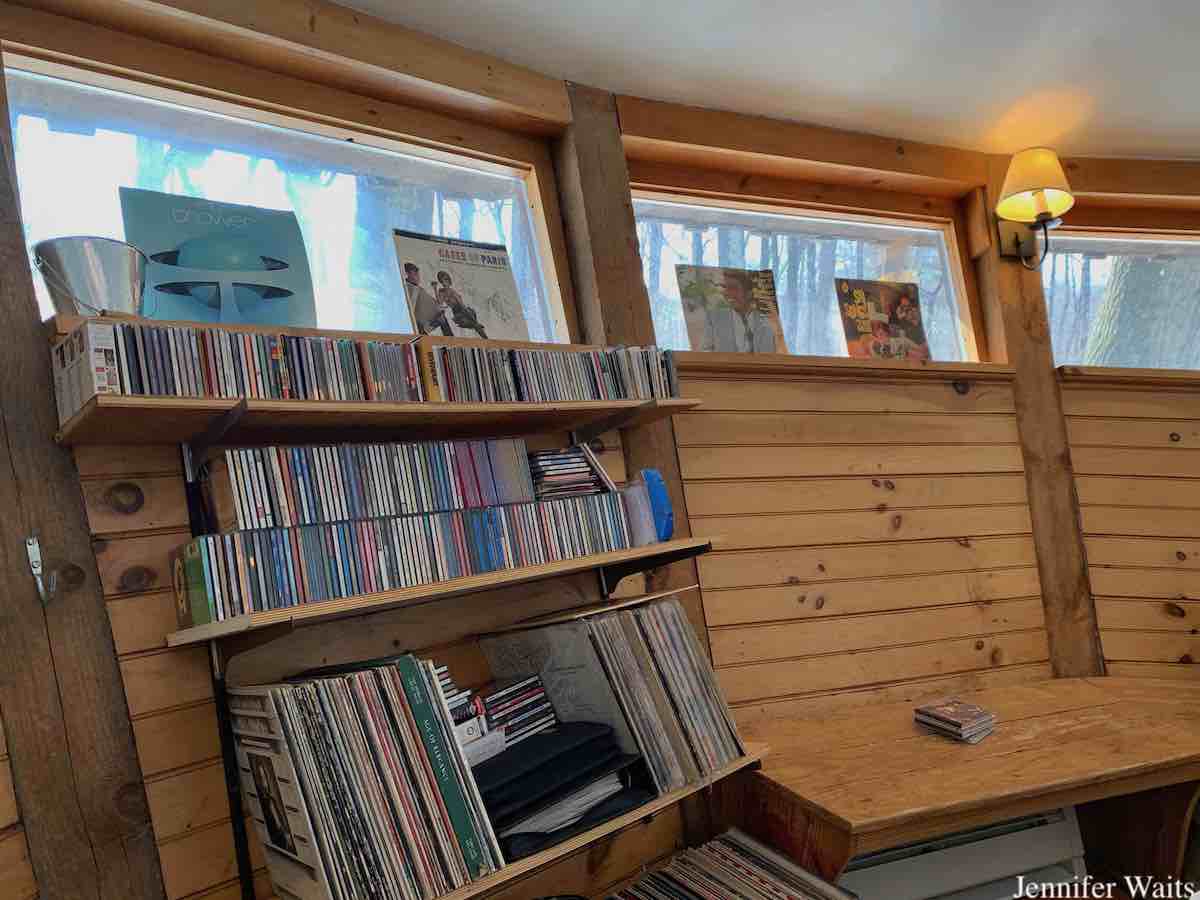
Bruner now works at Hampshire College as an Advanced Media Technical Specialist and as part of his job keeps an eye on the station that he’s been part of for more than 30 years. While sharing photos of the station construction, he noted, “I built it physically,” while also emphasizing the day-to-day work of the students that manage Yurt Radio.
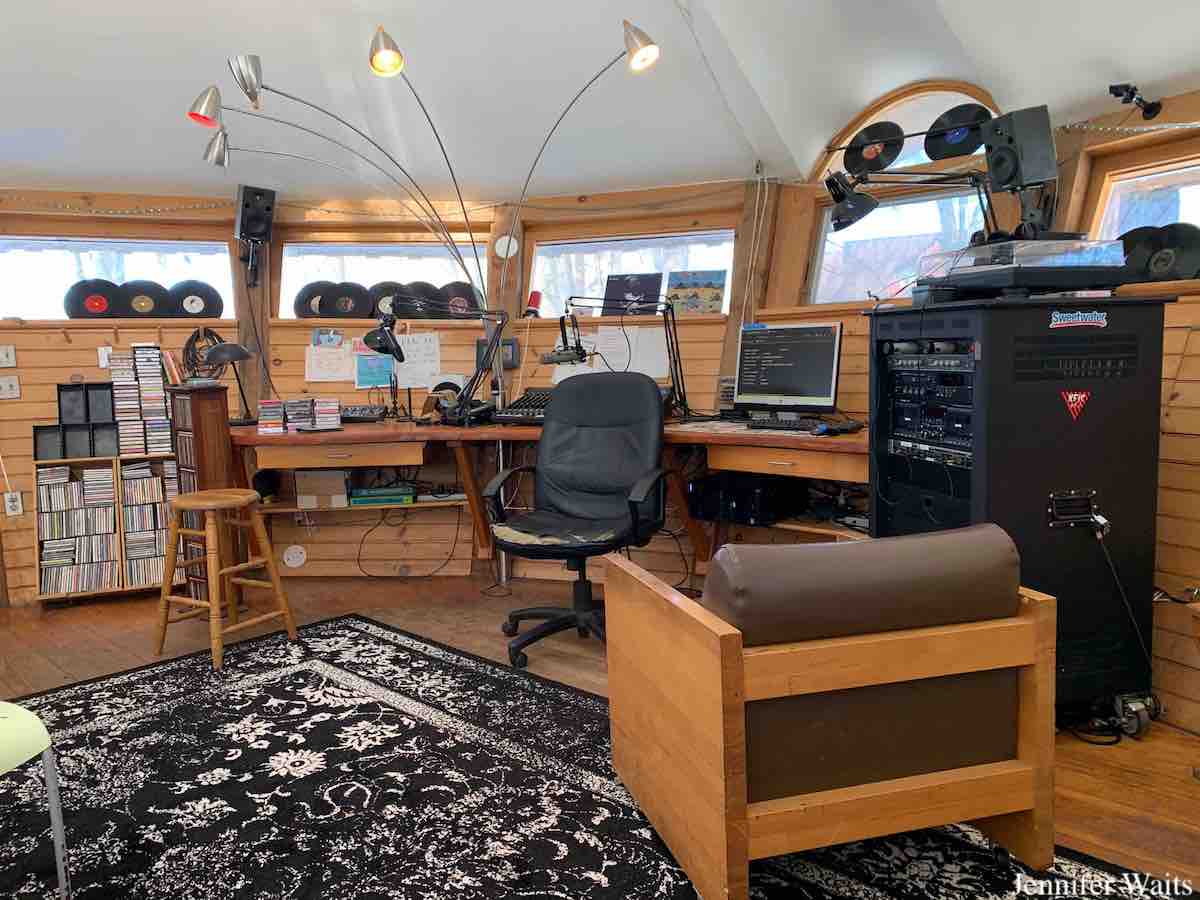
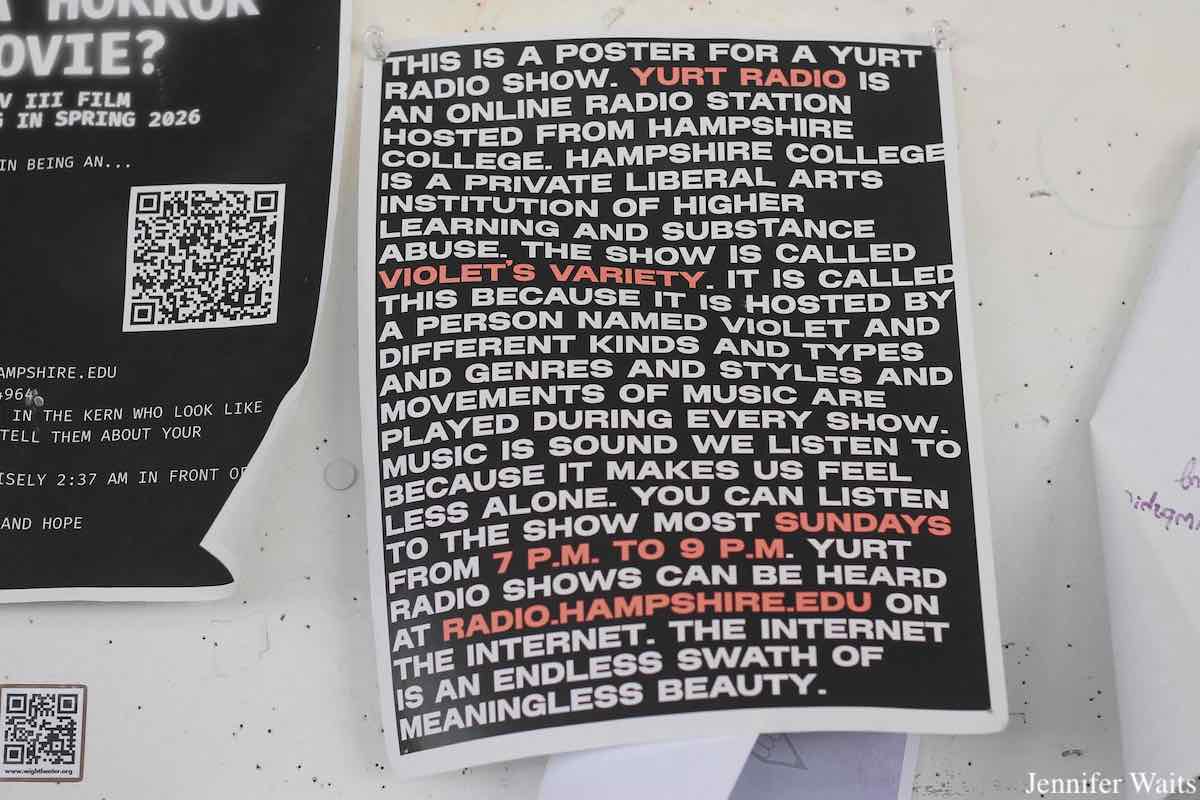
At the time of my visit in early March 2026, Yurt Radio was starting to ramp up for the semester. The first DJ meeting was held the week prior and students were still getting trained on the equipment. Around 65 people are on the member roster, with perhaps a dozen working actively at the station. These are impressive numbers for a school with just over 700 students. The students managing Yurt Radio as known as “signers,” and they coordinate scheduling, funding and even trash removal from the space. Behind the scenes, Bruner said he encourages students to play Hampshire-made material since he likes the idea of filling the stream with sounds that you “can’t get anywhere else.”
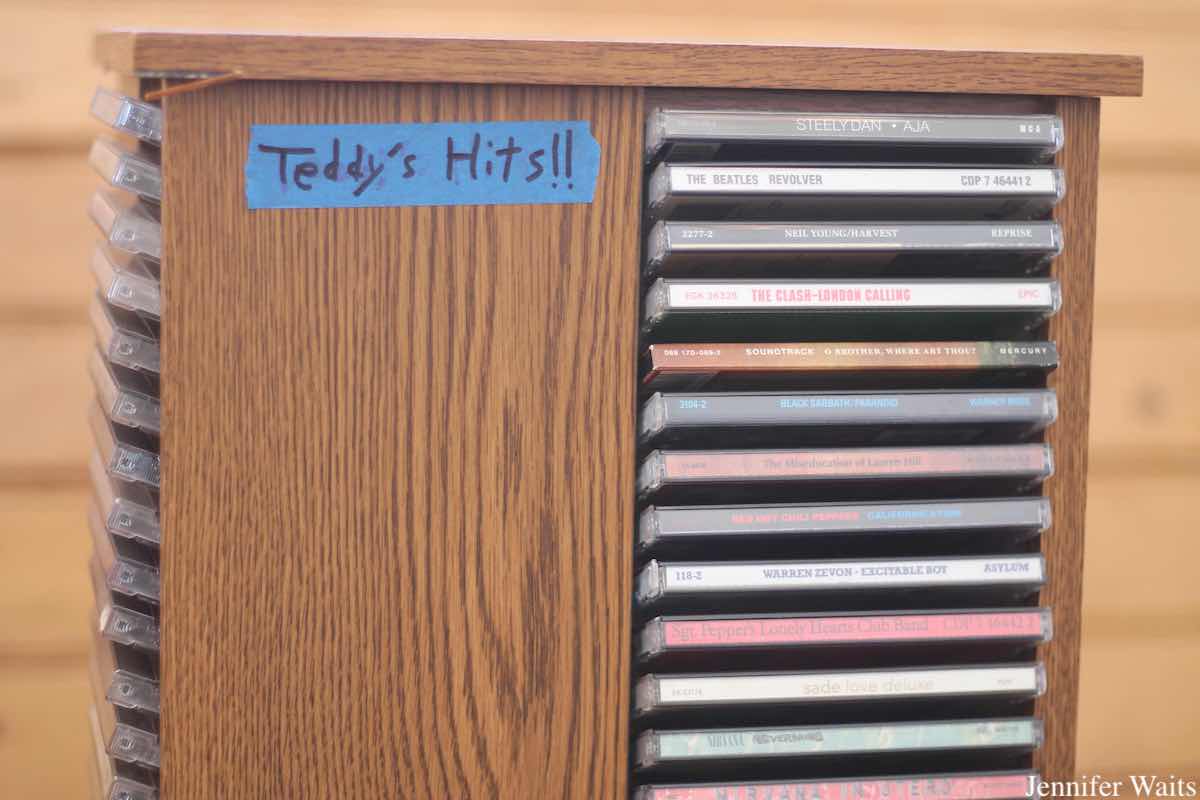
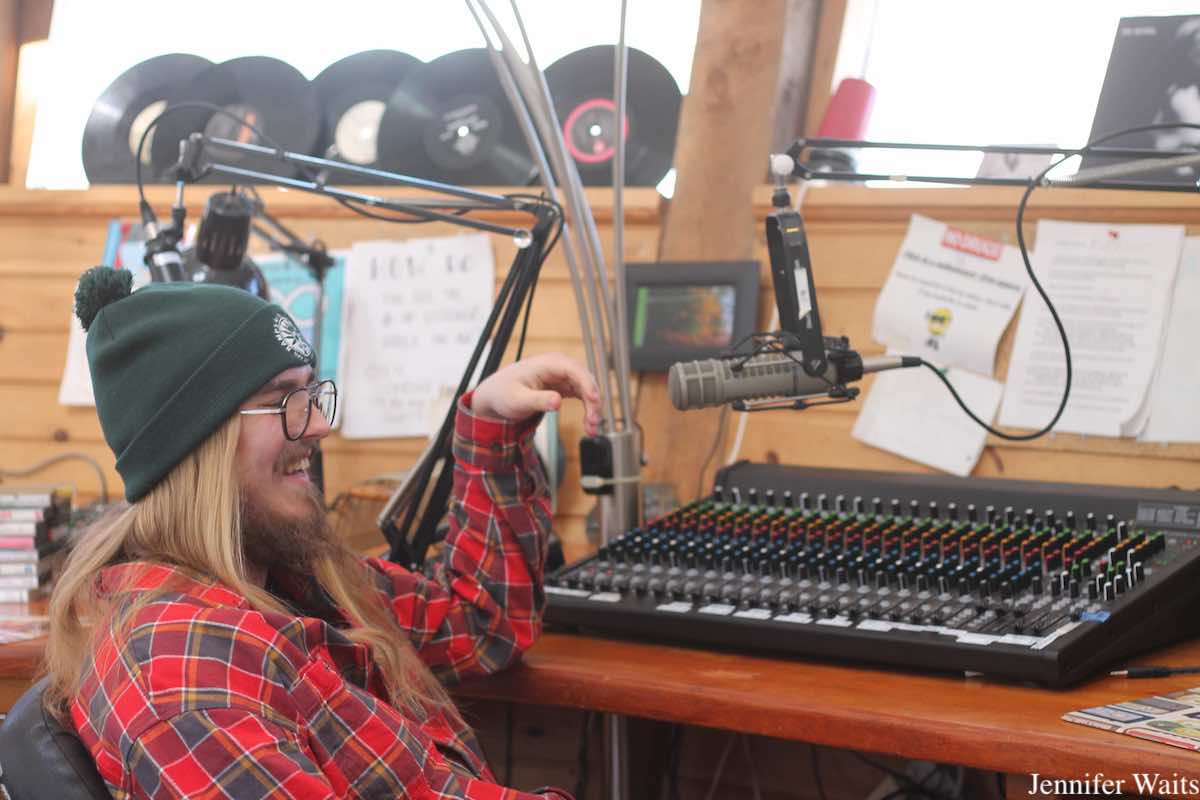
Teddy Stahl, a 4th year student and Yurt Radio Signer, popped into the studio mid-way through my visit. A huge fan of physical music, Stahl listens to several albums a day, methodically logging the titles. His list had just crossed the 1,862 records mark on the day that he chatted with me. As we looked around the studio, he pointed out a selection of CDs that he had organized within a rack in preparation for future listening. Arranged loosely in the order of his expected level of interest, this curated collection of CDs are a small part of the universe of music that he consumes.
I was surprised to see a pretty large batch of cassette tapes at Yurt Radio and both Bruner and Stahl told me that they are played on the air. Stahl also checks out cassettes regularly as part of his overall listening project. A radio fan too, he spoke enthusiastically about the vast radio offerings on the website Radio Garden, telling me, “I think it’s awesome that you can hear radio from around the world,” adding that, “I think the exploration of music is really fun.” At Yurt he relishes being around so much physical music and explained that he enjoys choosing albums based on the artwork, describing the process as being able to “window shop music.” In turn, he finds that doing radio can provide “a window for people into your life,” as listeners get to tune in to hear deeply personal selections.

Over and above the music, Stahl is drawn to the experimental aspect of the station, which affords DJs the “freedom” and “autonomy” to do their shows as they please, from mashing up different sources to playing around with the left and right audio channels. He finds joy in doing this type of radio and described Yurt Radio is not only an “inviting” place, but also “great place to express yourself.” He explained that participants respect and care about the station, adding that, “It’s a sacred space.”
Thanks to Yurt Radio + Station Tour Archive
Thanks to John Bruner and Teddy Stahl for the conversations and tour of Yurt Radio. This is my 196th radio station tour report and my 137th college radio station tour. You can view the entire collection of my radio station visits in numerical order or by station type in our archives.