“CiTR is in fact a Nardwuar cult,” joked CiTR Vice President Dani Larose in a message to me after my visit to the University of British Columbia (UBC) campus and community radio station in Vancouver. It’s not surprising that CiTR’s most famous and perhaps quirkiest show host might lure people to the station. Journalist and broadcaster Nardwuar the Human Serviette (aka John Ruskin) has reached superstar levels of fame, even having a special Nike skateboarding shoe crafted in his honor in December 2025. He started in radio at CiTR in 1986 while he was a student at UBC and continues to do a weekly show.
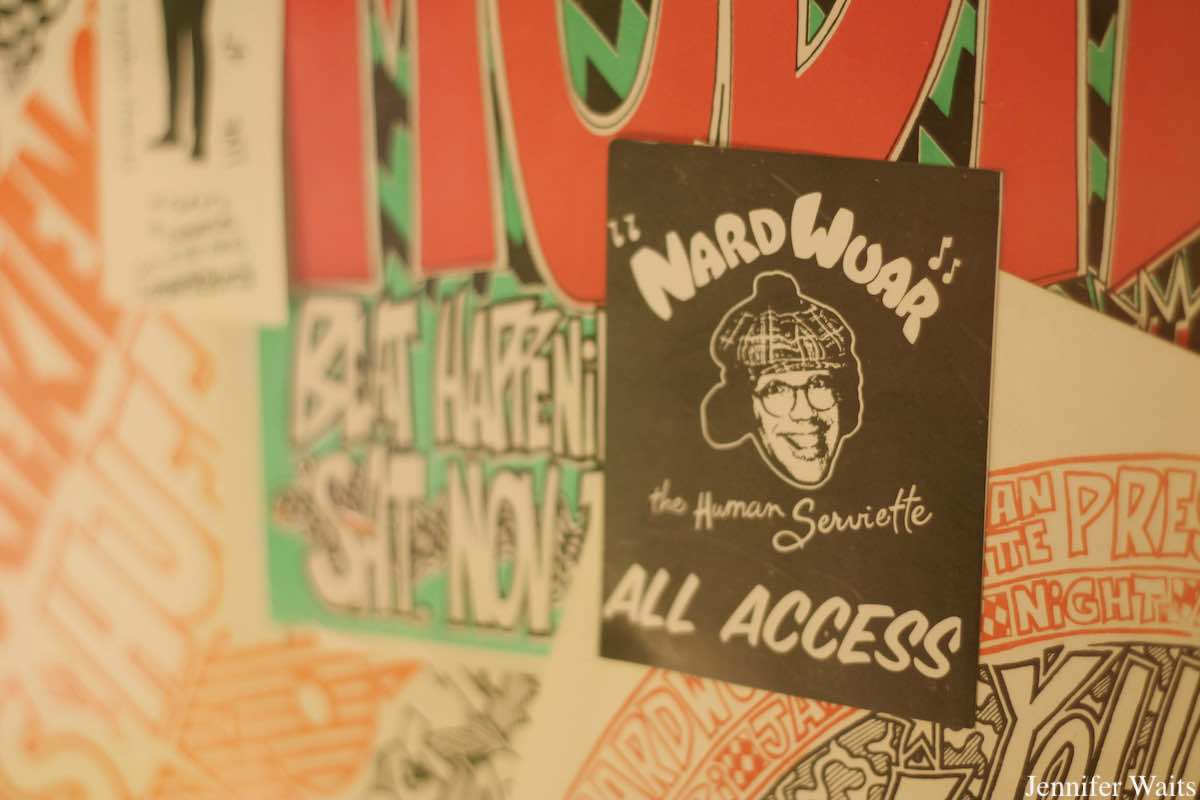
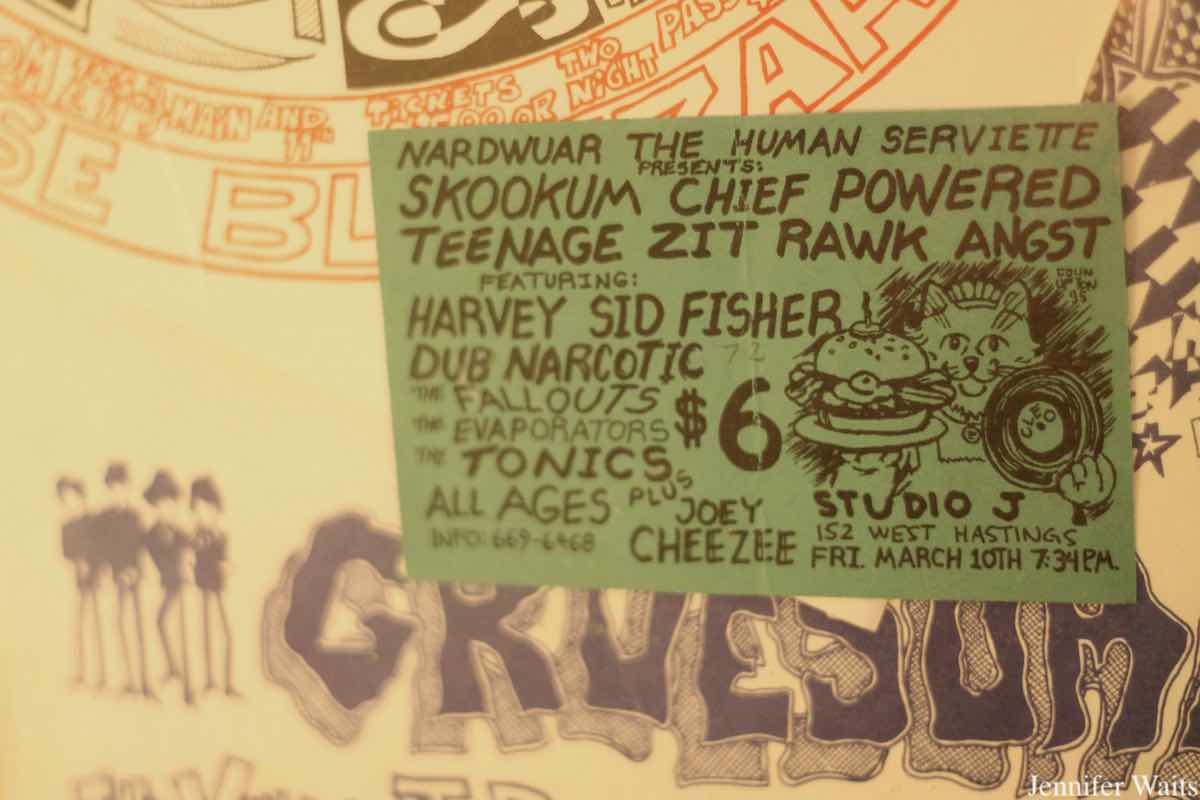
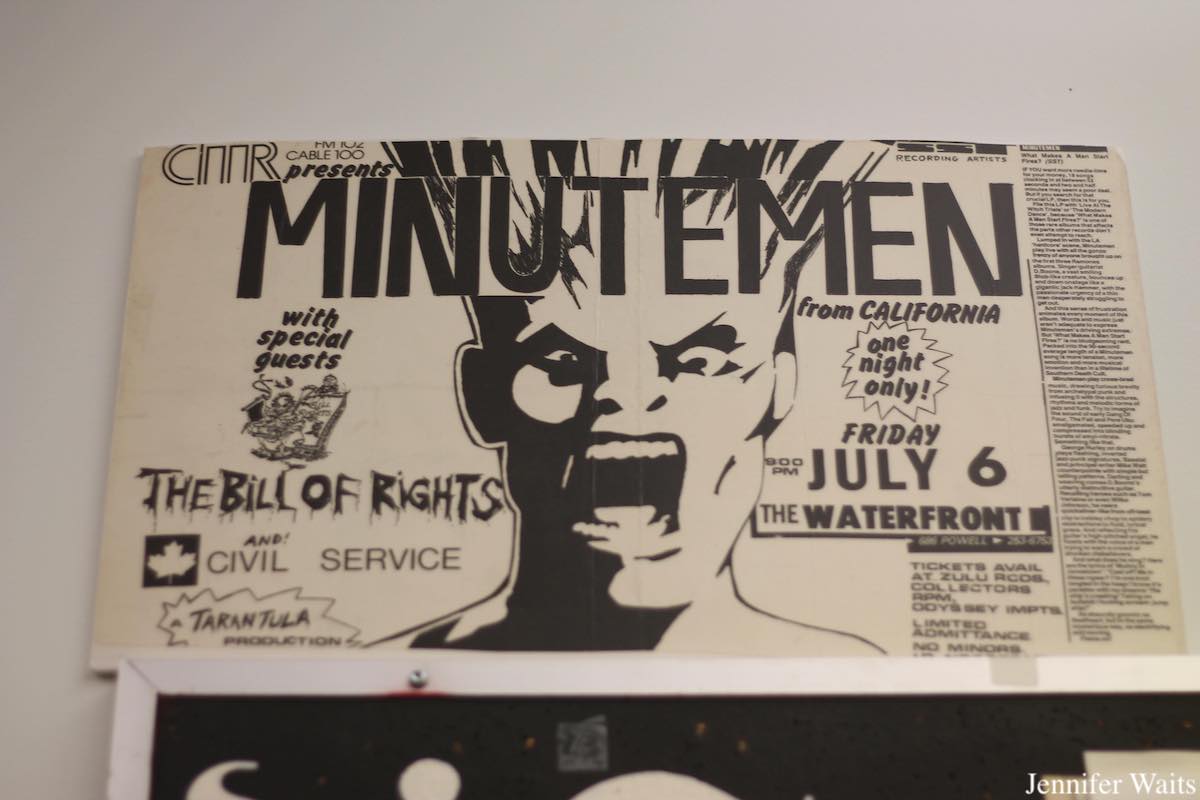
While he wasn’t on the scene during my June 2025 visit, one could catch glimpses of Nadwuar ephemera on the station’s walls and in its archives. 1990s-era handbills for Nadwuar-produced shows were on display and I also saw organizational documents that he created when he was the station’s volunteer manager. His website even contains vintage CiTR tours that he conducted in 1987 and 1995, which warms my heart as both an archivist and a radio station field trip addict. His enthusiasm for CiTR is palpable and those video documents are a great introduction to the station’s rich history.
UBC Radio History: Wireless Club Forms in 1919
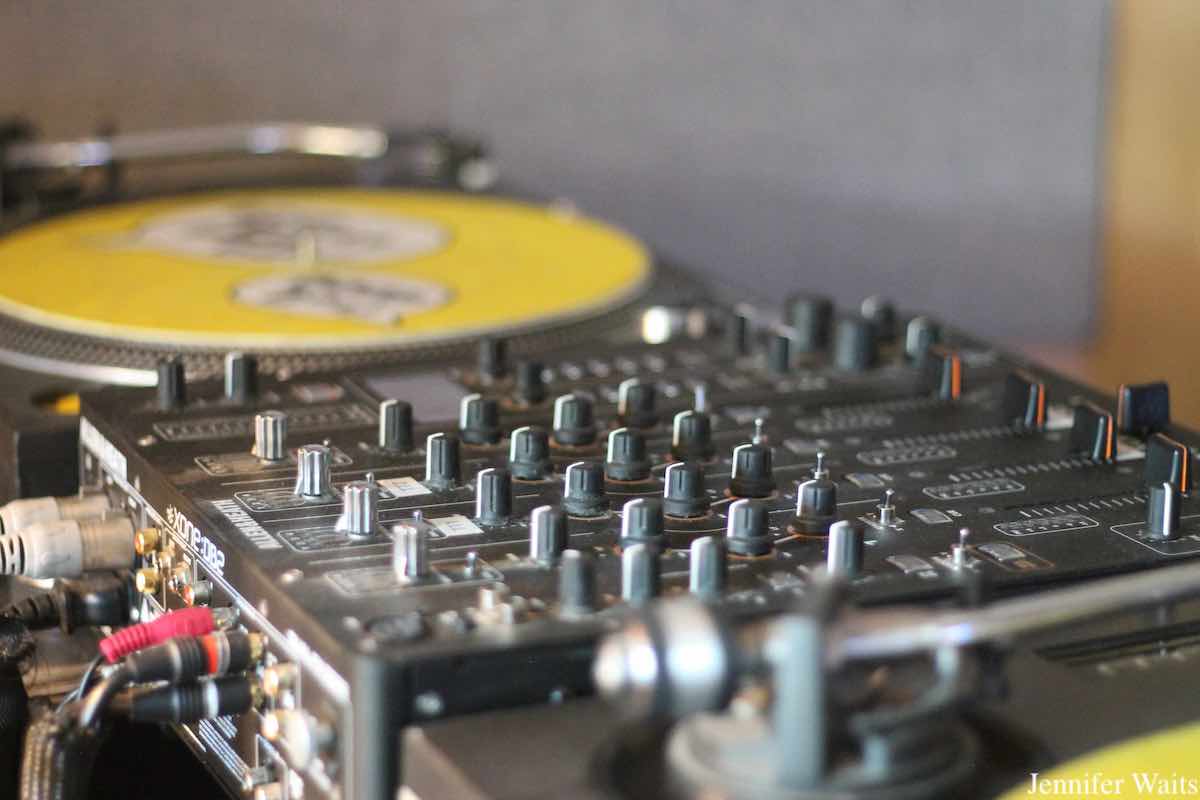
Interest in radio and broadcasting at UBC stretches back to 1919, when a wireless club was formed on campus. Before there was ever a broadcast station at UBC, the radio club presented lectures on a variety of topics, including broadcast station design. By 1930, the club was touring local radio stations and making plans for a future broadcast. A few years later, in November 1934, the radio club received a proposed budget request in the hopes of setting up a shortwave broadcasting station. A 1938 mention in student newspaper, The Ubyssey, referred to the group as “the shortwave club” and by 1939 the club was connecting with other university stations over shortwave.
Students Launch Radio Programming at UBC in 1937 and Radio Society Forms in 1939
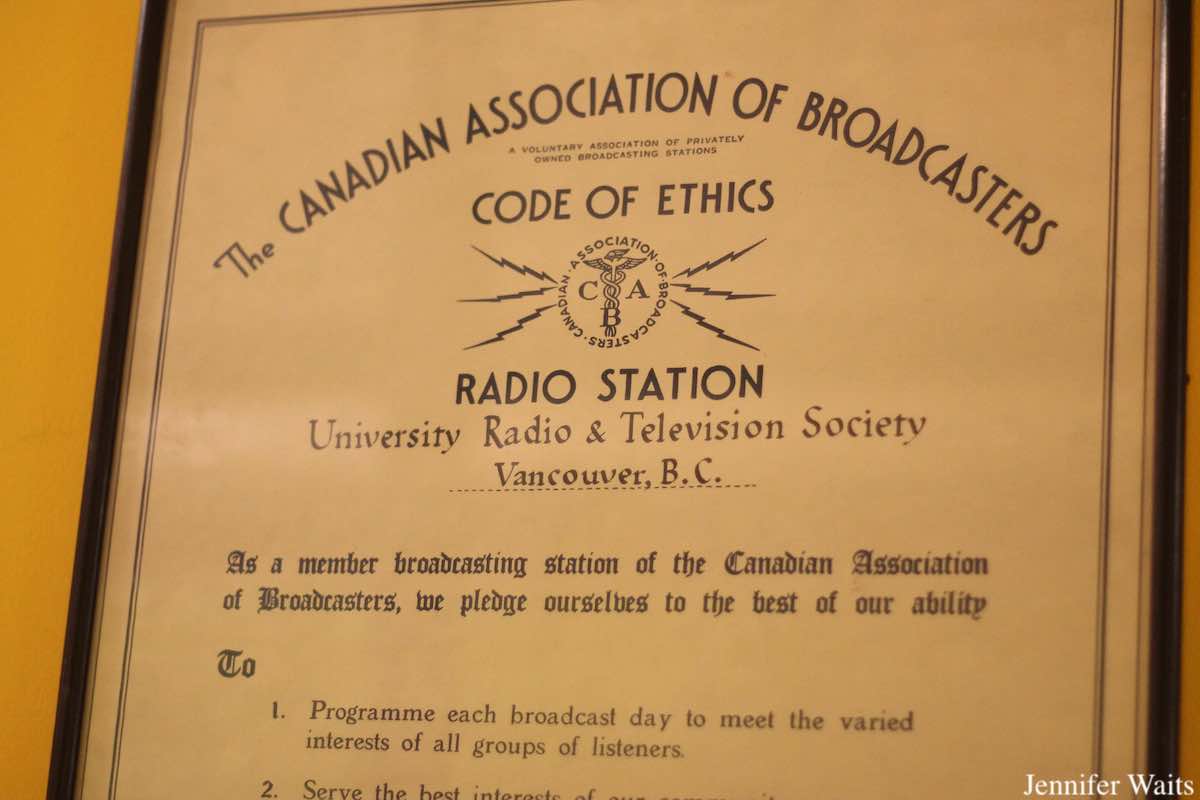
While the radio club continued its amateur radio work, others on campus started creating radio programming beginning in 1937. A studio was set up in the Aggie Building at UBC and a student-created show aired on local station CJOR under the banner of “Varsity Time.” Segments focused on student clubs and also included musical selections, interviews, and scripted “playlets.” A September 1938 piece in The Ubyssey reported, “Out of the restless longing of youth to make its voice heard across the undulating ether, there was created in days gone by a new institution, ‘Varsity Time.'” A special presentation in January 1939 was brought to the stage in a campus auditorium, with programming broadcast over a public address system. A few weeks later, Varsity Time changed its name to The Radio Society and established a new club on campus. “It is hoped that the Radio Society will control student broadcasts of a cultural and educational nature, and will present programs more representative of the various aspects of university life,” reported The Ubyssey (2/3/1939).
UBC Radio in the 1940s Utilizes Public Address System and Explores Broadcasts over CBC
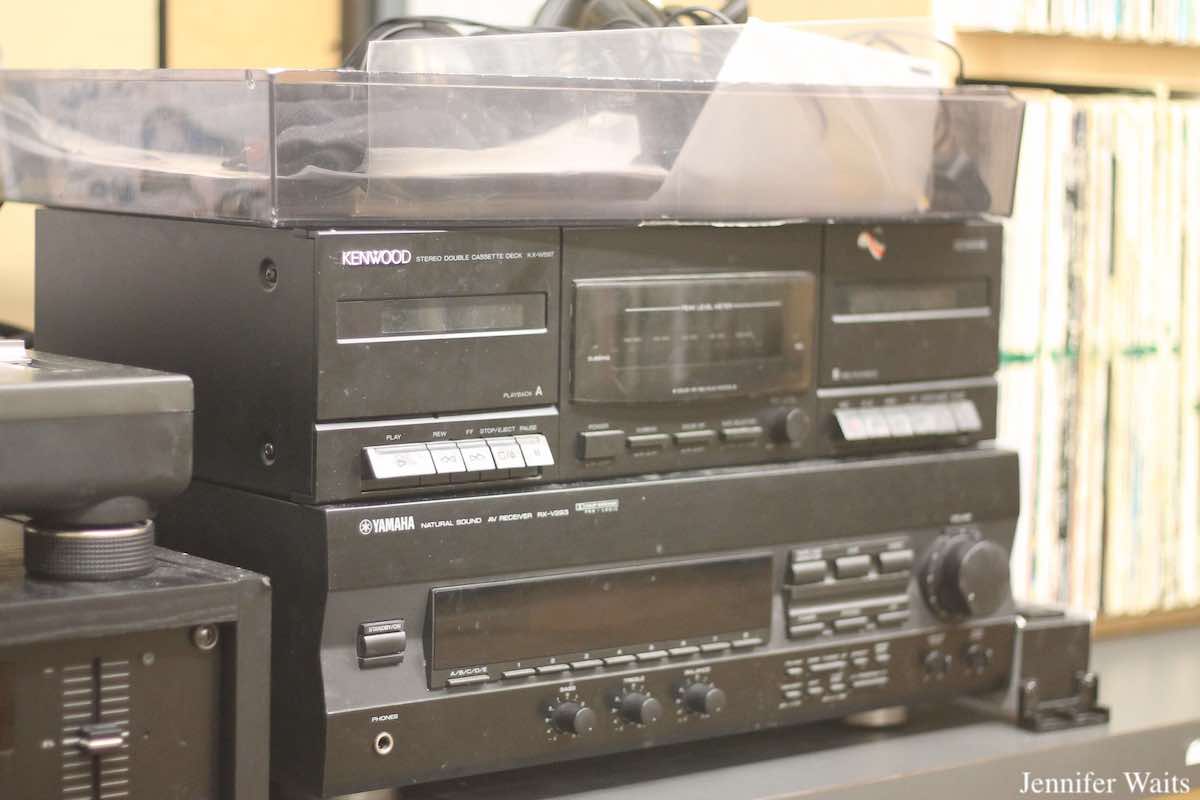
By 1944 the UBC Radio Society was utilizing the “campus public address systems” to transmit entertainment to students (The Ubyssey, 9/26/1944) and was preparing to air programming over the CBC, including reports about the university’s role in the war effort (The Ubyssey, 10/31/1944). In 1945, plans were in the works for the society to be able to “broadcast direct from the campus, by means of a communications line from Brock Hall to the Canadian Broadcasting Corporation,” according to an article in The Ubyssey, which noted that, “For the first time they will broadcast university sports events and music to listeners in the province” (The Ubyssey, 11/1/1945).
Radio Society Sponsors Formation of Amateur Club
The interconnected nature of ham radio and broadcasting on college campuses plays out in an interesting way at UBC. In October 1945, The University Radio Society sponsored the formation of an amateur radio club, bringing ham radio back to campus following WWII. The new club for “students interested in amateur short wave radio” was organized “to bring together ‘ham’ operators on the campus with others interested in obtaining their licenses” in the hopes of setting up a shortwave station (The Ubyssey, 10/11/1945). By early 1946 these members of the Amateur Radio Operator’s Association were in the midst of constructing a 200 watt shortwave transmitter (The Ubyssey, 1/15/1946). And in 1947 the UBC Amateur Radio Club (VE7ACS) was said to be “operating one of the most powerful transmitters on the shortwave band” (The Daily Ubyssey, 10/24/1947).
For the UBC Radio Society (Radsoc), programming continued over the campus loudspeaker network from the 1940s through at least the early 1980s, although additional methods were also employed throughout this period, with some shows airing over local Vancouver stations.
Radsoc Begins AM Carrier Current Transmissions to Campus Buildings in 1964
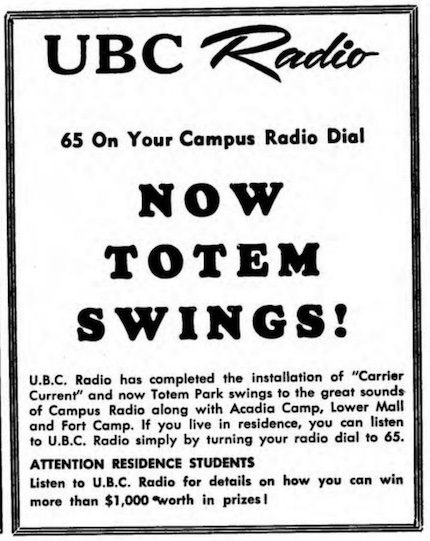
In 1964, The Radio Society (Radsoc) launched carrier current broadcasts over 650 AM. These transmissions, running from 8:30 am to 11:30 pm on weekdays, initially reached several buildings on campus, with the hope that all student residences would soon be able to pick up the station. The Ubyssey reported that Radio UBC was the first carrier current station at a Canadian university (2/18/1964). By 1967, the station was using call letters CYVR. A decade later, as carrier current regulations were changing in Canada, the station was asked to apply for an official license. After being granted a carrier current license in July 1974, the station changed call letters to CITR to comply with CRTC guidelines.
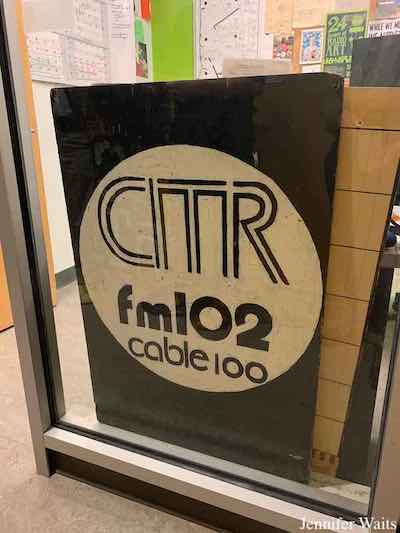
CITR adds cable FM in 1977 and terrestrial FM in 1982
In February 1977, CITR added cable FM broadcasts, allowing it to reach “200,000 homes in Vancouver” (The Ubyssey, 2/25/1977). Through this method, Cablevision customers could listen to the station at 89.5 FM by connecting their cable to their radios. By 1982, the station’s longtime dreams were realized, as it prepared to launch over terrestrial FM. At the time, CITR was transmitting its broadcasts in several ways: the public address system in the student union building, AM carrier current to campus housing, and cable FM to local residents. Announcing CITR’s April 1, 1982 launch over FM, The Ubyssey reported that the station was “granted the last available low-power frequency left in the Vancouver area.” CITR was later able to increase its power and continues over FM today, along with its online stream.
Touring CiTR in 2025
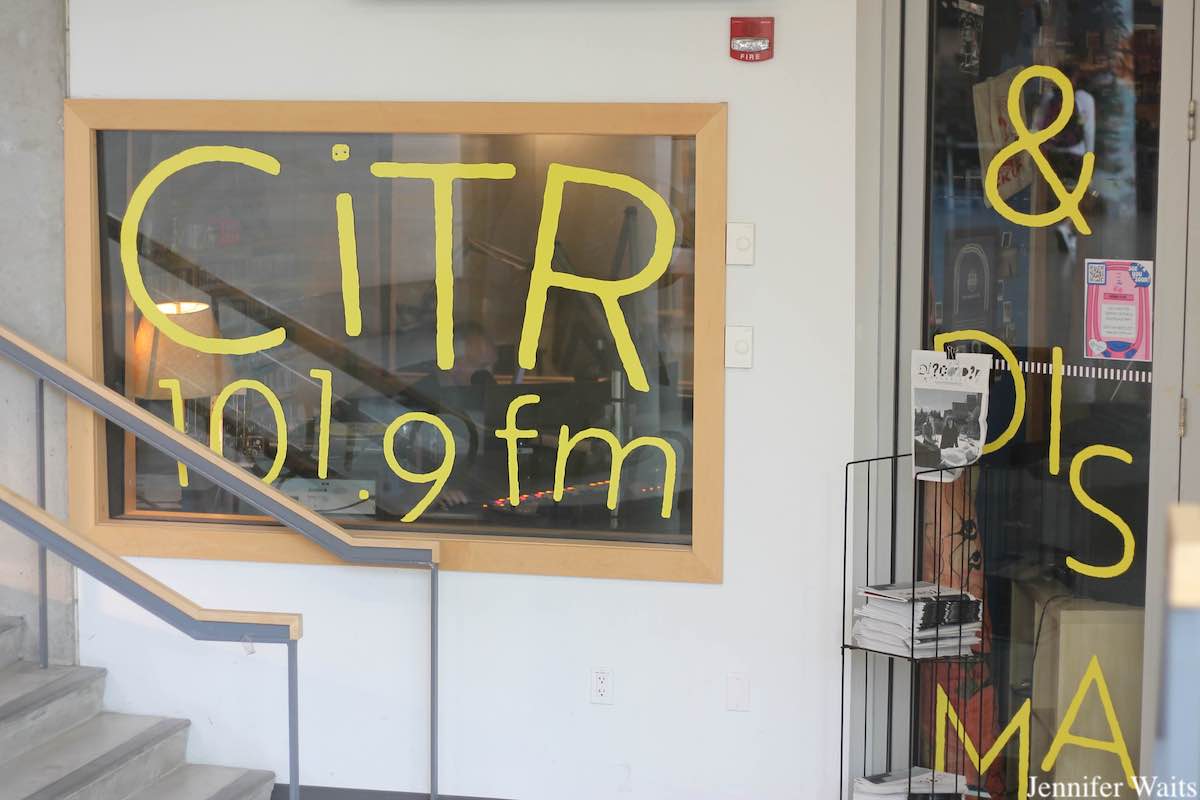
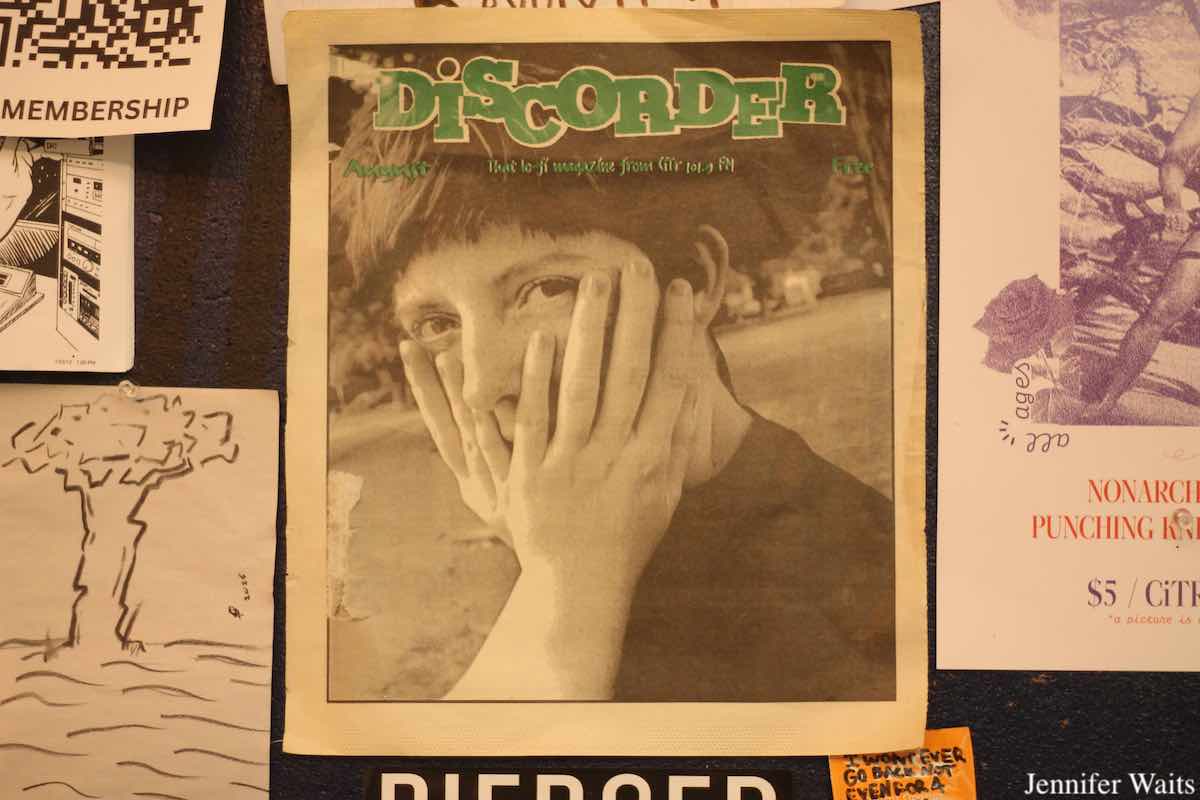
Today, CiTR (the station prefers to use a lowercase “i”) operates both a radio station and the magazine Discorder out of its home on the UBC campus in Vancouver, British Columbia, Canada. When entering the light-filled, mall-like and lively student union building (known as the AMS Student Nest), the CiTR space is easy to spot from the central atrium. The call letters and frequency (101.9 FM) are inscribed in such large type that they fill the studio window and an illuminated “on air” light hangs from the wall above. Additionally, a black CiTR Discorder logo adorns a concrete pole in front of the station. Located down a flight of stairs from the atrium, CiTR welcomes visitors during tours every weekday. Passersby can also pop by to grab a free copy of the station’s longtime (since 1983!) arts and culture magazine Discorder.
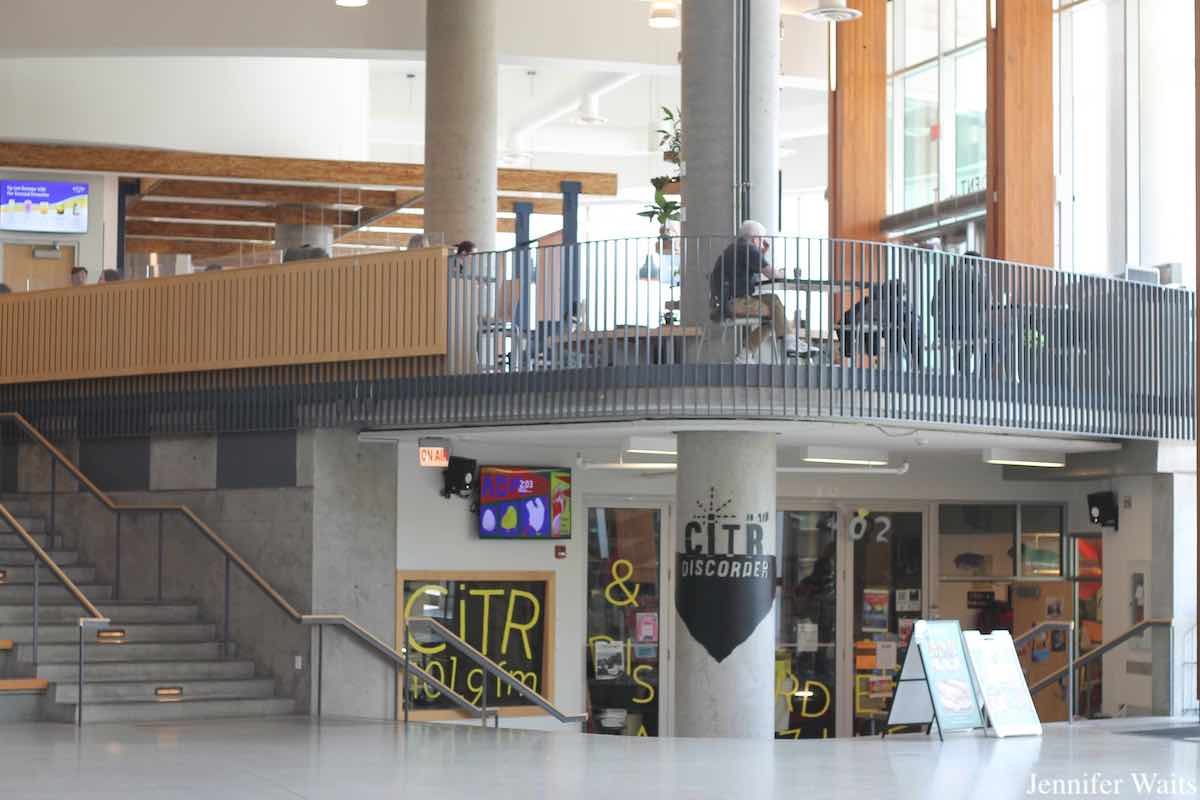
Another interesting feature of the CiTR space is its set of accordion-style windows that can be opened completely. The front windows abut the station’s lounge, which is full of seating, making it a regular student hangout option. But what’s especially cool is that CiTR can share live music with bigger crowds by simply opening those windows when musicians drop in for performances in the lounge. This semester’s activities in the space include a merch swap, movie screening, and open house.
CiTR’s Unique Organizational Structure: Student Club and Non-Profit Society
Run by a professional staff, but managed by students; CiTR has a unique organizational structure. Station Manager Jasper Sloan Yip explained, “CiTR is a student club, radio station, and it’s a non-profit society registered with the province of BC. So it has an interesting structure in that we have sort of three levels of governance.” A group of student executives run CiTR and “set the vision” for the station according to Yip. Professional staff then work to “execute on their executive vision.” Additionally, behind the scenes, a board of directors functions in more of a governance role, advising on broader areas like budget and by-laws, as opposed to the day-to-day operations of the station. This board is elected and appointed by the university and by the CiTR membership.

Student Engagement is High at CiTR and on an Upswing Post-Pandemic
On a recent “Fun Drive” fundraiser show, student members of CiTR spoke of their love for the station above all other campus activities, joking that they are majoring in CiTR. Sloan told me that student engagement at the station feels stronger and deeper than when he joined the staff in 2019. He credits the Student Executive team for hosting more events at the station, which has no doubt helped boost CiTR’s membership into the range of 150 to 250 people in a given year. He described the station as a “community third space” and “media training organization,” explaining that a key aspect of that is that the radio station and the magazine feel more connected than in the past.
Student Radio Collectives at CiTR include the Indigenous Collective
Along with that “third space” ethos, former radio show collectives that would produce shows around a given interest area now function more like “organizing units” that operate on the radio and beyond. Yip said, “We don’t really require the collectives to have any kind of specific output, like a radio show. They can. They’re welcome to. But they can also plan events, or they can work in the archive, or they can just watch movies.” One such group, the Indigenous Collective, produces “Unceded Airwaves,” a program that is “committed to centering Indigenous voices and offering alternative narratives that empower Indigenous people and their stories.” A recent episode focused on a campus library devoted to Indigenous scholarship, research, and archives.
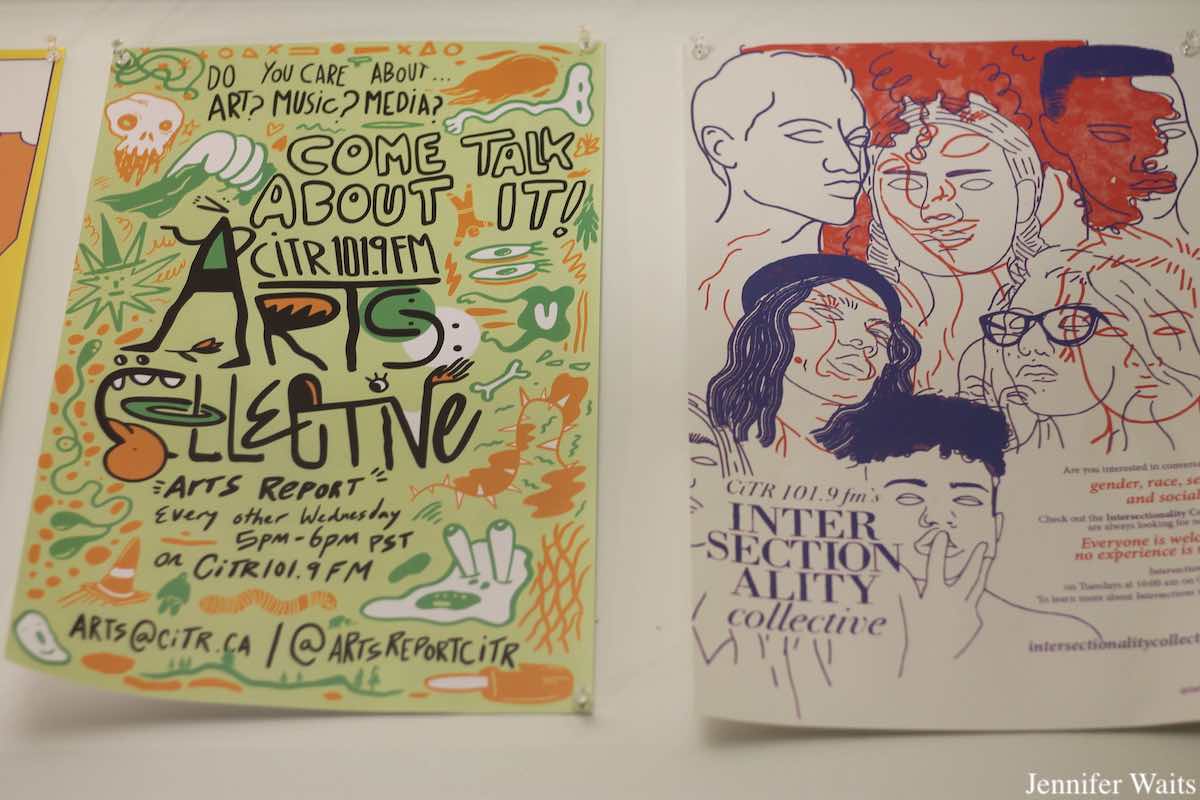
CiTR Vice President Dani Larose (who is one of the student executives) ran “Unceded Airwaves” for a few years starting in 2023 and said that it was a pivotal experience after she joined CiTR. “I was 19, had no idea how to run a show nor a collective, but our station manager Jasper took a chance on me. It gave me the opportunity to interview artists, learn how to create spoken word programming and increase Indigenous presence at the station and on the airwaves,” she shared.
Diverse On-Air Schedule with around 90 Shows
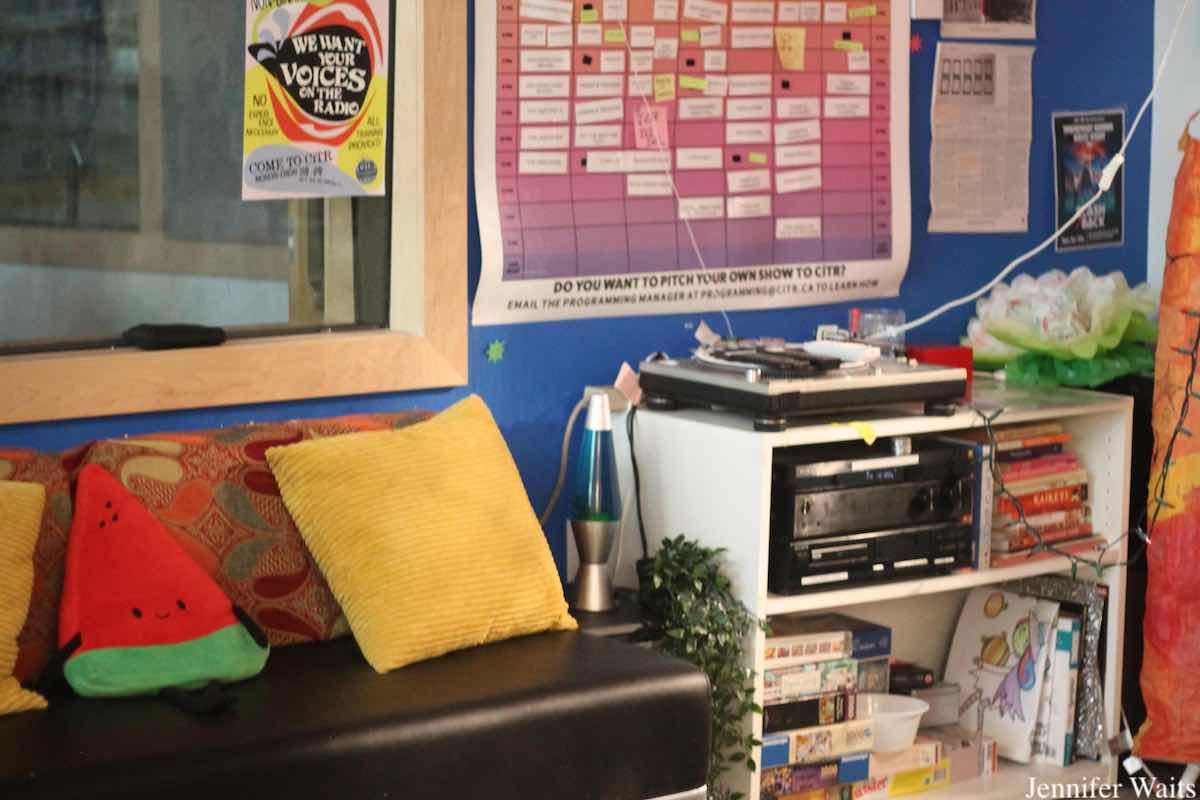
Made up of both students and non-student participants, the CiTR schedule (comprised of around 90 shows) is probably around 50% student-produced programming according to Yip. He noted, “And that’s great, because when I started, it was more like 75 community, 25 percent students. So it’s really started to shift towards students, which is what we like to see.” He likened the station to “a student club house,” and pointed out how even the decor has shifted in recent years because of students.
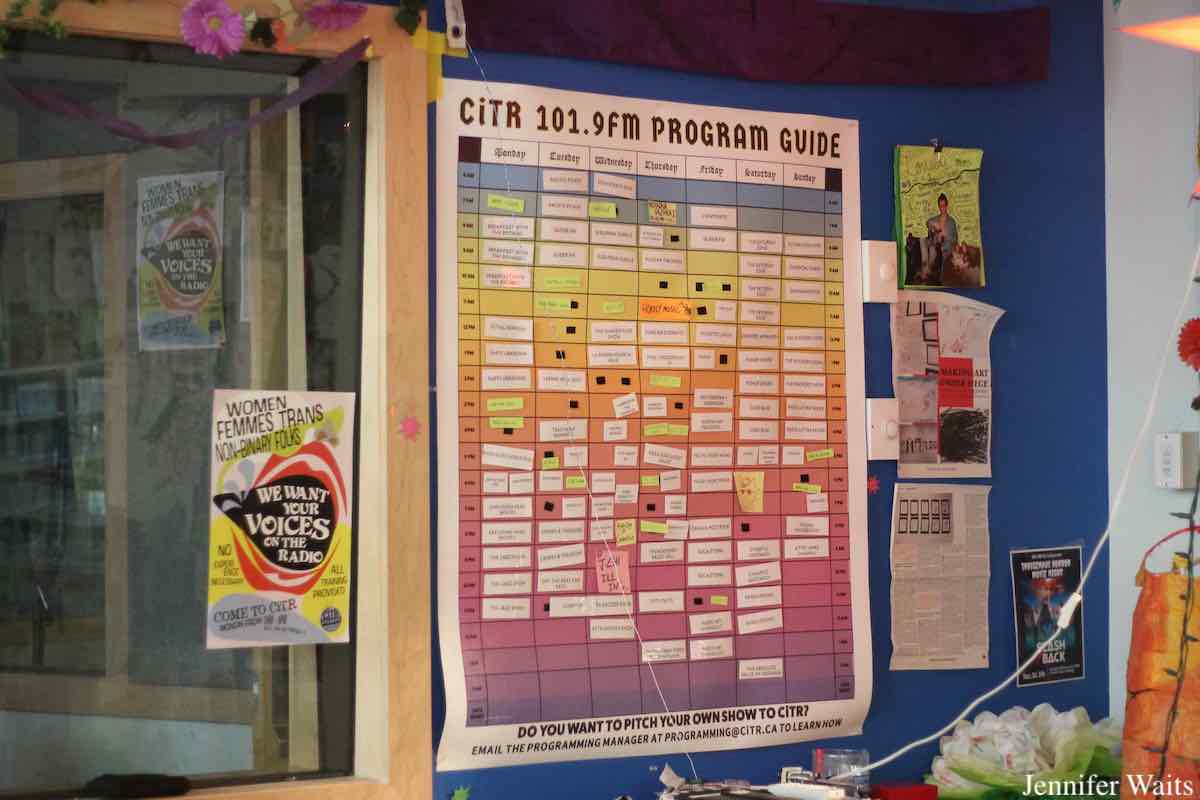
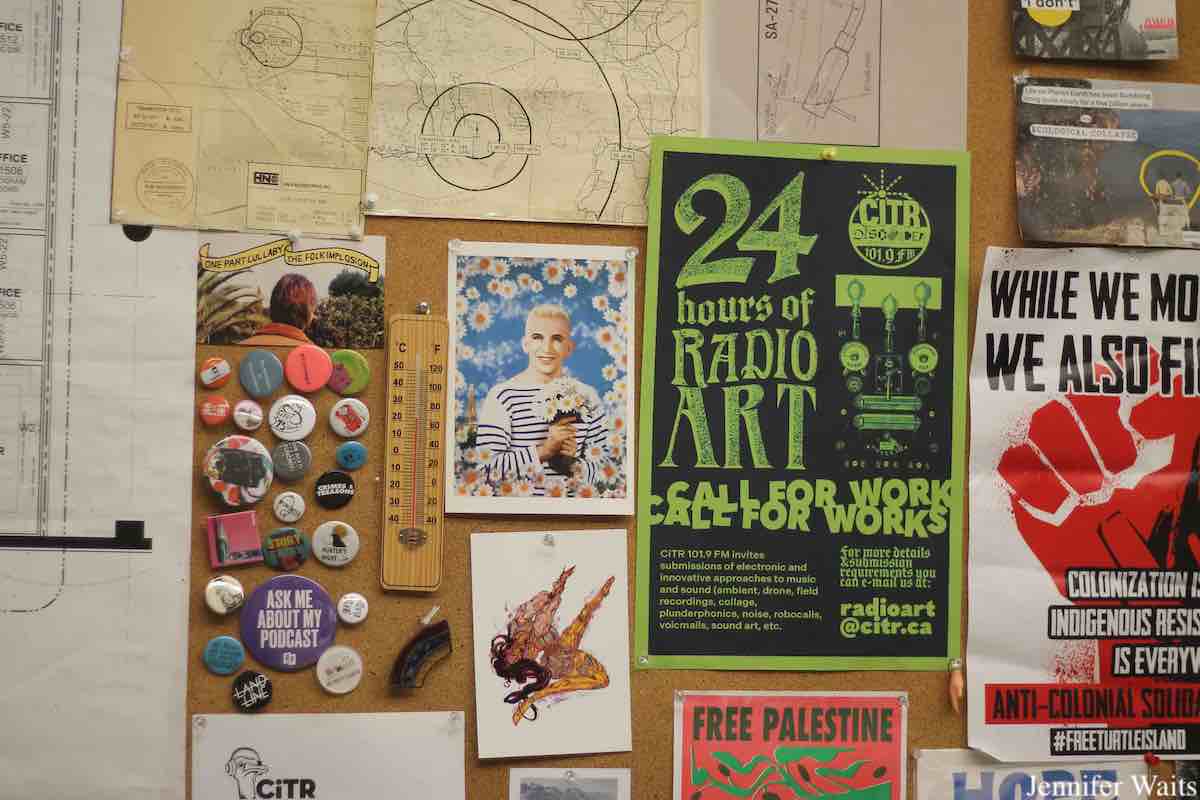
The CiTR schedule includes a wide variety of programming, including music across genres (classical, electronic, dub, new releases, folk, metal, salsa, punk, experimental, indie pop, hip hop, dark ambient, international, etc.) as well as talk programming (the long-time show “QueerFM,” syndicated show “Democracy Now,” plus other shows focusing on arts, culture, relationships, sports, news, etc.). Creativity is encouraged at CiTR and a strong example of that is the station’s “24 Hours of Radio Art” event, which showcases experimental music, sound art and noise. Playlists and audio from the January 2026 edition can be found on the CiTR website.
Vibrant CiTR Space
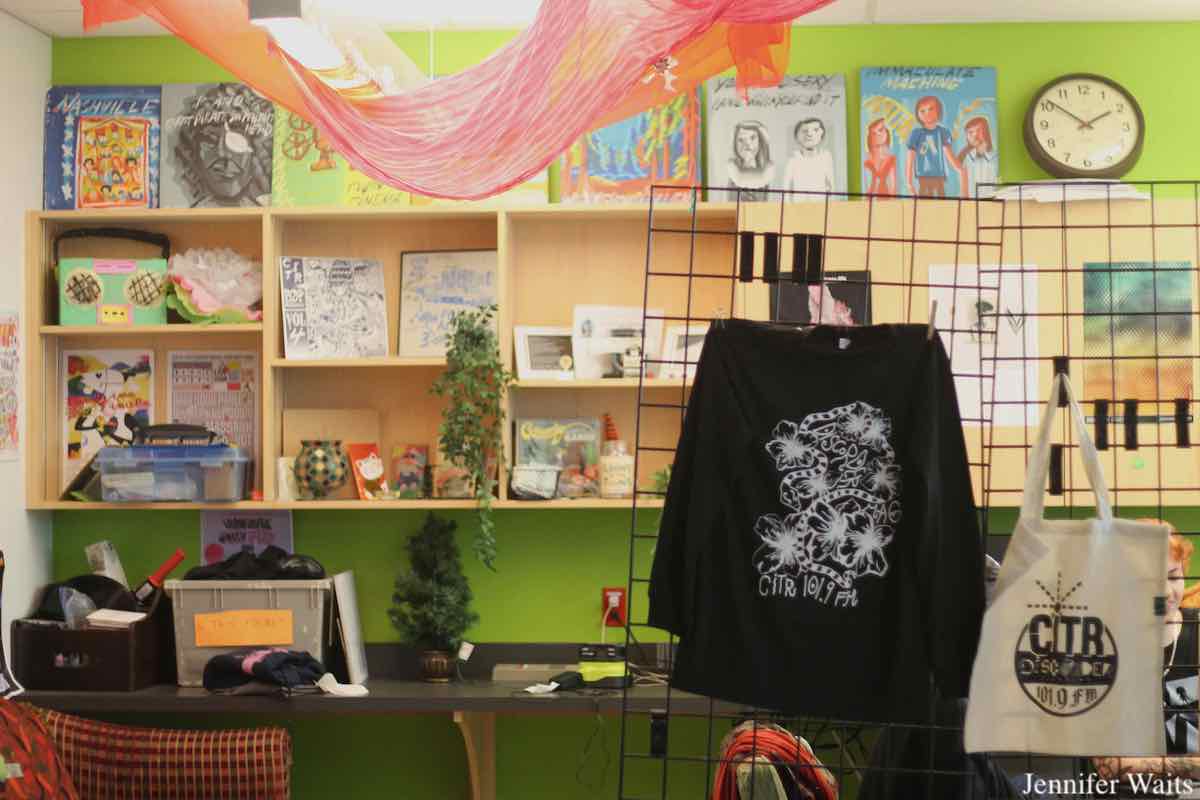
Like the sounds emanating from its radio signal, the bright and cheery space at CiTR is also full of personality. High up on a blue wall in the lounge is the CiTR/Discorder Donor Appreciation Wall, displaying cassette tapes and vinyl records labeled with the names of the most generous donors to the station. Across the room, a gallery of painter Steve Keene’s artwork featuring mainly artists local to the B.C. area sits atop shelves affixed to a lime green wall. I’ve spotted Keene’s wooden album-style paintings at numerous college radio stations, so it was nice to see such a large collection at CiTR.
CiTR Promotional Items Include LPs, Beanies, Dice and Music Compilations
Underneath the paintings, the shelves are dotted with posters, CiTR compilation LPs, and even a paper boombox. A nearby display shows an array of eye-catching CiTR merchandise, including tote bags and t-shirts. The station also produces more unusual items, including bright blue beanies and translucent pink dice. Outside the station sits a rack containing copies of CiTR compilation records as well as issues of Discorder, all free for the taking.
Physical Music Cherished at CiTR
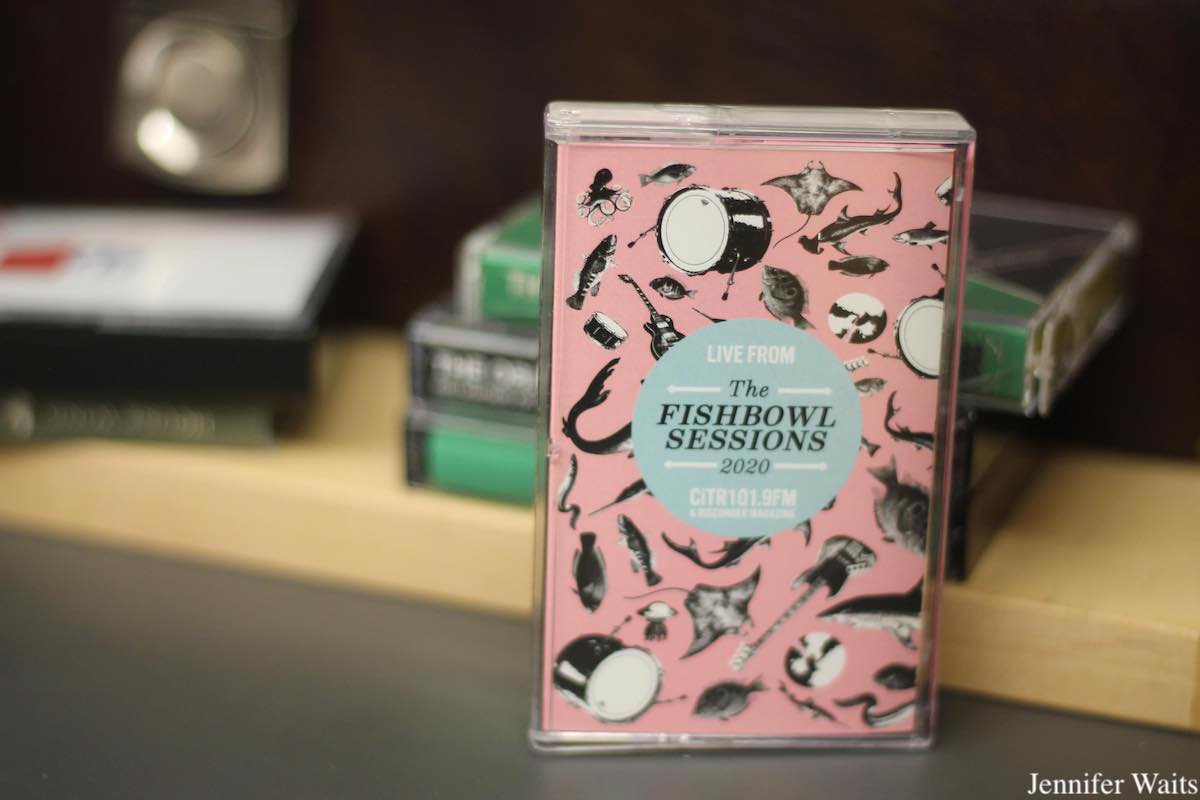
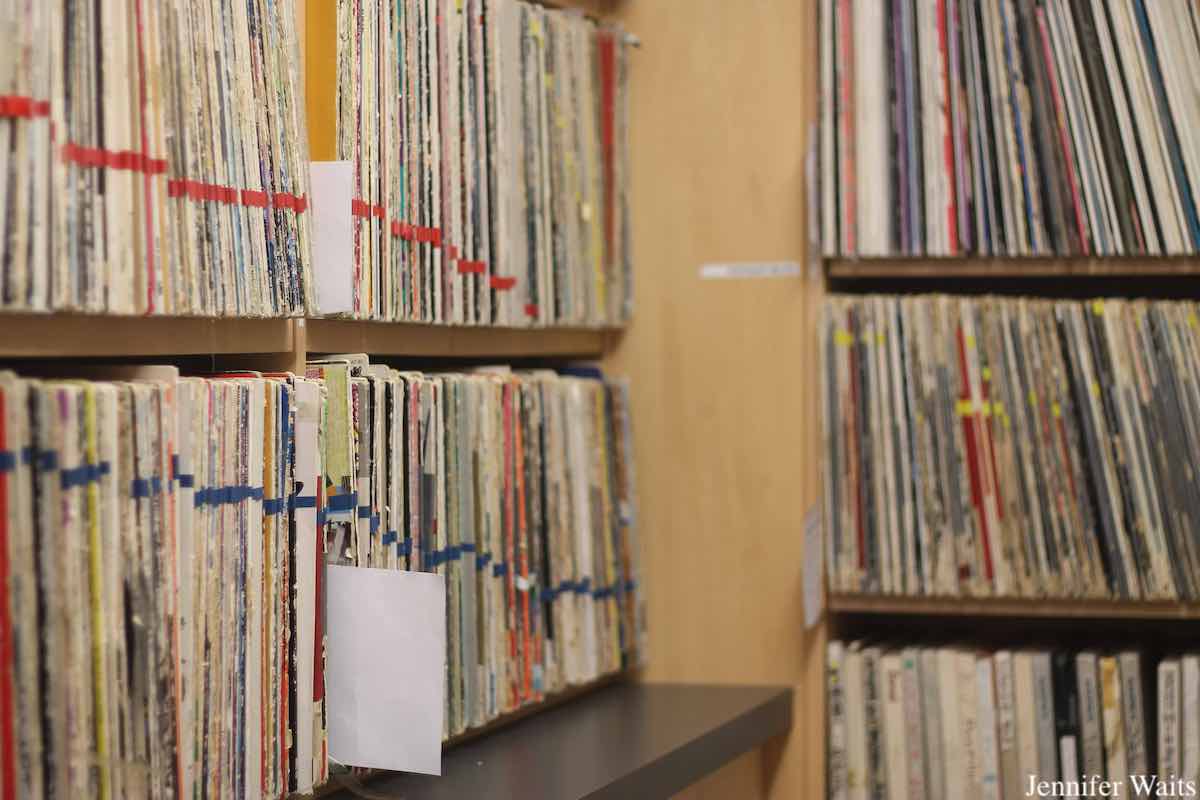
In addition to compilation LPs and Discorder, CiTR has also produced limited edition cassettes in recent years. A series of “Live from the Fishbowl Sessions” collections were released between 2015 and 2020 and feature recordings of artists that have played in the CiTR lounge. This dedication to physical media is also clear while walking through the station’s extensive music library. Yip estimated that the collection contains around 40,000 CDs, 11,000 LPs, 9,000 7-inch records, and 300 cassette tapes. Running out of space for the ever-growing library, CiTR now only accepts physical music from local artists, while focusing on digital music adds for everything else.
CiTR Archives Department and Reading Room
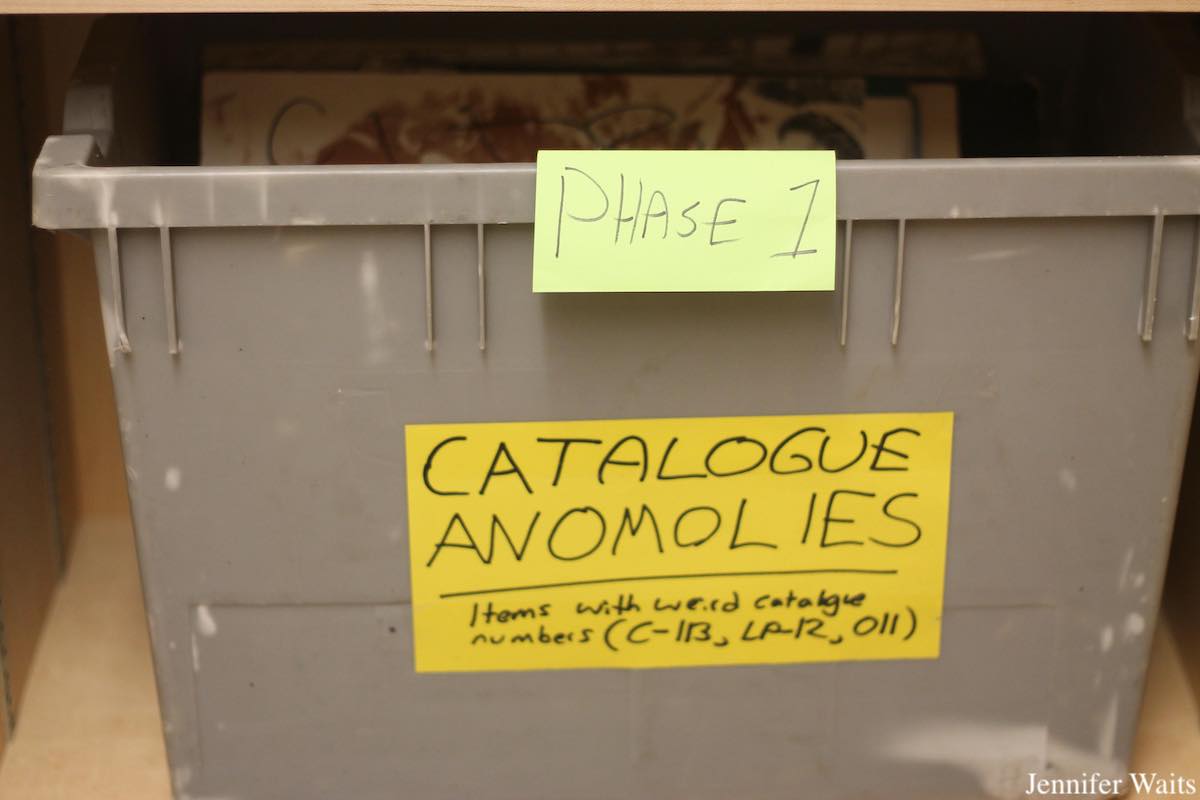
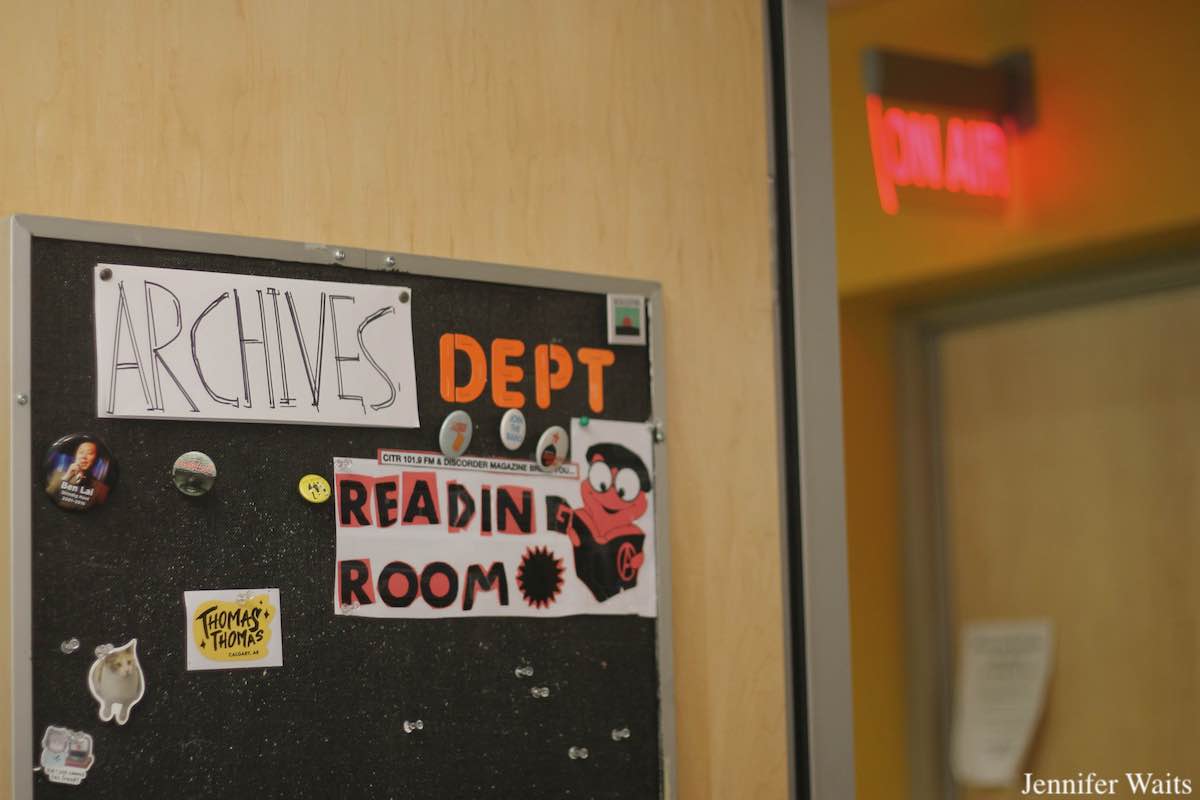
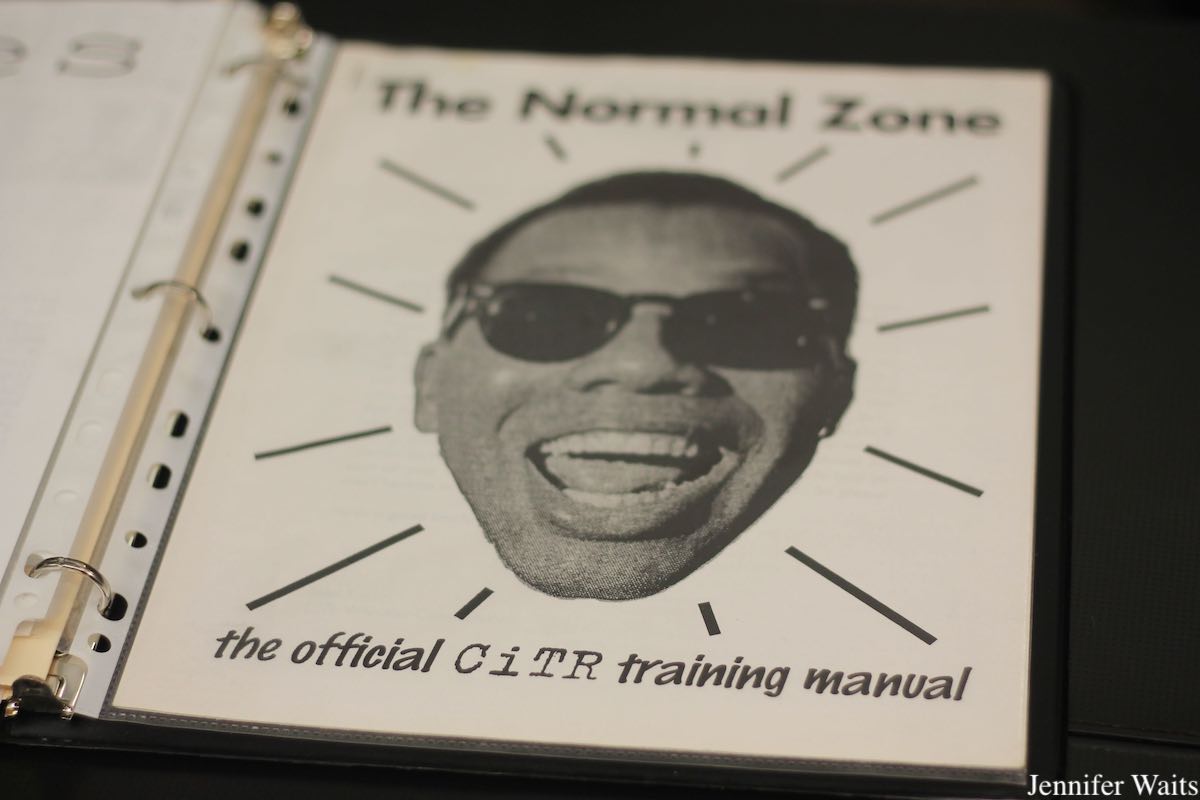
While I was heartened by the sight of a well-organized music library, I was equally thrilled to see CiTR’s dedicated archives room, which focuses on paper materials. Organized by a library science graduate student intern, JT Thomas, as part of a work-learn program, the space is set up like a reading room that one might find in a library’s special collections. After conducting an archival audit to assess materials located throughout CiTR, Thomas worked to develop systems and protocols for future volunteers utilizing the archives. At the time of my visit, the Archives Reading Room offered drop-in hours two afternoons a week for those interested in accessing the station’s physical collection. Within the room are copies of Discorder magazine, a 1990s CiTR hip-hop publication called Elements, 1990s-era CiTR training manuals and more.
In addition to its archival work within the station, CiTR also regularly sends copies of Discorder to UBC’s Rare Books and Special Collections and to the AMS (Alma Mater Society) for preservation. Digital copies of Discorder are included in the college radio collection that I curate within the Digital Library of Amateur Radio and Communications on the Internet Archive and can also be read directly from the CiTR website. It’s inspiring to see CiTR’s dedication to both preservation of and access to its materials.
Radio is Alive and Well at CiTR
The objects and artifacts of radio and radio spaces tell us much about the spirit of a station. And CiTR feels full of life and creativity. Larose sums that up nicely. “Non-profit radio is not dead, not even dying. Come to CiTR and you will see that ten-fold. If you work tirelessly to create INVITING and truly culturally-safe spaces for marginalized people, you’ll find that your radio station will not die,” she mused, adding, “You’ll find these signs of life on our bulletin boards, in the mini-fridge, hear it on the air, in our programming guide, in our digicam photos, our booming Instagram page and recent editions of Discorder mag full of student pieces.”
Thanks to CiTR + Station Tour Archive
Thanks to Jasper Sloan Yip for the tour of CiTR. Before even setting foot in the station, I also got a great introduction to CiTR culture from two of the student executives: President Jay Ballack and Vice President Dani Larose. Fellow attendees at the National Campus and Community Radio Conference (NCRC) in June 2025, they shared with me their passion for CiTR and their enthusiasm for campus and community radio generally. I appreciate that Larose spoke with me further over email following the conference, giving me more insight into the world of CiTR. This is my 195th radio station tour report and my 136th college radio station tour. You can view the entire collection of my radio station visits in numerical order or by station type in our archives.