
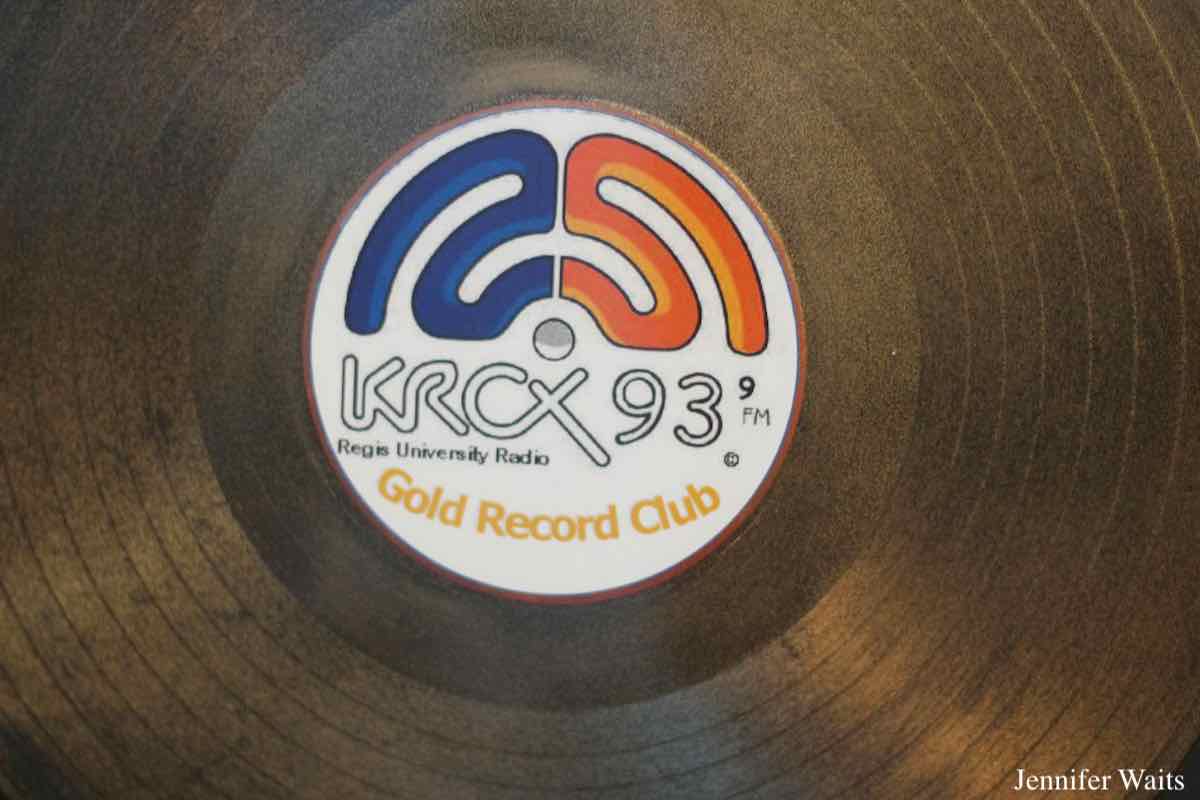
A sentence on the KRCX website, “Regis University is home to Denver’s oldest college radio station,” piqued my interest and led to a journey not only through the radio station, but down many archival rabbit holes in search of more information. The story goes that the station began as a “dorm room shortwave broadcast,” but details of this mysterious beginning are absent from accounts of the station’s history.

Touring KRCX
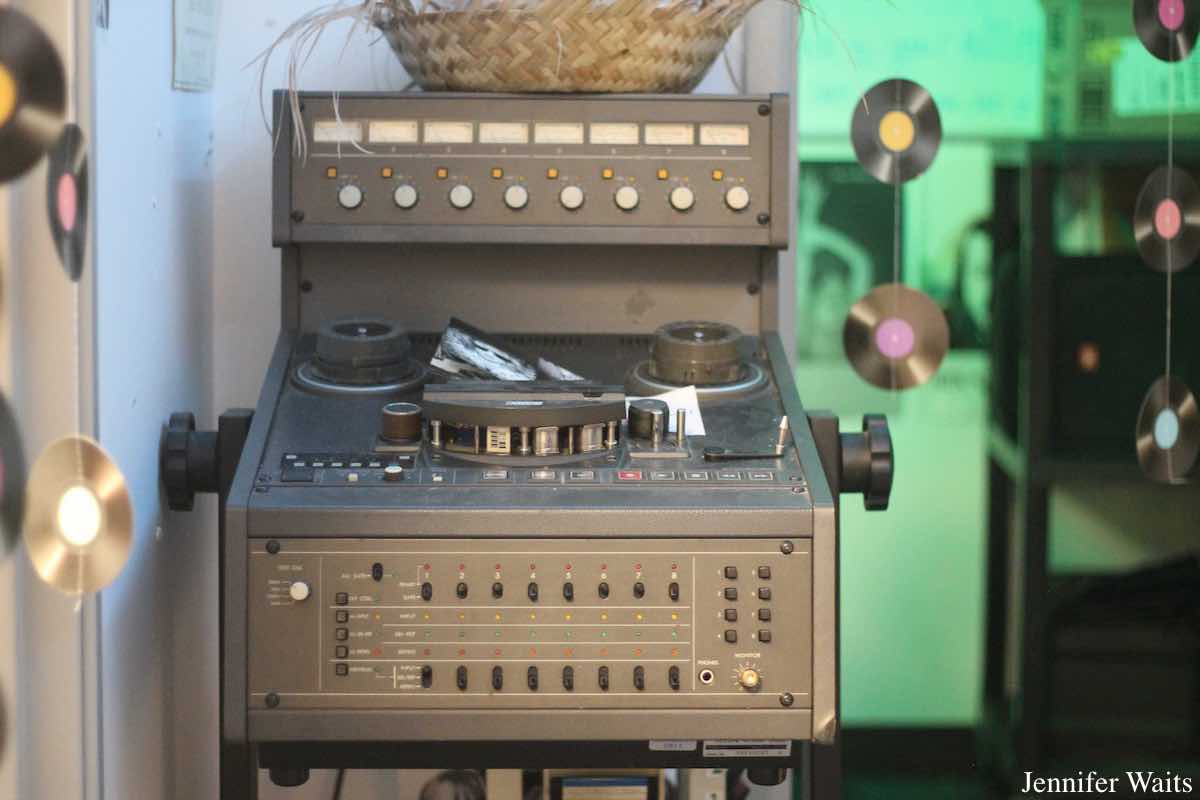
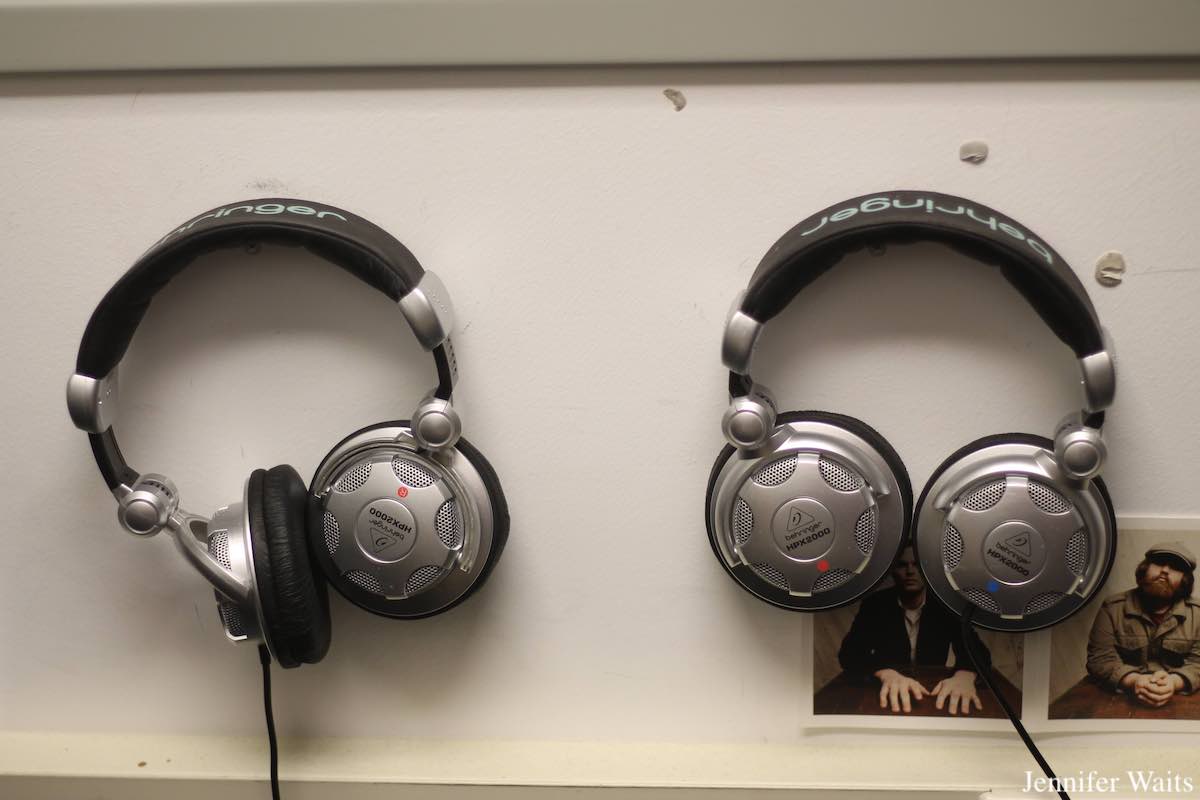
Within KRCX’s home in the basement of Clarke Hall, there are indicators that hint at the various stages and iterations of the long-time student-run station. Banners, stickers, show posters, awards and other ephemera reveal that the station held several spots on the dial, including 93.9 FM, 101.5 FM and 1530 AM. Posters and stickers from the 1990s and early 2000s cover various walls and doors, while shelves continue to house CDs. Older media and equipment dispersed around the station include records, mini discs, floppy discs, and a reel-to-reel machine.
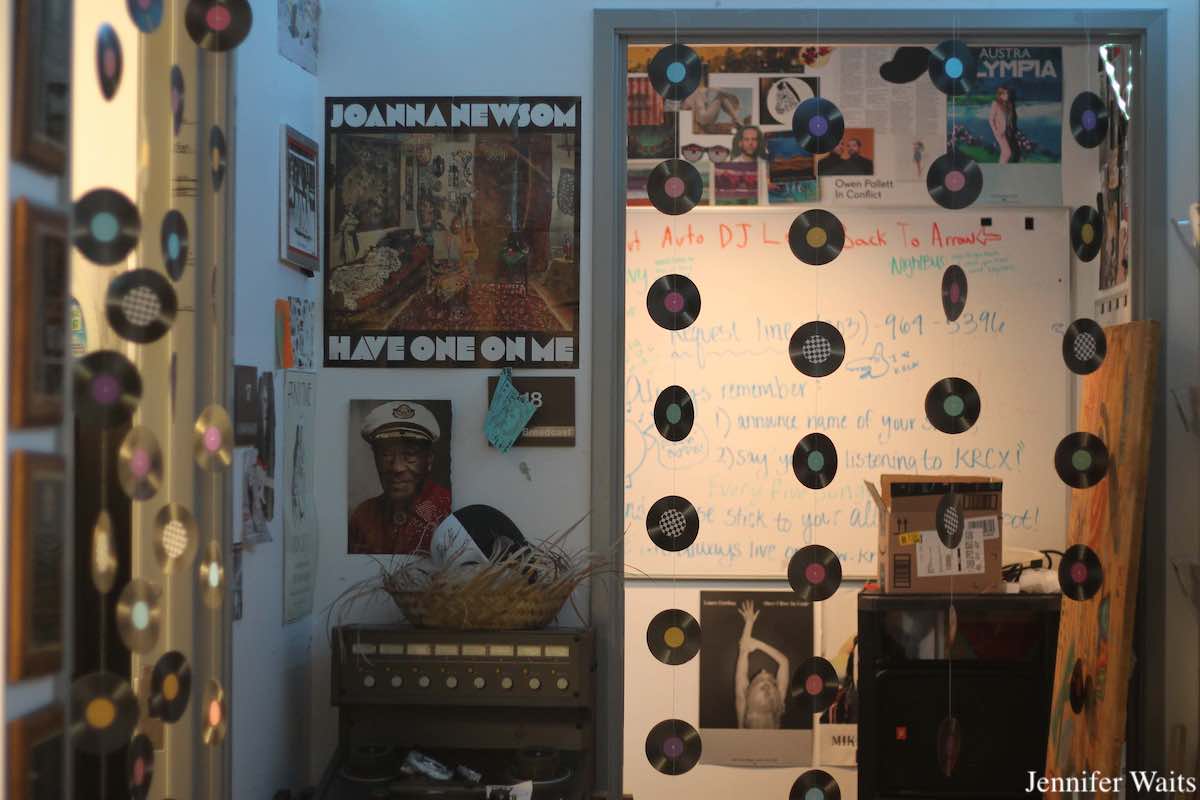
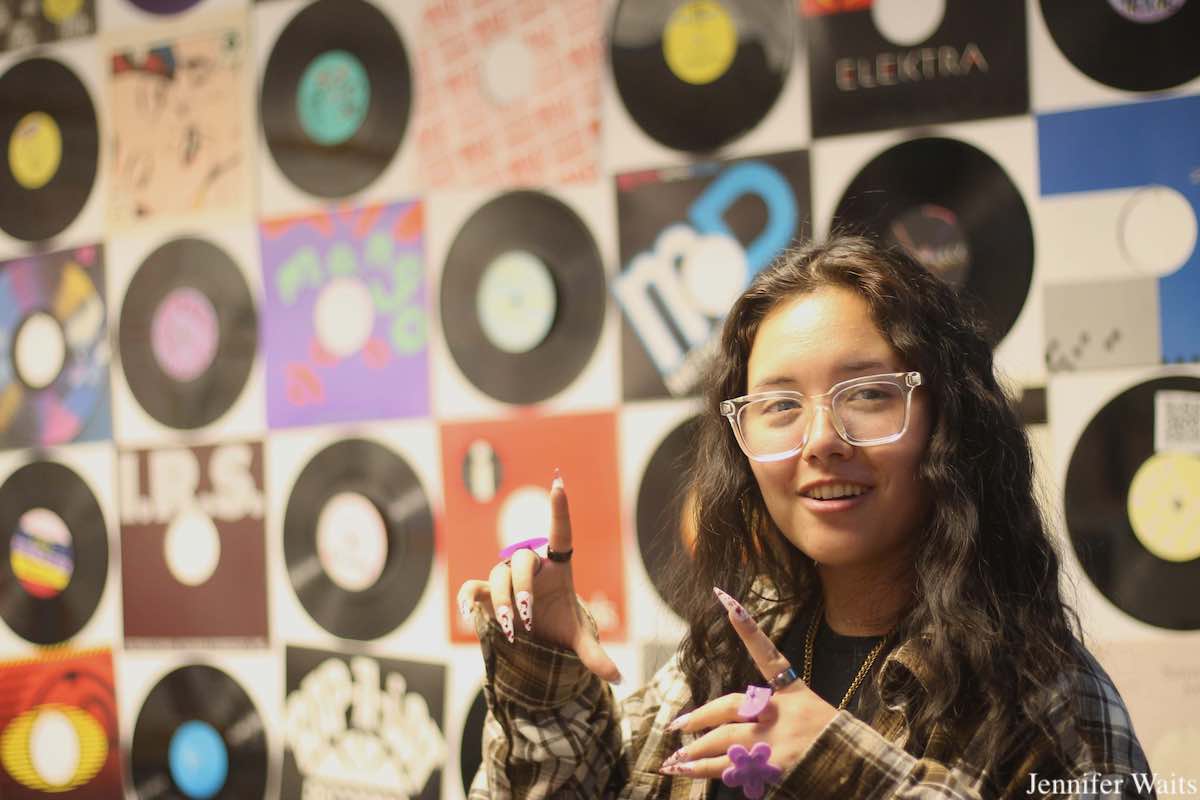
One wall of the office is decorated with vinyl records and covers. Discarded CDs had been smashed into bits for crafting sessions in the past, including some that were used to create disco balls at a station craft night and others that were incorporated into four panels that spell out the station’s call letters K-R-C-X.

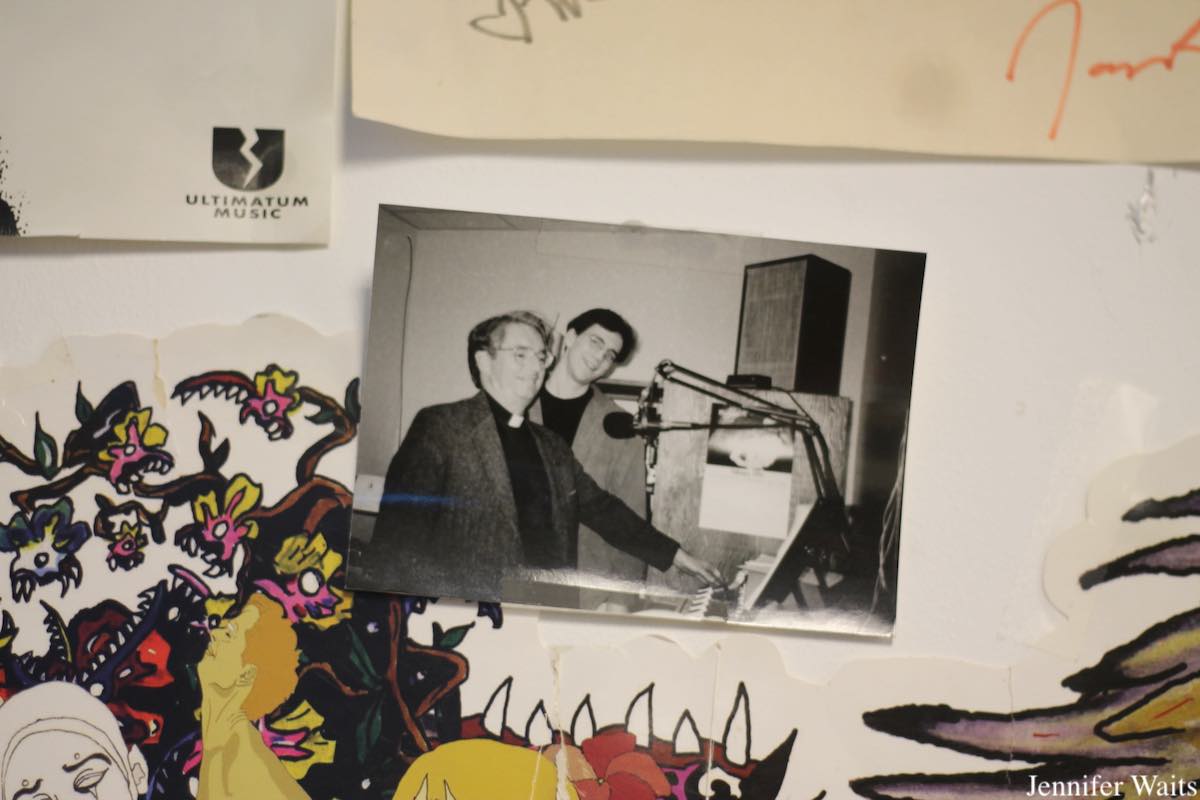
As KRCX General Manager Magdalena Tapia toured me around the station on October 23, 2025, they pointed out the “history on the walls” of the station’s three rooms as well as various mysterious undated artifacts, including photos, event posters and a phone message log book. Tapia wasn’t sure how long the station had been around, but had been trying to sleuth out details about some of the objects floating around the station. Noting that Regis dates back to the 1800s, Tapia told me that Clarke Hall, home to KRCX, is rumored to be haunted. KRCX participants have shared tales of hearing things late at night and a former manager was so spooked that he would sleep at the station rather than venturing out the door in the wee hours.
While I didn’t uncover details about ghostly denizens, I was able to piece together a bit more about the trajectory of radio at Regis. As is the case on many campuses, student radio at Regis has operated under many different names and in a variety of locations over the years.
Early Days of Radio at Regis College in Denver
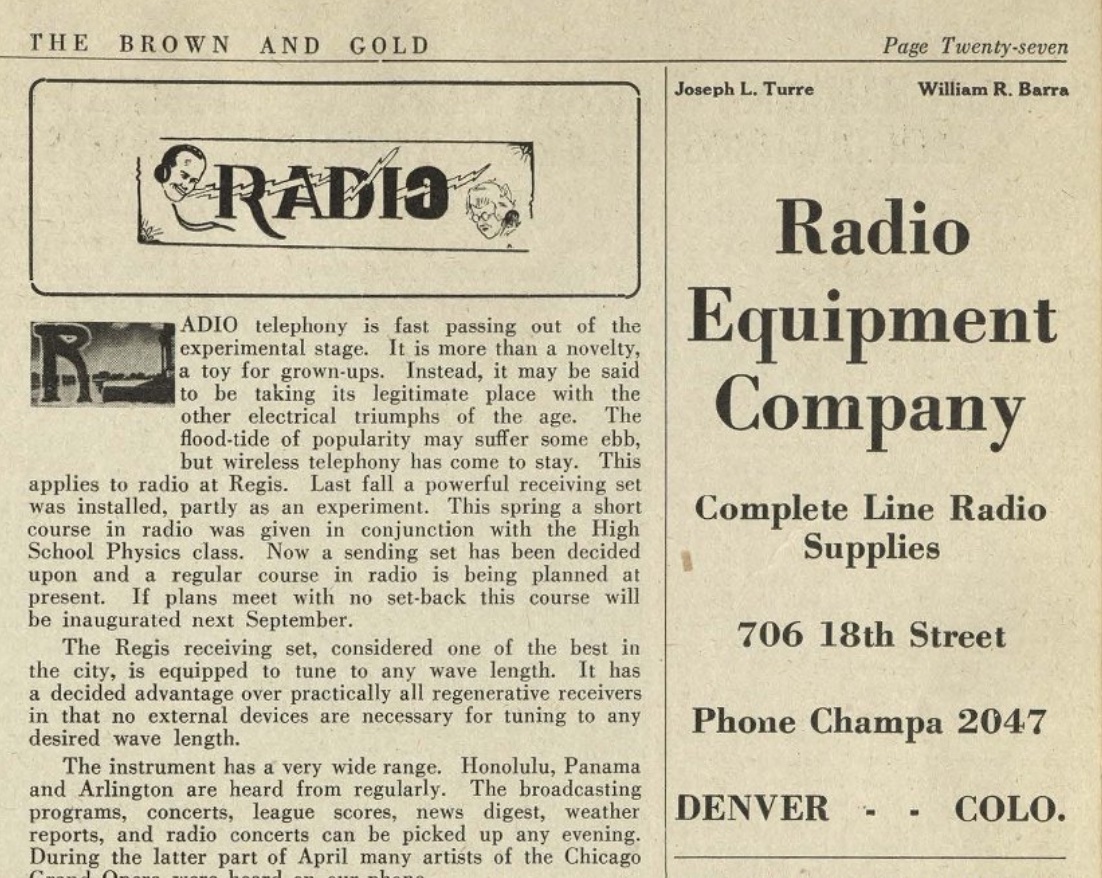
In 1921, a wireless receiving set was installed at Regis College “partly as an experiment,” with plans in place to install a sending set and begin radio courses in 1922. According to a radio column in the campus paper on June 1, 1922, the receiving set had picked up “broadcasting programs, concerts, league scores, news digest, weather reports, and radio concerts.”
The earliest mentions of student-led radio endeavors that I could find at Regis were a yearbook entry for a radio club in the 1940 Ranger and news of an amateur radio station that same year. “Hall Harbors Ham Radio Operator,” reads a headline from January 12, 1940 in Regis College student newspaper The Brown and Gold. The article profiles junior Bob Kelley, who had installed an amateur radio set in his dorm room on the second floor of Carroll Hall. Using the call W9QVZ, he was “operating on the 40 meter shortwave length” and was sending messages by code. At the time it was expected that within a month he would be able to “converse with the other Hams by voice also.” A December 5, 1940 article in the Denver Catholic Register stated that Bob Kelley was running the “first and only ‘ham’ radio station to be installed in Carroll hall” at Regis College.

Beyond the amateur radio work, the Regis College Radio department produced radio plays in collaboration with the Rocky Mountain Radio Council. A Christmas play aired over KOA in 1939 and in 1941 Regis College produced eight radio dramas about the history of the Jesuits as part of a celebration of the 400th anniversary of the Catholic order. In 1943, as word of carrier current was spreading among colleges, Private Thomas W. Donaven of Regis College wrote in to QST magazine asking if there were any carrier current stations in Denver.

New Radio Club and Carrier Current Station KREG Launch at Regis College in the 1950s
By the 1953-1954 school year there was a new radio club at Regis College, whose purpose was “the training of those interested in radio announcing.” The 1954 Regis Ranger profile of the club states that the club “hopes in the future to build a Campus Radio Station.” Soon after, campus-only carrier current station KREG was launched at Regis. By the 1958-1959 school year it was broadcasting from DeSmet Hall, had a roster of 30 DJs and had conducted high profile interviews, including one with Hollywood star Mitzi Gaynor.
And by 1960, KREG’s programming was piped into the Student Center. Interestingly, at the time KREG had implemented a “new policy of playing high quality music which benefits the college mind rather than the controversial form of rock and roll.” This switch aligned with a student opinion survey that “indicated a definite distaste for rock and roll.” The official yearbook photos of the station in 1960 show the all male staff sporting suits and ties. By 1961, the station had grown to around 50 participants and started renting records to students and campus organizations. Despite these accomplishments, KREG drifted away at some point in the 1960s.

Radio Revival with KRCR’s Debut in 1969
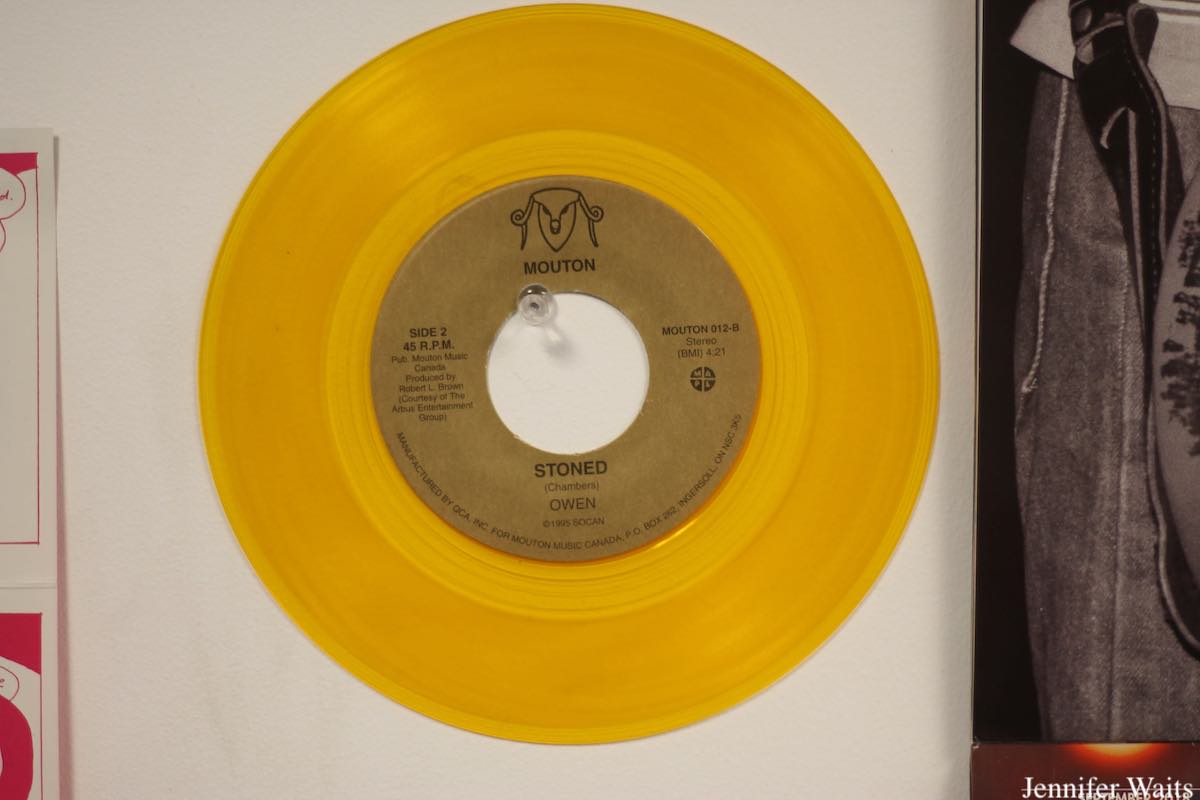
A new station, KRCR, launched at Regis in October 1969, “after nine years and many futile attempts,” according to a profile in the 1970 Ranger. The piece claims that this new station was “conceived and founded” in spring 1961. Unlike its predecessor, the newly minted KRCR played rock music, along with popular music, jazz, soul, news and sports. In the early 1970s, KRCR embraced rock and roll and pushed the boundaries by airing “sarcastic sports commentary” and learning into “personality radio” with DJs like “The Stoned Ranger.” The marijuana jokes continued and by the 1977-78 school year KRCR 66 AM dubbed itself “Reefer Rock Radio,” after once again picking “itself out of the ashes.” Around this time it was broadcasting out of the Student Center.
1980s Name Change to KRCX
During the 1985-1986 school year, KRCR changed its name to KRCX and was broadcasting to the dining hall and the three dorms over 660 AM. The station had a big listening audience during meal time and there were aspirations for “transmitting to all of Denver on an FM station,” according to the entry in the 1986 Regis Ranger. However, by the late 1980s and early 1990s, KRCX suffered a multitude of issues, including a mixing board fire and questions about finances and oversight. The station’s budget was frozen and the club was suspended. By the fall of 1992, KRCX was given a new advisor and was reorganized by the school’s communications board. At this point it was broadcasting from the basement of the O’Connell dorm, where it had moved circa 1990-1991. It continued its carrier current transmissions, bopping between 660, 580 and 590, while holding on to dreams of FM. Another move circa 1994 brought the station to the Media Center in the basement of the Student Center, from which KRCX broadcast an alternative music format.

KRCX expands to FM in 1999
By the 1998-1999 school year, KRCX was still on carrier current, moving from 1490 to 1530 on the AM dial. However, excitement was high for an even greater accomplishment, with KRCX beginning 101.5 FM broadcasts that reached one mile around the campus in spring 1999. The 1999 Regis Ranger yearbook wrote that because of this, KRCX “became Denver’s first and only F.M. college radio station.” By the 1999-2000 school year, there was growing interest in the station from students, the outside community and record labels.

The number of DJs increased to around 70, plus 8 student staff members. Within a few years, KRCX was also online and added streaming audio beginning circa 2005. Campus-only broadcasts continued over AM and FM and KRCX also expanded onto campus cable TV around this time. Within a few years, the spot on the dial moved to 93.9 FM and by 2009 KRCX was earning accolades from CMJ and covering the Democratic Convention.

2012-2013 Move to Clarke Hall, Exploration of LPFM
During the 2012-2013 school year KRCX moved yet again, landing in the basement of Clarke Hall, where it continues to broadcast from today. Around this time, KRCX hoped to expand its reach off campus. It applied for a new low power FM (LPFM) license in 2013 and was awarded a construction permit for a station at 97.9 FM in 2014. That permit was cancelled in September 2017.

KRCX in 2025
Flash forward to 2025 and KRCX is in another phase of re-building. The student-run station has a small group of participants on work-study. General Manager Magdalena Tapia is a senior and has been involved with KRCX since freshman year. Initially learning about KRCX at an activity fair, Tapia joked that the draw was the promise of “free pizza” and a job. Tapia described the 2024-2025 academic year as a “rocky time,” with a series of technical challenges resulting in the station’s webstream being offline.
Tech Challenges and Post-COVID Return
Although the audio of the KRCX stream can now be heard in the KRCX basement studio, transmissions cannot be heard anywhere else. The station computer runs through a cycle of 46,000 songs and a mix of promotional announcements. DJs can interrupt that mix to do live programming, even though it remains confined to the station space. Tapia explained that while their broadcasts have been silenced, KRCX continues to do campus events “above ground.” This latest round of technical issues stem in part from an August 2019 cyberattack on Regis University, that took down websites and systems on campus. A few months later, the coronavirus pandemic led to further disruptions, ultimately hampering the growth of KRCX and leading to a “slump,” according to Tapia. As is the case on many campuses, student organizations went through a period of transition after students returned following the easing up of COVID restrictions.

2025 Revamp of KRCX
Tapia explained that this semester they are working to “revamp” KRCX by troubleshooting its tech issues while continuing to spread the word about the station through campus events. They expressed enthusiasm about the “passionate” group of participants who are keeping the station active through the creation of website content and events. The station’s blog is full of concert coverage, music reviews, music history, and more. Recent events have included a battle of the bands, karaoke nights, a Halloween open mic night, crafting sessions on the campus quad focused on coloring and kite-making, a Valentine’s Friendship Bingo night, and more.

Although KRCX wasn’t streaming at the time of my visit, the station did have the ability to play CDs and digital music. Sometimes they do receive vinyl records and CDs in the mail and Tapia said that in a period when they are flooded with digital music submissions, it’s exciting to be sent “a physical things that we can keep in the station,” as opposed to a “file that can get deleted.” As we traveled from room to room we spotted a package of vinyl records that had just been mailed to KRCX and Tapia said, “I wish we had a record player.”
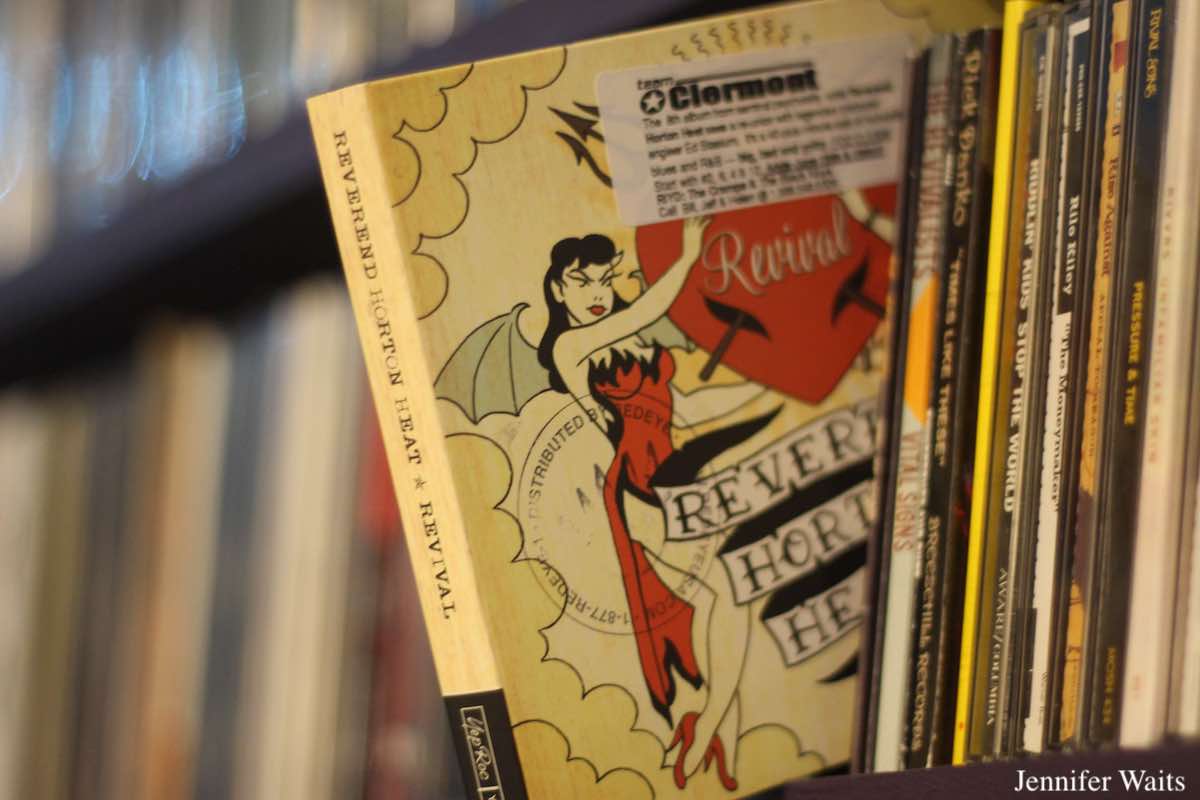
Reminiscing about the time when KRCX could be heard on campus, Tapia talked about the thrill of having artists in the studio to talk about their work. Staffers have received media passes to concerts and one memorable experience was having indie band Yam Haus play on campus. Following that event, the band reached out directly to the station to offer them tickets, saying “we remember you.”

Thanks to KRCX + Archive of Station Tours
Many thanks to Magdalena Tapia of KRCX for the tour! This is my 182nd radio station tour report and my 124th college radio station tour. You can view the entire collection of my radio station visits in numerical order or by station type in our archives.