One of the first things that I noticed when I arrived at WMPG-FM in Portland, Maine was a familiar-looking three-dimensional grey cardboard sign perched in the lobby window. Hidden behind a chair and near stacks of bumper stickers, the sign is on my hypothetical radio station tour bingo card. Sent by musician Leo Blais many years ago, the hand-made WMPG sign has counterparts at college and community radio stations all over the United States.

It wasn’t surprising to find this independent radio staple at the community radio station at the University of Southern Maine, since the rest of the station is full of funky ephemera. WMPG’s headquarters on the ground floor and in the basement of a former house (the student paper, The Free Press, is upstairs) is outfitted like a typical college radio station. Sticker-covered walls, shelves packed with CDs and vinyl records, and WMPG tchotchkes make for a colorful space from which to do radio.

WMPG’s Early Days of Campus-Only Broadcasts
With humble beginnings in 1970 as pirate FM station WGOR broadcasting from a dorm room in Gorham, Maine (listen to an interview with founder Howard Allen), WMPG-FM operates today on 90.9 FM. The station has three full-time staff members and an active volunteer roster of more than 200 community members and students, around 110 to 120 of whom are on the air as programmers. The original station operated without a license as it broadcast to a very small radius on campus at 107 FM. With university approval, WGOR applied for an FM license and began provisional broadcasts of WMPG in 1973.

Documentary Puts WMPG in the Spotlight
Fifty-five years after its initial dorm room transmissions, WMPG has been receiving worldwide attention thanks to a Tom Bell-directed documentary focusing on the story of this vibrant community radio station. The short film about WMPG, An Extraordinary Place, has been screening at numerous events and festivals. Days before my visit, it received an honorable mention at the Love and Hope International Film Festival in Barcelona. It was up for “Best Documentary” at that festival and has been garnering awards at other festivals. A few days later, the film aired on public television in Maine, with a YouTube debut expected soon. With an emphasis on “the power of human connections,” the film depicts “the relationships among the station’s volunteers and its radio audience…through the lens of love of music,” according to its producers.

College Radio Station that Embraces Community
Although I have yet to see the film, I was able to get a sense of the strong community and the love for music at WMPG during my visit. Program Director David Rogers-Berry shared with me the state of the station while leading me on a tour on a busy Tuesday afternoon in October. We talked about how WMPG is a bit of a hybrid station as it has historically drawn many of its programmers from the broader community. He said that over the past few years there has been both a mandate and a concerted effort to increase student involvement and get new voices on the air. As we chatted, numerous students were milling about the station shadowing DJs and having meetings with station staff. And Rogers-Berry noted that it hasn’t been that difficult attracting more students to the station, especially post-pandemic, during which he’s noticed a lot of “momentum” at WMPG.

Freeform Radio Station that Supports Local Music
A freeform station, WMPG is trying to have more of a “curatorial voice,” according to Rogers-Berry. He pointed out a section of new music assembled by the music department. The collection of CDs and vinyl records featured a mix of genres, including ambient experimental and a compilation of rare synth wave from Eastern Europe from the late 1970s and early 1980s. The music director notes on that release that it is “unknown and unstreamable!” While DJs are not required to play new music, this section is a way to encourage programmers to dig in to not only new and local music, but to also explored some gems being highlighted from the station archives.

Another way that WMPG emphasizes new and local music is through the long-running show Local Motives. Every Wednesday evening an artist/bands comes to the studio to play a 35 to 40 minute live session. 2025 has been particularly active for the show, with nearly 50 bands having come through by the time that I visited in October. Over the summer they also experimented with setting up bands to play just outside the station, on the driveway adjacent to the WMPG building. A snake was passed through a window to the set-up outside and these sets were dubbed “Live from the Drive.” One goal was to attract an in-person audience for those sessions.
WMPG’s Youth Radio Program and Remote Broadcasts
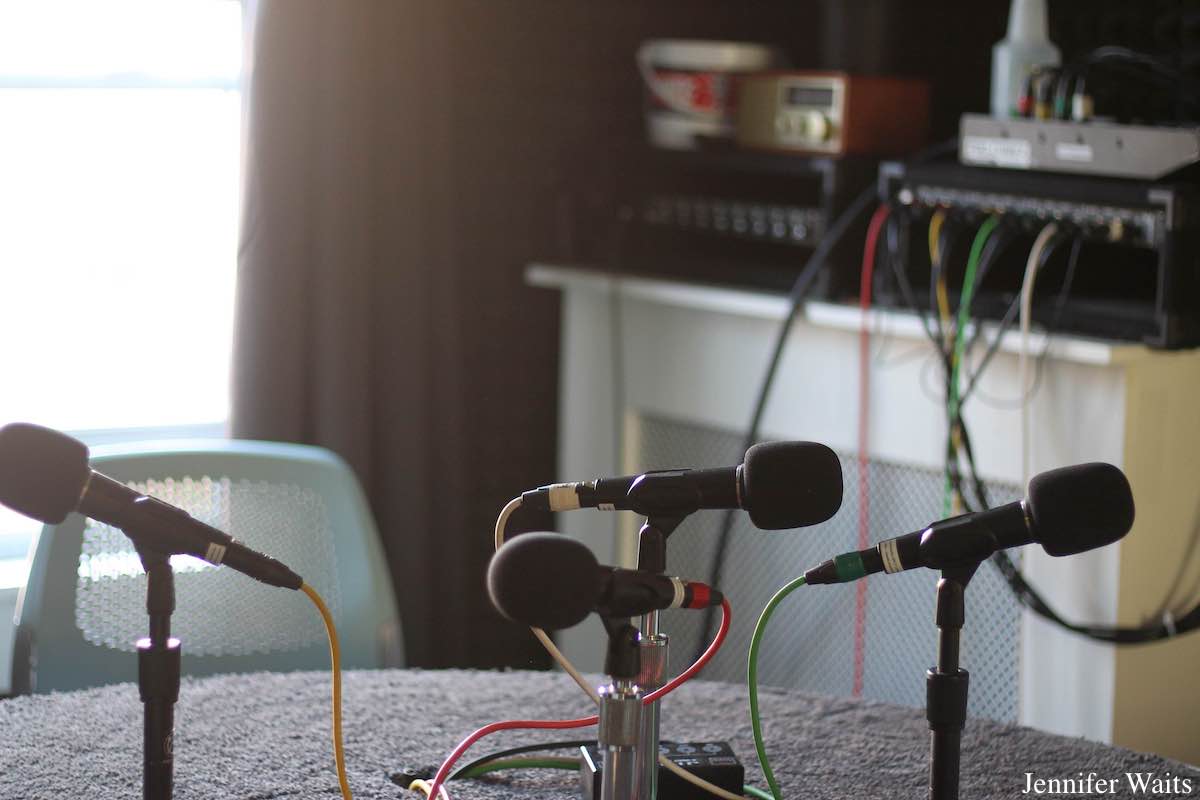
Another interesting and long-running program (since 1994!) at WMPG is Blunt Youth Radio, a Thursday evening show that features young people from the community. A free after school program, Blunt Youth Radio, invites Maine high school students to produce radio and podcasts from a dedicated studio at WMPG.

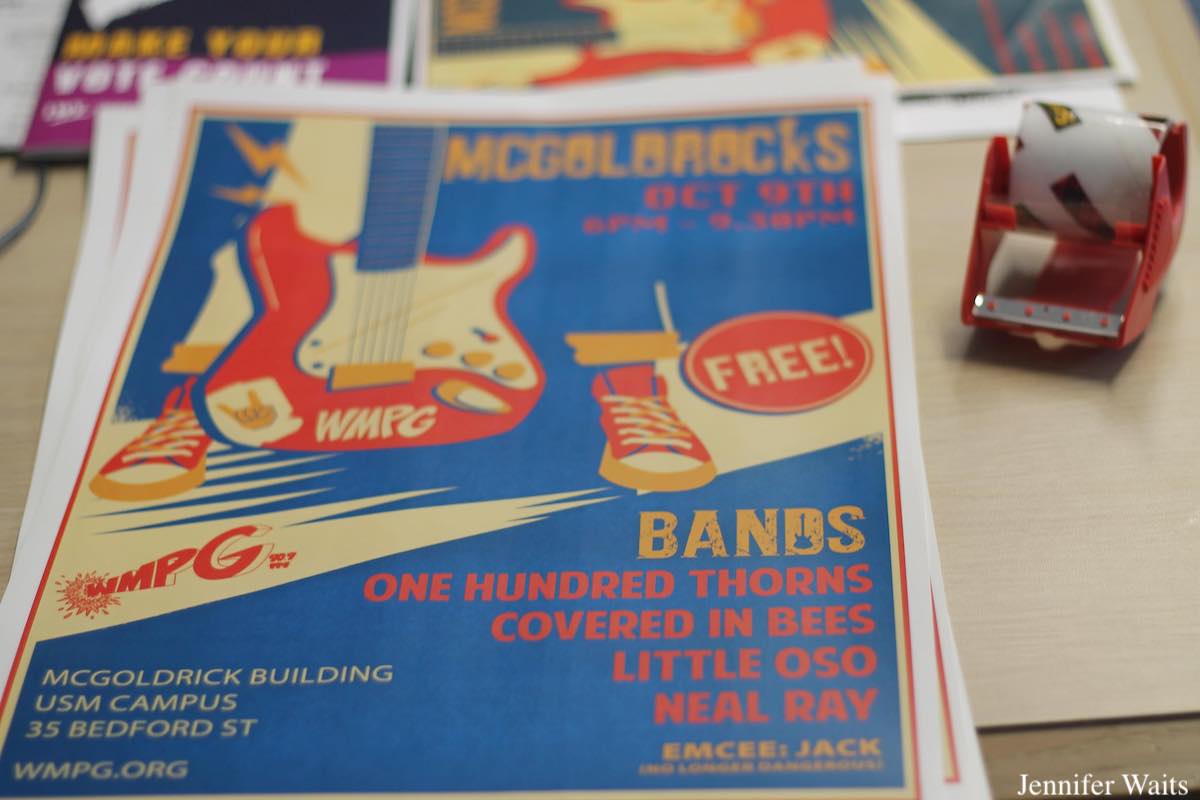
Live music in the studio and the youth radio programming are a couple of ways that WMPG brings the community in to the station. On the flip side, WMPG also does events in the local area, including live Friday night broadcasts, Freaky Fridaze, from various venues. For October 2025, WMPG DJs played music live from a craft brewery in Portland.
Record Library Reorganization in the Works
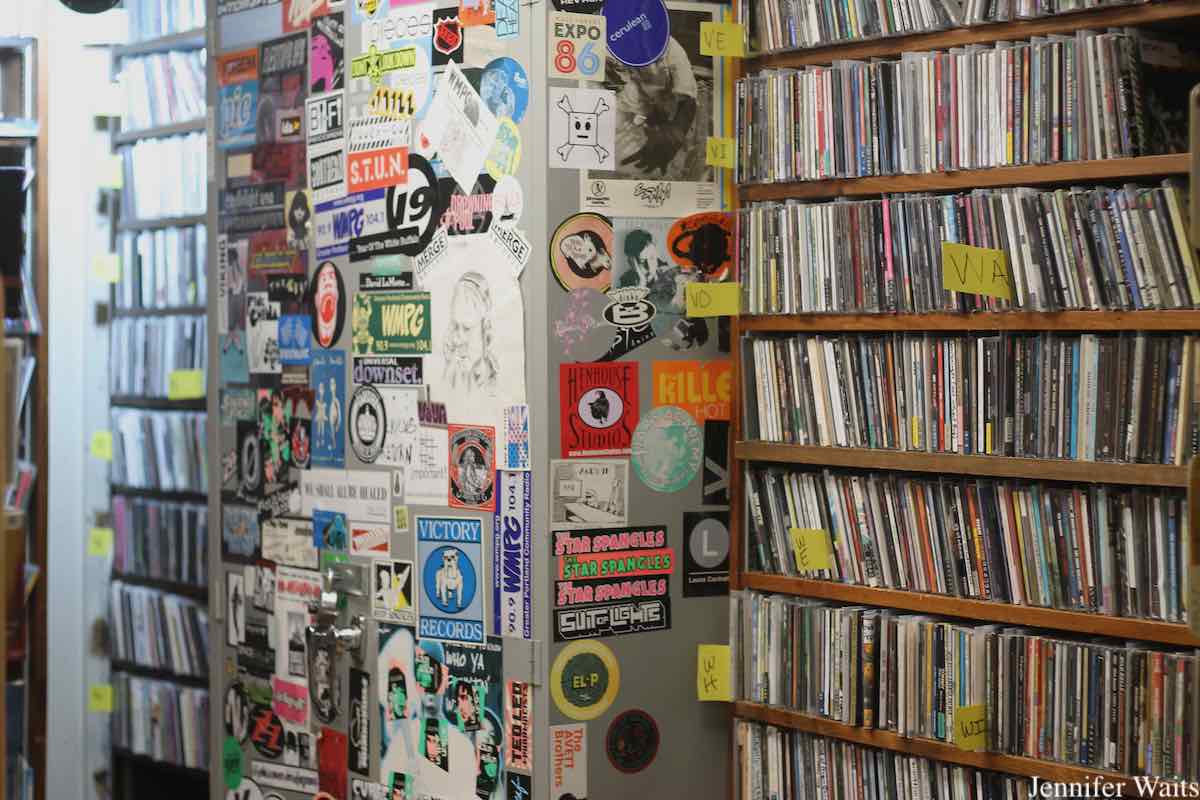
Like many of the stations that I visited this fall, WMPG is in the midst of reorganizing its physical music collection. While there was music throughout the station, the basement is home to a large media library of CDs and vinyl. On the way down to the packed space, I was charmed by a door nearly covered with radio station stickers. As an aficionado of radio station stickers, I appreciate the effort to consolidate all the radio stickers in one place. I was told that they were mostly collected at NFCB (National Federation of Community Broadcasters) conferences over the years. Impressively, stickers spanned the entire United States, representing stations from places far from Maine, including Alaska, Hawaii, California, Washington, Wisconsin, and more.
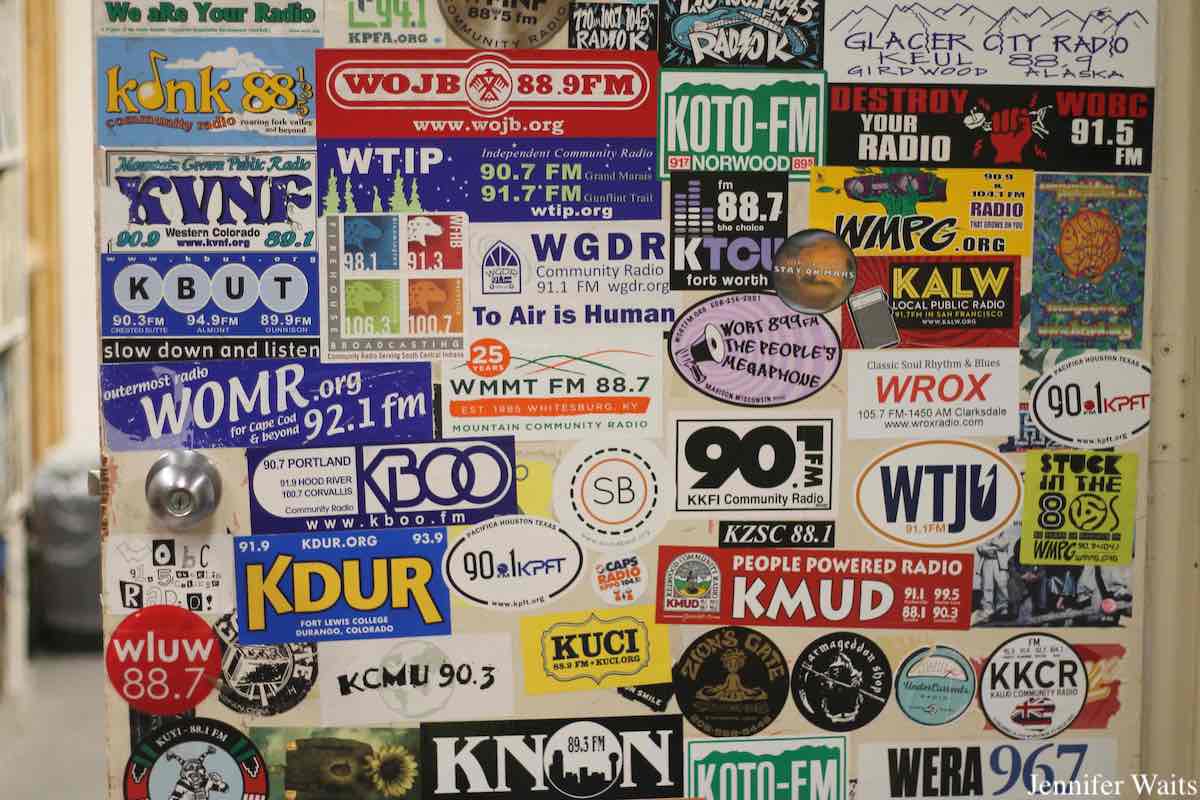
Rogers-Berry explained a bit about the current CD reorganization project, telling me that WMPG is working to cull about 60% of the CD collection. He said that in the past the library was filed chronologically and in an effort to save space, CD jewel cases were replaced with thinner sleeves. As the years went by, it became clear to WMPG that the thinner cases made finding music quite difficult. So now, the plan is to bring back jewel cases so that the library is browse-able. He told me that by reducing the size of the collection, the desire is to have a “curated” and “usable” library as opposed to one that is “comprehensive.” Station volunteers with expertise in various genres are doing the decision-making regarding what music is culled. “We’re going from a museum to a library,” noted Station Manager Jim Rand, as we chatted in his office at the end of my visit.
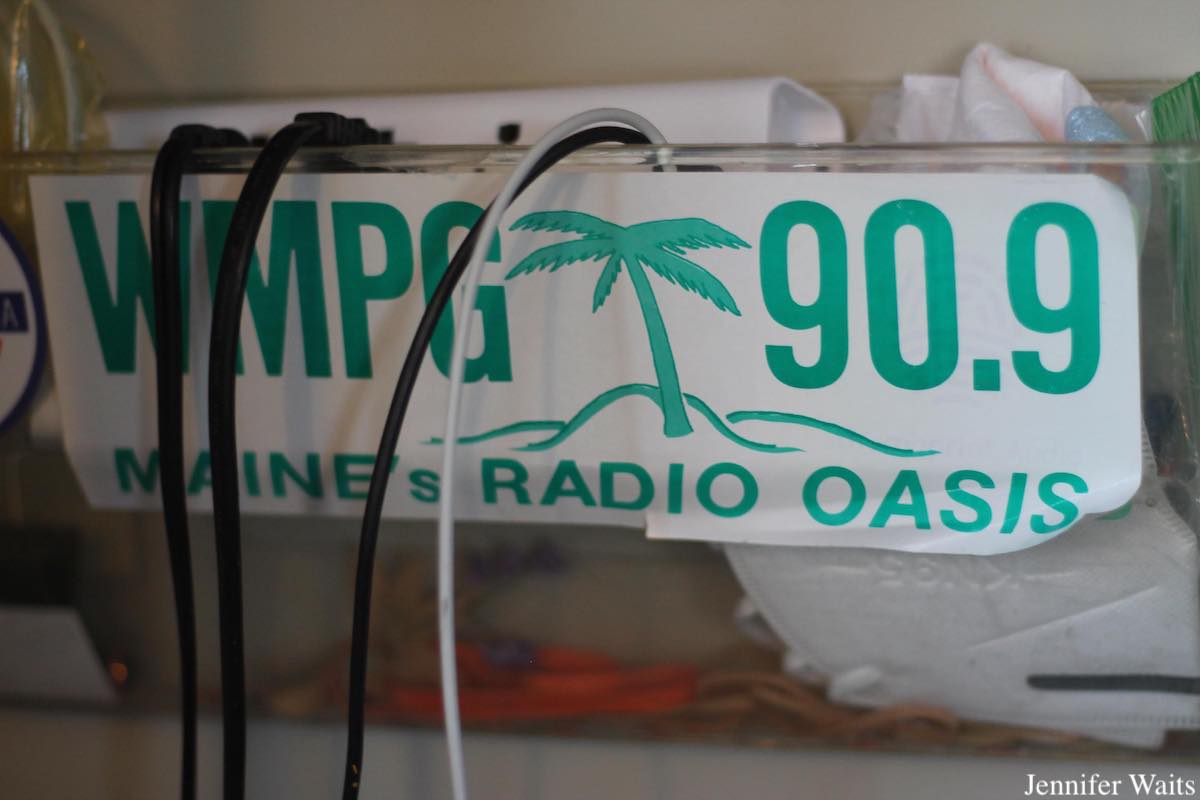
Although a portion of the CD collection is leaving the station, WMPG is working to preserve other objects and ephemera related to the station’s history. Rand shared with me a scrapbook created by WGOR/WMPG founder Howard Allen, which was full of amazing photos, clippings and artifacts from the early days of student radio at University of Southern Maine (USM). Other materials have been preserved on campus through the USM Digital Commons. As we spoke, he pointed to the an early WMPG bumper sticker that reads “Maine’s radio oasis,” which was affixed to his office door.
Thanks to WMPG + Full List of Station Tours
Many thanks to WMPG for the tour! This is my 181st radio station tour report and my 123rd college radio station tour. You can view the entire collection of my radio station visits in numerical order or by station type in our archives.