Posts Tagged ‘tv’

Radio’s Starring Role on New TV Series “Life Unexpected”

Portland DJ Cate of K-100

Last night I checked out the premiere of a new television series on the CW called Life Unexpected, largely because one of the main characters is a radio DJ. Additionally, it’s a teen-centric drama, so right off the bat the show is hitting at my pop cultural sweet spots.

[If you're planning to watch the show and haven't caught the first episode yet, then you may want to read this post later, as I reveal plot details below.]

The show opens with a shot of VU meters ticking away as we hear the sounds of a morning talk radio show in Portland, Oregon.

We eventually see the innards of the studio and get to spy on DJs Cate (played by Shiri Appleby of the long-departed teen show Roswell) and Ryan (Dawson Creek’s Kerr Smith), as they entertain listeners with their banter about relationships and marriage. Interspersed with scenes of the studio are shots of teenage Lux listening to the show on her radio (see…teenagers really do still listen to terrestrial radio!) as she gets ready for her day.

We soon learn that nearly 16-year-old Lux is in foster care, and we watch her as she tracks down her birth father. In hopes of becoming an emancipated minor, she asks her newly-found dad Nate for details on her mother. She’s surprised to find out that it’s Cate, the host of her favorite radio show.

In an effort to get in touch with Cate, Nate calls in to the morning show and his call works to reveal the sordid details of his Zima-fueled hookup with DJ Cate back in high school. Embarrassed by the on-air revelations, Cate leaves the studio to meet Nate in the station parking lot where she ends up becoming reunited with her daughter Lux.

The family reunion is not without its drama and after some not-so-unexpected twists, we witness a touching scene that actually reveals the power of radio. Lux tells Cate,

“You don’t realize you were there. On the radio. When everything else in my life kept changing. I could count on you every day. People are just…so scared…to tell the truth…You…you just put it all out there. You say the truth.”

In the opening episode, Cate’s radio shtick is that she’s a commitment-phobic, cynical thirtysomething. She and her co-host relentlessly tease each other on-air while never revealing to listeners that they’ve been in a romantic relationship for 2 years. Yet by the end of the hour we see Cate taking Lux in to her home and accepting a marriage proposal from her radio show co-host Ryan. As clips from the upcoming episodes hint at; the morning talk show may end up being the place where Cate begins to reveal more and more personal truths.

It’s not surprising that often TV depictions of DJs are in the form of talk show hosts (vs. music DJs) since this can become an easy way for writers to reveal the feelings and motivations of their characters. We’ll have to wait and see if this particular glimpse of the radio world on Life Unexpected catches on with viewers. I’ll also be curious to see if radio retains its starring role as the series progresses.


DJs in Peril: Radio Horror on Film

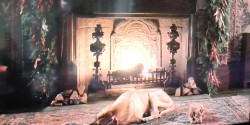
Being a DJ Can be Scary

Being a DJ Can be Scary

I’m one of those geeks who does TiVo searches using “radio” as my key word in order to ensure that I’m not missing an interesting radio-themed pop cultural moment. For some reason this week’s television listings offered up a bounty of radio nuggets, from the classic 1990 teen angst film Pump Up the Volume, to the 1987 retro-themed Woody Allen film Radio Days.

There were also a handful of children’s animated series with radio themes, including:

Postman Pat: in which “children put on a radio show at school”

Edgar & Ellen: watch as “Ellen becomes a mystery pirate DJ”

Beavis & Butt-head: tune in to see “The boys become disc jockeys for the day”

But what really caught my eye were the horror movies and thrillers set in radio stations. Premiering today on The Movie Channel, this year’s straight-to-DVD release Dead Air promised a “radio station fighting for survival” amid a terrorist attack.

Additionally, a 2001 episode of the series Night Visions called “Dead Air” aired this week, in which a late night radio shock jock deals with horror following some creepy calls. 1994’s Radioland Murders was also broadcast this week, with its tale of murder amid the launch of a new radio network in 1939.

Although horror can take place in any setting, there’s something particularly scary about the presence of a late-night DJ alone at a radio station. As I read the synopses for a few of these films and episodes I couldn’t help thinking about Play Misty For Me, in which a crazed caller is every DJ’s worst nightmare. With that, here are a few horror movie selections that will keep graveyard DJs awake at night:

1. Play Misty for Me (1971): Clint Eastwood directs and stars as late night DJ who is being stalked.

2. Dead Air (1994 made for TV movie): Gregory Hines stars as the DJ and a caller might be a killer.

3. Dead Air (2009): Late-night talk radio DJ holds down the fort at a station during a terrorist attack.

4. Radioland Murders (1994): Death abounds during the launch of a radio network in 1939.

Can you think of other representations of DJs in horror films?


Chicago Public Radio Calls Out LPTV Stations Exploiting Backdoor to FM Dial

Far outside the view of the general public, the virtual cratediggers of the FCC’s electronic recesses like Matthew and myself are sometimes privy to the little slap-fights that go on between broadcasters. In this case things are getting a little heated over the far left end of the FM dial, with a prominent public radio station calling out LPTV broadcasters exploiting the channel 6 backdoor to the FM dial.

As I’ve been already reported, the FCC recently ended restrictions on the use of FM frequencies adjacent to TV channel 6– 87.9 to 88.5 FM–in markets where former analog channel 6 stations went digital and changed channels.  Now, National Public Radio has petitioned the FCC to open up these frequencies everywhere, even in markets where digital TV stations decided to stay on channel 6 or where there are grandfathered analog low-power TV stations.

NPR’s argument rests on a technical analysis concluding that digital TV signals are far more interference-resistant than analog, and that modern TV tuners are selective enough to make interference from FM negligible for even analog LPTV signals.

Predictably, fellow noncommercial FM broadcasters are lining up in support of NPR’s proposal, while the ABC network and the National Association of Broadcasters have filed comments in opposition, calling into question NPR’s engineering data. There’s a few sparks coming from these opposing comments, but the real fun is buried in comments from Chicago Public Radio.

Without naming names, CPR  pointedly complains,

LPTV stations have begun to invade FM radio, broadcasting audio signals that were licensed for TV broadcast as if they were commercial radio stations on 87. 7 MHz. Not only are these signals inappropriately being broadcast as radio, they are also bleeding 24·hour dance music, with commercial advertising, over into the noncommercial stations that are on the lower NCE FM channels. Like squatters moving into recently-vacated homes, these LPTV stations are, in effect, intentionally broadcasting commercial radio which spills over onto the reserved portion of the FM band, trespassing on the limited territory of their noncommercial neighbors. Before this phenomenon becomes entrenched, the Commission owes the public, as well as public radio stations, a reasoned consideration of this problem.

(more…)


Schenectady DTV Abruptly Closes Its Backdoor to FM Dial

To some it may seem like I’ve been beating a dead horse over the TV channel 6 on FM issue, but I can’t help but be fascinated with TV broadcasters taking such pains to be on what so many observers say is the dying medium of radio.

In my second missive on the channel 6 radio phenomenon back in June I took note of Schenectady New York’s WRGB-TV. That station’s director of engineering made clear his intention to keep WRGB’s analog audio signal going even after the digital transition.

Now some ten weeks after the June 12 analog shutoff WRGB’s little experiment has come to an end. According to a brief statement posted to the station’s website dated August 24, general manager Robert Furlong acknowledges that this digital TV station has no authorization from the FCC to continue an analog broadcast on the FM dial, and announces the FM broadcast has been turned off, “effective immediately.”

I’ve not turned up any additional explanation for killing it so suddenly. My guess is that the station got a pretty firm message from the FCC reminding them that the license to broadcast an analog signal of any kind expired on June 12. I can’t see how WRGB continuing its 87.7 FM broadcast can be seen as anything but unlicensed operation, which would earn any other unlicensed broadcaster an FCC nastygram, at the very least.

Furlong also says that the station management “reviewing our options,” though I can’t really imagine what those options might be. They could petition the FCC to let them resume the analog broadcast, but that’s a very long longshot. Or perhaps they could reach an arrangement for simulcast with a desperate local radio station. Yet that option quickly gets complex, since I’m certain all of WRGB’s network affiliation and syndication agreements are for TV broadcast only. Adding a real radio simulcast would likely require renegotiating all of those contracts.

The appearance of analog TV’s channel 6 on the far left end of the FM dial was not designed in. Rather it was a happy accident which provided some listeners with an extra channel of programming and some other broadcasters an opportunity to sneak onto the FM dial. Like many such accidents, it might have been good while it lasted, but the sun seems to be setting for channel 6 on FM.


Channel 6 Radio Backdoor No More Lucrative than Plain Old Commercial Radio?

Last month I wrote about a few legacy analog channel 6 low-power TV stations operating as radio stations, taking advantage of their audio program butting up against the low end of the FM dial. One of the pioneers is New York City’s Pulse 87. However it seems as though the backdoor to the FM dial may not be so easy to keep open.

Arcane Radio Trivia alerted me to Pulse 87’s call to listeners to donate to the station in order to keep it in good stead with creditors. Nevermind that Pulse 87 is a commercial station (ostensibly operating in the noncommercial part of the dial at that).

As of July 21 it looks like loyal listeners came through with the much needed cash, gaining the station “a reprieve from some of our creditors” and the opportunity “to attempt to raise money through more conventional means.” The station also promises to return the donations, presumably once replacement capital is raised.

I’m not really sure what to make of this situation. Commercial media is having a hard time, whether broadcast, internet or print, so I’m hesitant to place blame on the weakness of radio or the channel 6 LPTV method. We have no idea what the books at Pulse 87 look like, so it’s hard to say whether the culprit is insufficient revenue, poor management, or some mixture of both.

However, I do think it’s safe to say that the particular dance music format of Pulse 87 has tapped into some kind of loyal niche audience otherwise insufficiently served by other stations. The real test will be whether or not Pulse 87 can keep up the quality of the programming that keeps a loyal listenership in the face of cashflow problems. The temptation to cost-cut by automating and embracing other Clear Channel tactics may be too strong, even if that’s the surest route to undercut the qualities that make the station unique.

Perhaps the station would be better off going non-profit and relying on its listeners who’ve apparently already demonstrated a willingness to cough up bucks to keep Pulse 87 on air.


FCC Taking a Look at BusRadio

Every day I learn something new about radio and today I was really surprised to discover that there’s an entire radio service called BusRadio that is piped in to school buses and reaches a million kids. They tout themselves as “a superior, age-appropriate alternative to AM/FM radio programming.” According to an article in the Denver Post:

“BusRadio is free to the school districts and is heard each day on more than 9,000 school buses in 24 states. The districts receive a small amount of money for allowing the music on their buses. There is different programming for elementary, middle and high school students.”

US News and World Report picked up the story this week and goes into more detail about the service:

“…BusRadio sends music, contests, public service announcements, and commercials over the Internet to school district servers, which then forward the programming to buses using wireless transmitters.”

What’s controversial is the fact that BusRadio airs commercials and may not be playing age-appropriate music, according to detractors.  The Post article explains that Congress has initiated an FCC review:

“Supporters say the radio content calms the kids on what can at times be a hectic bus ride.

But some parents say forcing their children to listen to commercials on the bus is akin to having their kids held hostage by corporate America. They also say the music is sometimes age-inappropriate.”

This definitely reminds me of some of the anti-Channel One (ad-supported TV news in schools) rhetoric from back in the day. BusRadio is fighting this backlash and has an extensive Q&A section called “Myth vs. Reality” on its website where it refutes many of these claims. Additionally, they allow parents to register on their website in order to listen to actual BusRadio programs that their kids may have heard.

Regardless, I’m never that thrilled about forcing kids to listen to commercial radio. But the whole brouhaha does bring back memories of my junior high school bus rides. We would plead with our driver to play the hot rock station and would feel so victorious if he complied. That was our bus radio.


Corporate Radio Gets a Little More Life after Michael Jackson’s Death

TV Coverage of Michael Jackson's International Radio Airplay

TV Coverage of Michael Jackson's Radio Airplay

I’ve been combing through the web trying to get a handle on how radio has responded to the death of Michael Jackson on Thursday. There’s much anecdotal evidence to suggest that radio listenership was up, as fans sought out his music and news about his death from the radio. However, as listeners turned on their radios and TVs (and the Internet) to hear the sounds and see the images of the pop icon at his best, not all stations were able to deliver great programming from the outset. As Matthew pointed out on Thursday, many commercial stations with automated programming weren’t in a position to provide Jackson-themed music and commentary as the news broke.

However, an article in the Boston Globe today, “Live Radio Takes the Lead: Canned Programs are Set Aside as DJs and Fans Celebrate Michael Jackson,” points out that the Boston airwaves did have some success in terms of satisfying fans. According to the piece: (more…)


Ideas and Lamentations for Channel 6

Following up on last week’s post about LPTV stations on channel 6 effectively turning into radio broadcasters I’ve been researching the topic a bit more. Turns out that full-power TV stations had the option to stay on channel 6 in their transition to digital, as I learned from this April article in TV Technology. Although their channel space still bumps up against the low end of the FM dial, the don’t retain their analog audio, and so are no longer heard on the radio.

Interestingly, Fred Lass, the director of engineering for Schenectady, NY’s WRGB-TV, tells TV Technology that he’s considering methods for continuing to have an analog FM audio broadcast alongside the station’s digital signal:

“We have a plan to continue operating on 87.7 after we go digital,” he said. “We think that it’s possible to operate with a vertically polarized analog FM audio carrier when we go back to ch. 6 for DTV. That signal will be horizontally polarized, of course, and there should be enough cross pol isolation to make it work.”

Lass admits that he really hasn’t tried this yet, but thinks it should work.

It never occurred to me that DTV stations would be permitted to continue broadcasting an analog FM audio signal, and I wonder if this is something that would require permission from the FCC.
(more…)


Is Twitter the New College Radio?

When I was a kid in the 1970s my parents would try to pry me away from the television, warning me that it was going to “rot my brain.” Yet, my dad also admitted to me that his parents made the same pronouncements to him about the dangers of listening to too much radio. Each generation seems to fear the latest technology and it’s almost cliched when parents demonize TV, video games, the Internet, Facebook, Twitter, and texting, when in fact these are all just new ways to communicate the same old stories, news, and entertainment.

I’ve been thinking a lot lately about how Twitter and Facebook are the new “radio” for the younger generation. It’s almost hard to believe that way back when we got our breaking news from the radio because today radio is often overlooked as a news source.

WHRC Studio 1987

WHRC Studio 1987

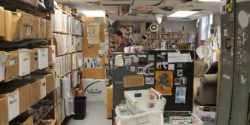
A few weeks ago I was at my college reunion and revisited the campus radio station WHRC. During my visit I talked to a lot of people about the station and the role that it played on campus in the 1980s. Everyone had bits and pieces of nostalgia to pass along, but what really amazed me was that several people had distinct memories of first hearing about the Challenger disaster in 1986 while listening to WHRC. At the time the campus-only station was piped in to the dining center and, in fact, the main WHRC audience was during meal times. So all of the people who I talked to were probably eating lunch in the dining center when they heard the news together about this tragedy.

Similarly, when Kurt Cobain died in 1994 (another defining tragic moment for my generation), the first people to mention it around my office had heard the news over the radio. However, this was also the first time that I remember hearing that the Internet was actually breaking news, as it was buzzing over word of Cobain’s death. This was during the early days of the Internet (I’m not even sure if we had email at my office yet), when those participating in online communities like The Well were trailblazing true hipster geeks. I’m pretty sure it was my friend’s sister who worked at Wired (a hip magazine about technology? Crazy!) who was getting some of these early reports on Cobain and passing the news along to those of us in technologically-deprived offices. (more…)