Radio Obsessive Profile #8: Beloit College Radio Historian Dave De Anguera

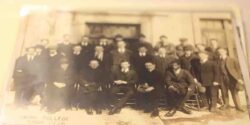
Professor Charles Culver at the controls, about 1910 (Beloit College Archives)

The early history of college radio has not been documented sufficiently and much of it is sequestered away in the archives of colleges and universities.

Last year I was thrilled to see Hugh Slotten’s book, Radio’s Hidden Voice: The Origins of Public Broadcasting in the United States, as it is one of the first publications to give credit to college radio pioneers in the very early days of radio.

Personally I’m invested in this, as I’ve done quite a bit of research to uncover the hidden history of radio at Haverford College, where I got my start in radio. Students at Haverford College built a radio station in the 1920s and achieved a great deal of press and attention for both the station and their radio experiments (including a chess match with Oxford students by radio).

While investigating the Haverford station’s history I’ve also run across a number of other histories of college radio stations, often compiled by students or staff members. One such history is Dave de Anguera’s book Ethereal Messages: A History of Beloit College Radio 1907-1994.

Radio experiments began at Beloit College with the arrival of Physics Instructor Charles Aaron Culver in 1907. During his time at the college he initiated pioneering work in radio and wireless, leaving in 1920 to join the faculty of Carleton College (where he was also instrumental in college radio). As Hugh Slotten pointed out in his interview with me, Beloit College held one of the earliest licensed stations at a small college, with WEBW, having its initial broadcast in October, 1924. Beloit’s current station, WBCR-FM, is still going strong today.

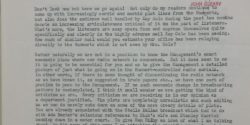
WEBW log - first entry, 1924 (Beloit College Archives)

I reached out to Beloit College radio historian Dave de Anguera, as I thought he would be a perfect addition to the Radio Obsessives series here at Radio Survivor. From my own experience, I know what a challenge it is to dig through the archives of college radio stations, in which history is not necessarily documented all that methodically.

In his interview, Dave shares with me why he was inspired to research the history of radio at Beloit College, his take on how the trials and tribulations of college radio today are similar to its struggles in the past, and provides some perspective about the role of technology in college radio in 2010.

Jennifer Waits: What prompted you to research and write the history of radio at Beloit  College?

Dave de Anguera: I’ve always loved radio and have been a lifelong history buff to boot. So, when I kept coming across information on WBCR’s history, and the fact that it stretched back so far, I couldn’t contain my curiosity any longer and thus started investigating further.  I eventually made a proposal to the college (with the support of Beloit College archivist Fred Burwell and Professor Carl Balson) for writing and publishing a book on the subject. (more…)


Ghost Story with Physics: Radio Drama Explores Wireless Pioneer

A ghostly wax figure at the Cork Gaol (Jail) and Radio Museum, Ireland

Coming up this weekend on the evening of Sunday, July 25th, BBC Radio 3 will be airing a 90 minute radio drama that explores the life of wireless radio pioneer Sir Oliver Lodge.

British physicist Sir Oliver Lodge transmitted radio signals in 1894 (before Marconi), studied wireless transmissions and also investigated psychic phenomena such as life after death.

This weekend’s radio drama is in part drawn from transcripts of seances in which Lodge communicated with his deceased son. According to the drama’s co-author, media historian David Hendy, the radio play “Between Two Worlds” is:

“…about Oliver Lodge, one of the ‘inventors’ of radio, and focuses on the  links between his work on wireless and the ‘ether’ and his personal interest in spiritualism: it’s a kind of ghost-story with physics - plus a bit of media history!”

There is something so magical and mystical about radio and the way it transmits voices from afar. It’s not surprising that a radio scientist would also be fascinated by the possibility of communicating with loved ones through the ether after they have passed on.


Radio Obsessive Profile #6 and #7: Jonathan Winter and John Jenkins of American Museum of Radio and Electricity

Folks in Bellingham, Washington are lucky to have an amazing resource for radio history right in their backyard.

What is now known as The American Museum of Radio and Electricity (AMRE) began in 1985 as the Bellingham Antique Radio Museum as an outgrowth of Jonathan Winter’s personal collection of vintage radios and radio-related objects. As his collection grew, he sought out a bigger venue and eventually joined forces with fellow radio collector John Jenkins.

With their move to bigger quarters in 2001, the museum’s name was changed to The American Museum of Radio and Electricity to reflect its now broader mission of presenting exhibits focused on a variety of scientific innovations. According to their website:

“Today, the Museum is dedicated to the interpretation of the relationship between the scientific exploration of electricity and the development of broadcast radio into its Golden Age—a story with immense cultural, historic, aesthetic, and scientific significance. Among the Museum’s current holdings are unique examples of early scientific instruments and 19th century electromagnetic apparatus, an outstanding collection of more than 10,000 vacuum tubes, and an authentic reproduction of the radio room on the Titanic displaying an original Marconi wireless set.”

The museum galleries contain interactive exhibits recounting nearly 400 years worth of innovations related to electricity and wireless, from the “Dawn of the Electric Age,” to the early history of radio, to the radio’s “golden” age. AMRE also houses more than 1000 radios, operates a low power FM radio station (KMRE-LP), and hosts science education classes for kids.

I talked to founders Jonathan Winter and John Jenkins in order to learn more about the museum and find out how their collective passion for radio inspired its creation. (more…)


Radio-Themed Book Art Exhibit and Vintage Radio Print Ads

Ginny Gordon and the Broadcast Mystery image from Feliks Banel

It’s hard for me to resist the lure of vintage books and I was pleased to see that our friend Feliks Banel posted a online exhibit called Radio with Pictures: Iconic Cover Art from Books about Radio on his I STILL Love Radio blog.

Feliks is a radio historian, so he’s managed to curate a lovely collection of images, ranging from radio history books from the 1920s, to collections of vintage radio scripts, to tomes about the use of radio during wartime, to first-person accounts from radio announcers, to some campy pulp novels with radio themes.

On a somewhat-related note, I recently ran across the highly addictive Vintage Ad Browser search engine. If you’re into retro radio imagery, try out the radio search and you’ll find some real gems. On their companion site, Cover Browser, there’s also a collection of 600+ book, magazine, and comic cover images related to radio.


Bay Area Radio Museum Saved, But Still Seeking Help

Bay Area Radio Museum Gets Reprieve

Bay Area Radio Museum Gets Reprieve

I was happy to read in Ben Fong-Torres’ Radio Waves column yesterday that the Bay Area Radio Museum has been saved.

As we reported earlier this month, the online-only museum had scaled back recently under mounting costs.

Well, not only has the California Historical Radio Society stepped up to provide some help; but the site’s hosting service also pitched in with some free bandwidth.

As with many ventures such as this, volunteer help is still needed and perhaps some of you radio fanatics out there might be willing to help with digitizing material, conducting research, and writing articles for the website. Of course they are also happy to accept cold, hard cash.

Take a look at the Bay Area Radio Museum’s website to learn more about San Francisco Bay Area radio history, listen to old airchecks, scan through vintage broadcast schedules, and peruse individual station histories (along with tales, photos, and miscellaneous artifacts).


Bay Area Radio Museum’s Uncertain Future

Bay Area Radio Museum

I think it’s extremely important to honor radio’s history, so I’m always impressed when there are folks out there who are actively working to support that cause.

The Bay Area Radio Museum has been a labor of love for its Executive Director David Ferrell Jackson for the past 5 years. This online museum is an amazing place to learn about the history of radio in the San Francisco Bay Area. You can check out profiles of DJs from days gone by, peruse station histories, and look at vintage photos. Previously there were also links to old airchecks, but due to the high cost of bandwidth, Jackson has decided to scale back until he obtains outside help.

As Ben Fong-Torres reported in his “Radio Waves” column in the San Francisco Chronicle today, Jackson will continue to maintain the website, but has taken down media-rich material (like audio archives):

“Beyond volunteers – ideally skilled radio and broadcasting students at local schools – Jackson wishes the museum could attract a chief executive officer ‘to run it and get volunteers and financial help.’ And, he said, to develop a plan ‘to assure that these recordings, photographs and documents will be collected, stored and displayed in a manner befitting a world-class media museum.’”

In addition to the online museum, Jackson also spearheaded the “Bay Area Radio Hall of Fame,” whose most recent inductees were honored at a ceremony on September 29th.

It’s sad to think that this might be a sign of radio’s decreasing relevance to not only listeners, but also to museums, funders, and cultural institutions. I’m hopeful that someone will step up (another museum? a broadcasting-oriented university’s library?) to help out so that this history is properly preserved. With such a rich history, the San Francisco Bay Area deserves a Radio Museum.

But I guess the question remains: if it opens (even online), will people come?

For those of us who do care about radio, it’s important to support efforts like this; so I’d encourage you to take a look around the museum and see how you can help.

My dream is that the museum will survive and that it will expand into non-commercial territory, doing more extensive profiles of some of the amazing college, community, low-power, pirate and public radio stations that are also on our jam-packed radio dial in the San Francisco Bay Area.


Radio History Imprisoned at Cork’s Radio Museum Experience

Radio Museum at Cork City Gaol Heritage Centre, Ireland

Radio Museum at Cork City Gaol Heritage Centre, Ireland

Along with my obsession for radio I also have a special place in my heart for wax museums; so imagine my glee when I discovered the bounty to be found in Ireland at Cork’s Radio Museum.

One of my first stops during my vacation to Ireland last month, the Radio Museum Experience is located in the Cork City Gaol Heritage Centre. The gaol (or jail) opened in 1824 and housed prisoners until 1923. After the inmates left, radio set up shop on the old jail site.

Beginning on April 25, 1927, radio broadcasting began on the premises in the Governor’s house. The early station, 6CK, became part of the national radio network of Ireland: Radio Eirann (later Radio RTE) and broadcast from the old jail until the 1950s. (By the way Radio RTE has a portion of its website devoted to history of the network’s public service broadcasting, including photos from the 1920s.)

Wax Figures at the Cork City Gaol

Wax Figures at the Cork City Gaol

My trip to Cork’s “Radio Museum Experience” began with an audio tour of the jail; complete with cells filled with creepy wax figures.

As we ended that tour and returned the old school museum-issued cassette player/headphone combos we asked about the radio museum. We were told that it was closed because it wasn’t working. After we explained that we were there mainly to see the radio museum, they invited us upstairs to check it out.

I thoroughly enjoyed poking around the Radio Museum. I’m not entirely sure why it was closed, except for the fact that lighting was dim in places and some of the audio components weren’t working.

Radio Museum Artifacts

Radio Museum Artifacts

On display were collections of old radios, vintage broadcasting equipment, and a re-creation of the original studios of station 6CK. You could also catch tidbits of old radio broadcasts, see a map of early broadcasting stations from around the world, and read about the history of radio in Ireland. A bonus for me was seeing the corpse-like wax figure propped behind the board in the old studio.

Radio Museum Experience in Cork

Since I’ve been reading a lot about radio in the 1920s recently, my visit to the Radio Museum in Cork was timed perfectly for historical reflections.

I’m glad to see that these artifacts are being preserved and that there’s an opportunity for people to take a look at Irish radio history.

But it also saddens me that the exhibit wasn’t really open to the public. Hopefully it will be up and running again soon for all to enjoy. Otherwise it becomes yet another example of radio increasingly fading away from view.


Radio Obsessive Profile #2: Jose Fritz’s Arcane Radio Trivia

Jose Fritz's "Radioman" Profile Picture

Jose Fritz

I’m awed by all the radio enthusiasts, collectors, historians, and scholars out there; so I’m going to try to feature some of my favorites on Radio Survivor in a new feature called Radio Obsessives.

I didn’t realize it at the time, but my interview with Garrett Wollman about his fascination with radio towers is what prompted me to begin this quest to profile radio obsessives; simply because I love talking to other radio fans about radio.

“Jose Fritz” lives for radio and regularly blogs about radio factoids from the olden days on his blog Arcane Radio Trivia. In many ways I’ve found a kindred spirit in radio reportage, as Jose is also a fan of non-commercial radio and continues to remain optimistic about the future of college radio.

Interestingly, he’s opted on his blog to focus entirely on the past, avoiding “topical” stories for the most part. Consistently writing an impressive 5 posts a week, he’s covered everything from the long-forgotten radio show “The Fleischmann’s Yeast Hour,” to WXPN’s scandalous student radio past, to James Brown’s career as a radio station mogul, to little-known radio pioneers like Reverend Jozef Murgas.

I had an email chat with Jose Fritz to learn more about his radio obsession and to attempt to peel back some of the layers of his secret identity. I can tell you that he’s an engineer by day, is a blogger by night, has a music and radio past, and writes a fun and educational blog. On to the interview:

Jennifer Waits: When did you start Arcane Radio Trivia and what prompted you to begin writing the blog?

Jose Fritz: I began Friday, May 13th 2005. I decided one day maybe a few weeks prior that I needed a structure that would compel me to write more regularly.  I gave myself a set of strict rules and started that Friday. It’s been 5 posts a week since then for 220 weeks; that’s 1047 posts not counting today.  I keep thinking I should edit and compile them into a book.

I though it would make my other writing more productive. I was wrong.  I did write more, but I wrote more about radio, instead of becoming a writing exercise it became a consuming hobby.  I still manage to get the rest of my writing done, but I often end up posting after midnight. (more…)


Garrett Wollman’s Radio Tower Quest

WLS Radio Tower Photo by Garrett Wollman

WLS Radio Tower Photo Copyright 2004, Garrett Wollman from The Archives@ BostonRadio.org.

Fandom is an amazing thing and thanks to the Internet it’s easier and easier to find like-minded obsessives who share one’s passion for the most obscure objects, idols, and idiosyncrasies. Radio is no exception. Loads of websites document radio history, with nostalgic archivists collecting ephemera, airchecks, and reminiscences from San Francisco to Boston. Various forums also exist, like those on Radio-Info.com, allowing listeners and industry types to talk shop and share current radio gossip.

And then there’s Garrett Wollman. I recently ran across some of his photographs of radio towers and was fascinated. As part of his work with The Archives @ BostonRadio.org, he’s been traveling around the country meticulously photographing every radio tower that he can find. Sometimes he even ventures into radio and television stations; but for the most part it’s the outside architecture and landscapes that he finds so compelling.

In order to learn more about this project, I contacted Garrett to get the scoop about his love for radio towers and his work to help document the history of radio and television. I was surprised to find out a couple of things: 1) Garrett’s a young guy—a rarity in radio history circles and 2) He’s not a big fan of current radio offerings. After chatting with Garrett, I also was made aware of pursuits like DXing and county counting, making me realize that there’s so much more to the radio scene than I ever realized. On to the interview: (more…)


Radio’s Murder of Music

I’m on a quest to document the early history of my college radio station WHRC, which began in the 1920s as a Haverford College Radio Club station known as WABQ. As I was doing a quick search for material today, I found a goldmine of vintage radio information on David Gleason’s website. For one thing, he’s painstakingly scanned old radio magazines like Broadcasting Magazine and Broadcasting Yearbook, as well as old radio guides listing radio stations of the day. The Haverford College station WABQ appears in some of these lists, going as far back as 1924. And, interesting to me, there are plenty of other college stations listed during this era as well.

But the thing that was really fun to find is from the October 15, 1935 issue of Broadcasting. In an editorial called “Murder of Music,” publisher Martin Codel writes about an “ASCAP…propaganda campaign against broadcasting.” Wow. Sounds like 2009! Here’s more text from the editorial:

“In a publicity release issued this month, ASCAP asserts that ‘murder of music’ by radio was accomplished last year when the 85 leading tunes of the year were played 1,255,669 times by the two principal networks. About two years ago ASCAP issued a propaganda blast titled Murder of Music in which it set out to prove that radio had killed sheet music, phonograph record and other musical instrument sales.”

The editorial goes on to point out that ASCAP is arguing that radio should pay up in order to make up for the loss of sheet music sales. And, it also brings up the age-old practice of pay for play:

“ASCAP does not recite in its handout the well known fact that radio tends to popularize the works of composers. Moreover, it does not bring out that composers and publishing houses are constantly plaguing the networks, stations and performers to ‘plug’ their numbers. Innumerable cases of bribery of orchestra leaders and performers have been exposed.”

The more things change, the more they stay the same.