Modern Day Mix Tapes: What’s Next after the Cassette?

Radio Show to Mix Tape

For me, mix tapes and radio shows have a lot in common; as they both make an attempt to compile a collection of pieces of music in order to share a particular mood, highlight a specific genre, or communicate a special message to listeners (or to the object of one’s desire).

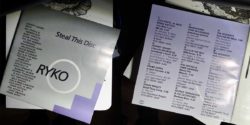
I used to do thematic radio shows, often with hidden messages (intended for my crush) and it was very much like a public mix tape for me. After my show I would dub a cassette copy, craft case art and jot down track names and titles before presenting the mix to the one who I was trying to impress.

A few years later I took my mix-making to the online world, penning playlists for a start-up called Uplister. What made that site unique was that our playlists had room for liner notes built in next to each track. Although we only had 30 second sound clips for each piece of music, what really brought the lists to life were the accompanying narrative written by each playlist-maker. Suddenly mix tapes compiled after a break-up took on new meaning, when the story was shared along with the music selections.

At the time (2000-2001) we had big plans for Uplister, with our founders boldly proclaiming that the playlist was the “next unit of global music consumption.” I’m not sure that’s happened, but playlists have become a common method for people to understand and group music from their collections.

Brown University graduate student Ben Nicholson takes a look at the modern day mix tape in his paper, Playlist: 21st Century Mix Tape, published in a recent issue of Technomusicology: A Sandbox Journal. Ben writes about how music collecting and sharing has changed since the advent of digital music, arguing that:

“Music has largely moved from the shelf to the hard drive in the 21st century. Digitally-encoded mp3s have made the storage and transportation of music more efficient and, once one has acquired a computer, less expensive than ever before…Ten years ago, a CD collector might sort their music collection by hand, organizing their CDs into an alphabetized archive located either on a shelf or in a CD tower. The acquisition of a new CD could require a reorganization of the entire collection in order for the CD to physically fit into its proper place…For an mp3 collector, however, these organizational headaches are remedied by software; iTunes will sort all of your music for you.”

I was also interested in Ben’s discussion about technologies that attempt to replicate personalized mix tapes, including Apple’s Genius Mixes. He writes that an evaluation of software that attempted to group playlists thematically found that:

“Listeners preferred playlists with an organizing principle, playlists that were more like mix tapes…Though it is unlikely that automated mix software and corporately sponsored playlists will replace manual/amateur mix construction, the fact that software developers are attempting to perfect their playlist algorithms and that iTunes is opening a playlist market indicates that the concept of the personalized mix is important to digital music distributors.”

What do you think? Do computer-generated mix tapes hold the same allure as a mix tape passed from person to person? Is it the one-to-one connection from sender to receiver that makes for the power of the mix or is the collection of songs enough? And how do services like Pandora fit into the equation? Or hand-curated radio shows for that matter?

Although it makes sense that music recommendation services would attempt to replicate hand-made mixes, I can’t imagine that people will be wooing potential mates with Genius Mixes or Pandora playlists or that those lists will end up in shoe boxes along with old love letters. But then again, in decades to come the artifacts of a courtship may all be housed in digital files or on remote servers. Yesterday’s ticket stubs, photographs, and saucy letters written in cursive will probably be replaced by files full of racy text messages, You Tube videos chronicling first dates, and romantic blog posts.


The decade’s most important radio trends: #13 College radio tightens its playlist

#13 in our series on radio trends of the decade

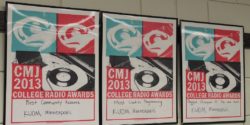
Although college radio as a rule is much more diverse than commercial and public radio stations, there’s been a trend in the past decade for many stations to create a more focused identity surrounding a specific style of music. In some cases this is done with the help of professional consultants and paid staff members; whereas in others, it’s simply due to a rigid (and perhaps lazy) mirroring of playlists from other college radio stations.

In 2001, University of Washington station KCMU was transformed into KEXP after an infusion of cash and equipment from The Experience Music Project in Seattle. The station moved off campus and has a more specific music focus than when it was a student-run station.

Some stations, like WERS at Emerson College, have opted to adopt formats more familiar to commercial and public radio listeners. In 2006 they switched to AAA (adult album alternative) programming during the day, moving specialty shows to the evening and weekends.

In August 2009, University of Nebraska station KRNU modified its format in order to appeal more to college-age listeners. Changes at that station included a narrower playlist of indie/alternative music and a shifting of specialty music shows to a new web channel. The new web channel serves to play the more experimental sounds that their terrestrial station used to play.

Rochester Institute of Technology station WITR recently reduced the number of specialty music shows so that they don’t comprise more than 25% of the station’s schedule and is cutting down the number of slots available to non-student DJs. Many speculate that this is also part of a bigger mission to narrow their playlist into a more standardized rock format geared towards college students. Their current format is described as “Modern Music and More.”  Similarly, Vanderbilt University station WRVU is also putting a limit on the number of non-student DJs.

With college radio under much more scrutiny from administrators, many of these changes may simply be out of fear that a school may abandon, sell, or cede control of its radio station if few students listen or participate. In the process, though, some stations may be losing their edge and what really differentiated them from mainstream radio to begin with.


100% User-Controlled Radio?

In his post about Pandora yesterday, Matthew mentioned that he’d like to see a different model of radio on the Internet, where both listeners and DJs have some sort of control over the music selections. Well, we’re definitely in an era full of user-generated content and of success stories like American Idol, where fans vote for their favorite performers and play a role in who wins the big prize. So, it’s no surprise that traditional radio is starting to experiment with giving listeners a chance to control the playlist.

San Francisco commercial radio station Live 105 just launched a show on June 28th that airs on Sunday nights from 10 until midnight which is being touted as “100% User-Controlled Radio.” Listeners sign up for a service called Jelli in order to help formulate the playlist. According to Jelli’s website:

“Jelli is 100% user-controlled radio, enabling users to take over a radio station using their web browsers. Leveraging the power of the web to reinvent traditional broadcasting, Jelli empowers the community to interact with the broadcast in real-time and determine dynamically what plays on the air.”

I signed up for Jelli and have to admit that I was excited about potentially being able to re-shape Live 105’s playlist. However, as you might guess, the song selection that I had to choose from limited. I scanned through the choices trying to shake things up a bit by voting for all of the more obscure bands and for the genres that are outside of Live 105’s current playlist.

Amid all of the expected rock tracks from Green Day, AC/DC, and Rancid, I was surprised to see some wild card song options including soul, reggae, Tom Jones, Bee Gees, jazz from Miles Davis, country from Willie Nelson, hip hop from Jurassic 5, Run DMC, and a Tribe called Quest. There were even selections from college radio favorites like The Cramps, Vivian Girls, Squirrel Nut Zippers, American Analog Set, Sonic Youth, Galaxie 500, Sleater-Kinney, Dead Can Dance, !!!, Nick Cave and the Bad Seeds, Diamanda Galas, Casiotone for the Painfully Alone and old punk like Agent Orange. So, I wonder. If all the indie kids got on here and voted for a list of non-mainstream stuff, could we have a Sunday night commercial radio show that was both listenable and unexpected? I’d love to see that.

(more…)