DJ Chairman Genachowski Throws a Few Bones to Radio at NAB

DJ Genachowski

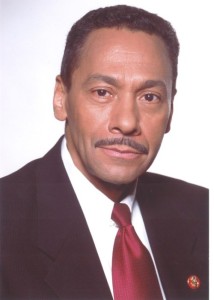
The National Association of Broadcasters wraps up its annual national trade show in Las Vegas tomorrow. Radio has its own annual show, so at the big one it tends to take a back seat to television when it comes to big announcements. Nevertheless, when FCC Chairman Julius Genachowski gave his remarks [PDF] to the crowd on Tuesday, he had a few things to say about radio.

First, the Chairman revealed his own secret radio past, telling attendees that he was “a radio DJ while in high school, spinning disks — literally — on an old carrier current station.” I must note that means young Julius was actually broadcasting without a license. But I also presume his high school station operated legally under Part 15 rules for AM carrier current, which also kept his signal confined to school grounds.

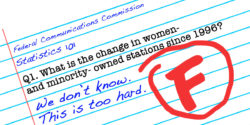
Genachowski laid out the statistic that “radio has actually grown its over-the-air audience by almost 10 percent over the last decade.” If accurate that about matches the growth in the US population over the same period (based upon the Census Bureau’s current population estimate of 309,069,148). He also touted a couple of the bones the Commission recently threw to the radio industry, authorizing the HD Radio power increase and allowing AM stations to have translator repeater stations on the FM dial.

Genachowski used most of his time to defend the FCC’s controversial proposal to ask TV broadcasters to sell back some spectrum space to be repurposed for wireless broadband. Still, he did make a nod towards the upcoming ownership rules review, saying that the Commission will issue a Notice of Inquiry “soon.” At the moment its up to tea leaf readers to decipher what will be up for consideration. Genachowski’s only comments on the rules review amounted to vague pronouncements of respect for “the traditional Communications Act values of competition, localism, and diversity,” while acknowledging that “an America with universal broadband access and deployment looks different from one without.”

At least it’s nice to hear the FCC Chairman give some props to radio, especially since he didn’t attend last year’s NAB Radio Show (Commissioners Atwell-Baker and Clyburn went instead). We’ll see if he chooses to grace this year’s.


The decade’s most important radio trends #9: The FCC Authorizes Low-Power FM

#9 in our series on radio trends of the decadeToday there are close to 1000 more noncommercial, locally-programmed community radio stations on the air in the US than a decade ago. The reason for this is the low-power FM radio service created by the Federal Communications Commission in 2000. While Congressional intervention cut the new service off at the knees at the end of that year, the creation of LPFM is an important event that provided crucial recognition for the value of hyper-local community radio.

By the end of the 1990s the FCC was feeling a lot of heat about radio. From one side were complaints about the steep decline in local service brought on by the great loosening of ownership restrictions in the 1996 Telecom Act. On the other side broadcasters were haranguing the Commission about the rise in unlicensed “pirate” broadcasters.

The unlicensed broadcasters–who often preferred the moniker “microbroadcasters”–justified their actions as civil disobedience. Using power levels well under the 100 minimum the FCC set for the lowest class of broadcast station, the microbroadcasters correctly cited the fact that the Commission refused to provide licenses for this class of stations.

A perfect storm for microbroadcasting was created by the availability of inexpensive transmitters and a unifying raison d’etre. Besieged by as many as a thousand unlicensed stations nationwide, the Commission’s Enforcement Bureau had no real hope of keeping up. Yet the Commission had to defend its own legitimacy in the face of critics upset about the spike in unlicensed activity. So the FCC kept up enforcement actions, with the apparent hope that some high profile busts would keep both critics and would-be pirates at bay.

That was the scene set for the emergence of LPFM. The idea for LPFM did not arise fully-formed from the mind of then-Chairman William Kennard. Rather, several proposals for an LPFM service had been floated to the FCC in the late 90s. Furthermore, a real movement had grown behind LPFM, with the Prometheus Radio Project leading that organizing effort.

For Chairman Kennard LPFM offered a ripe opportunity to release some of the pressure by offering would-be unlicensed community broadcasters a shot at a real license. LPFM also looked good politically. Who would oppose inexpensive low-power noncommercial stations intended to serve small, local communities? Well, the NAB and NPR, for starters, under the reasoning that any competition is bad for business.

Nevertheless Chairman Kennard’s FCC moved forward and emerged in January, 2000 with a full-fledged service. There were two real innovations with LPFM. The first was permitting low-power stations to be spaced closer on the dial than full-power stations. The second innovation–often overlooked–is that it created a simplified and expedited licensing process. Obtaining a full-power station license is often a long, laborious and expensive endeavor that requires pricey engineering surveys and legal assistance. With LPFM the Commission did the engineering work in advance, identifying every possible LPFM frequency nationwide. It then set licensing windows during which all applicants would submit their paperwork.

The hitch in the program came at the end of 2000 when the NAB finally succeeded in convincing Congress that close-spaced LPFM posed an interference threat to their full power stations. That resulted in a rider attached to an omnibus budget bill which forced LPFM stations to obey the same spacing as stations broadcasting at thousands of watts. But, importantly, the NAB did not succeed in killing LPFM altogether, and stations started going on the air by 2005 2002.

At the end of 2009 the House passed the Local Community Radio Act, intended to restore LPFM to the levels originally set by the FCC. Now we wait for action by the Senate. When passed, the shorter spacing allowances promise to add many more hundred LPFM stations, especially in the nation’s largest urban markets.

Although most of commercial radio is vaster wasteland than it was a decade ago, noncommercial stations continue to be a bright spot on the dial. Because of LPFM hundreds of communities that otherwise would never have a vibrant, locally-programmed noncommercial station enjoy the sort of community radio that was rarer commodity just ten years ago.


Chicago Public Radio Calls Out LPTV Stations Exploiting Backdoor to FM Dial

Far outside the view of the general public, the virtual cratediggers of the FCC’s electronic recesses like Matthew and myself are sometimes privy to the little slap-fights that go on between broadcasters. In this case things are getting a little heated over the far left end of the FM dial, with a prominent public radio station calling out LPTV broadcasters exploiting the channel 6 backdoor to the FM dial.

As I’ve been already reported, the FCC recently ended restrictions on the use of FM frequencies adjacent to TV channel 6– 87.9 to 88.5 FM–in markets where former analog channel 6 stations went digital and changed channels.  Now, National Public Radio has petitioned the FCC to open up these frequencies everywhere, even in markets where digital TV stations decided to stay on channel 6 or where there are grandfathered analog low-power TV stations.

NPR’s argument rests on a technical analysis concluding that digital TV signals are far more interference-resistant than analog, and that modern TV tuners are selective enough to make interference from FM negligible for even analog LPTV signals.

Predictably, fellow noncommercial FM broadcasters are lining up in support of NPR’s proposal, while the ABC network and the National Association of Broadcasters have filed comments in opposition, calling into question NPR’s engineering data. There’s a few sparks coming from these opposing comments, but the real fun is buried in comments from Chicago Public Radio.

Without naming names, CPR  pointedly complains,

LPTV stations have begun to invade FM radio, broadcasting audio signals that were licensed for TV broadcast as if they were commercial radio stations on 87. 7 MHz. Not only are these signals inappropriately being broadcast as radio, they are also bleeding 24·hour dance music, with commercial advertising, over into the noncommercial stations that are on the lower NCE FM channels. Like squatters moving into recently-vacated homes, these LPTV stations are, in effect, intentionally broadcasting commercial radio which spills over onto the reserved portion of the FM band, trespassing on the limited territory of their noncommercial neighbors. Before this phenomenon becomes entrenched, the Commission owes the public, as well as public radio stations, a reasoned consideration of this problem.

(more…)


Congress to big content and big radio: let’s talk about PRA

source: deseo.com

source: deseo.com

Responding to a Congressional request for negotiations over the Performance Rights Act, the National Association of Broadcasters says it’s ready to chat, sort of.

“NAB is of course willing to talk with members of Congress on this issue and any issue that could negatively impact the ability of free and local hometown radio stations to serve our listeners,” declared NAB Vice President Dennis Wharton. “We would hope that any discussions would also include some of the nearly 300 members of Congress who oppose the RIAA-backed bill.”

That’s the acronym for the Recording Industry Association of America, of course, which wants Congress to require radio stations to pay royalties to the performers of songs that they broadcast. The NAB, and the rest of broadcasting, are ardently opposed to this proposal. Wharton’s comment roughly translates into: “We’d be happy to talk about what a dog of an idea this is with anybody.” But to be fair, surely the RIAA takes the opposite obstinate stance. (more…)


LPFM Expansion Moves Forward, but Is It Too Late?

Volunteers erect KDRT-LP's new antenna.

Volunteers erect KDRT-LP's new antenna.

Today the House Commerce Committee unanimously passed the Local Radio Act by voice vote, opening up the gates to send the bill for a vote by the full House. This bipartisan action is the best hope the restoration of low-power FM has seen since its wings were clipped back in 2000.

When the FCC created LPFM it intended that these stations could be spaced one notch closer on the dial to a full-power station than another full-power station could be place. That is, if there were a full-power station at 101.1 FM, another full-power station may be no closer than 101.9 FM. But under the FCC’s original rules an LPFM could be at 101.7 FM, known as the third adjacent. Each adjacent is .2 MHz, so the first adjacent to 101.1 FM is 101.3 FM and the second is 101.5 FM.

Under heavy pressure from the National Association of Broadcasters Congress and President Clinton horse-traded away this closer spacing in a rider to an omnibus spending bill passed at the end of 2000. This move achieved the NAB’s true goal of limiting the number of new non-commercial stations by making 10 and 100 watt stations absurdly obey the spacing limits for 10,000 watt stations, even though the NAB’s own members operate close-spaced low-power repeater stations called translators. With a flick of Clinton’s pen some hundreds of communities–especially in large metroplexes–were instantaneously deprived of the opportunity to have a new low-power non-commercial community radio station.

LPFM advocates like the Prometheus Radio Project generally claim that passage of the Local Radio Act will enable hundreds of new stations to go on the air. But I do actually wonder if those hundreds are still possible.
(more…)


Unemployed Radio Broadcasters: the NAB Still Loves You (for $179).

Tough times necessitate creativity, not to mention a little bit of compassion. Not to be left behind the National Association of Broadcasters serves up both by offering what it’s euphemistically calling a “free agent rate” [scroll down to the bottom] which gives discounted registration of only $179 to its upcoming Radio Show convention. Radio magazine is little more direct in reporting that the discount is for unemployed broadcasters. Looking to avoid that word, the NAB instead likes to say that the rate is intended for “[r]adio broadcasters who are currently between jobs.”

The "free agent" entrance to the NAB Radio Show.

The free agent entrance to the NAB Radio Show.

Not to nit-pick, but to actually say someone is between jobs implies that there’s another one on the horizon. But given the way that the largest radio consolidators like Clear Channel and Cumulus have been laying off staff, it doesn’t seem like there’s too many radio jobs left waiting for all those “free agents,” unless we include operating the wireless intercom at the drive-through.

Somewhat ironically, the only Cumulus employees at the Radio Show might be those new “free agents” since, according to Jerry Del Colliano [scroll about half-way down], the company has forbidden its staff from attending. Whereas the newly “free” Clear Channel broadcasters will have the great pleasure of listening to their former boss, CEO Mark Mays, at the “Super Session Breakfast.” What a way to start the day! At 7:30 AM it just might be most tolerable with a hangover from the previous night keeping the B.S. obscured in a post-alcohol haze.

I hope you, dear reader, understand that I’m aiming my snark at the Scrooge McDucks running (or ruining) the likes of Clear Channel, Cumulus and the NAB. I intend no fun at the expense of the unlucky broadcasters unceremoniously kicked to the curb by Mr. Mays and Mr. Dickey. If these guys keep up their current mode of business, the “free agents” at the NAB Radio Show will outnumber the working broadcasters two to one, and they’ll have to pay the unemployed guys the $179 to show up.

The audacity to fire thousands of personnel and then magnanimously offer them a $120 discount to attend your industry’s biggest trade show exemplifies the attitude, misplaced priorities and sheer ignorant greed that is killing commercial radio.


AM on FM Begins Oct. 1

After rendering the AM dial a garbled mess after sunset by cramming in too many stations along with space-hogging HD signals, in 2007 the commercial radio industry came a-calling to the FCC with it’s hand out. It’s request? To let AM radio stations have repeater stations–called translators–on the FM dial.

While sitting on the NAB’s proposal for nearly two years, the Commission quietly let AM stations utilize FM translators that their parent companies already owned, provided they applied for what is known as “special temporary authority.” Then, this past July, the FCC made the policy official.

Those of us concerned that the rule would signal an influx of new commercial low-power stations eating up frequencies that might otherwise go to community LPFM stations were relieved. The Commission’s new rule essentially reflected its earlier shadow policy, only permitting AM stations to use already existing FM translators. The Commission also signaled that no new opportunities to obtain a commercial FM translator was imminent.

While I still think it’s bad policy, it could be a lot worse. Commercial translator owners now will have to make a choice as to whether it’s more valuable to repeat their AM or FM stations. Also, the same existing rules apply which limit commercial translator to being located only within its parent station’s broadcast area. This is because the commercial translator station’s purpose is to fill in areas where geographic or other anomalies hinder reception where otherwise one would be expected to receive a station. Noncommercial translators are not subject to this restriction, and may be located any distance away from parent stations. So, a commercial AM station’s new translator still has to be located in its protected broadcast radius.

As the CommLawBlog gleefully reminds us, this new policy kicks into affect on October 1. It will be interesting to see which, if any, AM stations take advantage of this opportunity, or if the rule sparks a spike in selling and exchanging FM translator licenses.


AM on FM

Back in the early days of FM, when AM radio ruled the roost and an FM radio was still a rare commodity, many station owners simply simulcast their AM station’s programming on their FM stations. In the 1960s the Federal Communications Commission put the kibosh on that scheme, ordering FM stations to air different programming. This, in turn led to the development of freeform FM radio, since many station owners were glad just to have something to put on air that didn’t cost them much money. However, by the early 70s the increased fidelity of FM would make that band profitable in its own right, overtaking AM in audience share by the 80s.

Colorado Dept. Transportation radio network with repeater stations

Colorado Dept. Transportation radio network with repeater stations

Yesterday the FCC took us back to the future, in a way, approving the use of FM translator stations by AM stations (PDF of Report & Order). Translator stations are repeaters for full-power stations intended to fill in gaps in its signal area that might exist due to geography or other propagation anomalies. By design translator stations are low powered at anywhere from 10 to 1000 watts and may not originate their own programming. They’re also allowed to be short-spaced on the dial, crammed into channel spaces closer than permitted for full-power stations, or LPFM stations (for more on that discrepancy see this post from Matthew).

When the idea of AM stations having FM translators was first proposed I was quite skeptical, fearing an onslaught of new translators repeating commercial AM programming filling up every available nook and cranny on the FM dial, pre-empting the further expansion of LPFM. Luckily the actual order passed by the FCC is more rational than feared.

As the Broadcast Law blog points out, AM stations will only be permitted to make use of FM translators already licensed or issued a construction permit as of May 1, 2009. That means there won’t be a land grab brought on by a rush of new translators–station owners will have to rely on the translators they’ve already been granted by the FCC. It also means stations owners will have to make a choice as to whether their FM translators will be more valuable repeating an FM property or AM.

The NAB lobbied for AM repeaters on FM in order to compensate for two situations. First, the overly crowded AM dial is often useless at night (and I wonder who’s to blame for that?) due to interfering signals brought on by the ability of AM signals to propagate further after dark. The second is that many AM stations still have day-time only licenses, since they would cause too much interference after dark.

I’m still skeptical of the need for AM stations to have translators on the FM dial, since any broadcast group large enough to have licenses for FM translators already has FM properties it could switch its AM stations over to. This change isn’t going to help any of the few remaining independently owned AM stations not accompanied by any FM licenses. So it just sounds like the big commercial broadcasters want to have their cake and eat it too.

I’m just glad there isn’t a new translator license application window scheduled so that there might still be some frequencies available for low-power FM in the near future.


What would Paul Whiteman say about the Performance Rights Act?

The National Association of Broadcasters is happy today because five more members of the House of Representatives have announced their opposition to the Performance Rights Act, which would require over-the-air radio stations to pay musicians for broadcasting their recorded tunes. They’re now signators to the NAB backed Local Radio Freedom Act, a resolution that opposes “any new performance fee, tax, royalty or other charge” on radio stations.

The NAB presently has 237 reps signed onto the counter-bill. The PRA, sponsored by John Conyers (D-MI), got a green light from the House Judiciary Committee early last month. There’s a senate version that’s still sitting in the Judiciary Committee. This week the combat on the blogosphere is over whether PRA supporters are opposed to black radio.

Let’s not go there, but it seems like an appropriate time to go back about 70 years and take a look at the court case that, had it gone otherwise, would have made all the combat we’re seeing today unnecessary. I refer to the great battle between the early big band sheiks and RCA over radio royalty payments for performance artists, eventually resolved—at least at the time—by the great jurist Learned Hand.

Not licensed for radio broadcast

Fred Waring and his Pennsylvanians

Fred Waring and his Pennsylvanians (source: boomtownwebworks.com)

It was a pleasant spring evening in 1935, and big band leader Fred Waring sat at Lindy’s restaurant in New York City holding court with friends and reporters. Despite the Depression, times were good for Waring and his Pennsylvanians, a meticulous 70 member dance ensemble with chorus. The conductor/arranger reported earnings of about $10,000 a week by 1932, a huge sum of money in those grim days. Waring in turn paid his fortunate musicians union scale wages when many bands could barely afford train fare. “Fred Waring, Inc.,” Time magazine called his operation. (more…)


Should the FCC investigate charges that radio stations censor pro-Performance Rights Act musicians?

Here’s an interesting skirmish that has already gotten lost in all the growling over the Performance Rights Act. This month the Federal Communications Commission received a Petition for Declaratory Relief (PDR) from the MusicFIRST Coalition. The charges that it levels are pretty serious. MusicFIRST says that broadcast radio stations are pressuring artists to oppose or keep quiet about the bill, which would require stations to pay royalties to artists whose music they air.

“The Commission should investigate the actions described in this petition and declare them contrary to the public interest,” the filing says.

Like a lot of people, I’m deadlocked over the PRA, which pits two groups I love against each other —radio stations and musicians. But possible intimidation and/or suppression of artists should be taken seriously, even if the charges come from a biased source.

“We are dropping his record”

Let’s deal with that last reality from the get go. MusicFIRST is backed by SoundExchange and the Recording Industry Association of America. The accuser in the PDR is Jennifer. L. Bendall, MusicFirst’s executive director and a registered lobbyist for Sound Exchange, Viviendi Universal, Metropolitan Life, and eBay. And the attorney filing with the FCC is none other than Sam Feder, until recently the agency’s general counsel.

(more…)