U.S. Court of Appeals Strikes Down FCC’s Indecency Policy

Big news for broadcasters today, as the United States Court of Appeals for the Second Circuit issued a decision striking down the FCC’s indecency policy. According to the decision, the “FCC’s current policy fails constitutional scrutiny,” in large part because it is too vague and can lead broadcasters to shy away from airing programming, effectively diminishing First Amendment rights to free speech.

The ruling comes in response to changes in both definition and enforcement of the FCC’s indecency policy over the years. In 2001 the FCC clarified its position on indecency, stating that indecent material “describe[s] or depict[s] sexual or excretory organs or activities” and would be considered “patently offensive as measured by contemporary community standards for the broadcast medium.” At the time the FCC also stated it would not take action against “fleeting and isolated” instances of swearing over the broadcast airwaves. But that policy changed after some high profile incidents during television broadcasts, such as the infamous Janet Jackson/Justin Timberlake breast exposure during the Superbowl and various unbleeped celebrity pottymouth moments during live television awards shows like the Golden Globes.

Since that time, broadcasters have complained that the FCC’s rules have been unevenly enforced and that it’s been difficult to predict what actions or utterances will lead to fines.

In light of all of this, today’s decision states:

“…the absence of reliable guidance in the FCC’s standards chills a vast amount of protected speech dealing with some of the most important and universal themes in art and literature.

Sex and the magnetic power of sexual attraction are surely among the most predominant themes in the study of humanity since the Trojan War.

The digestive system and excretion are also important areas of human attention. By prohibiting all ‘patently offensive’ references to sex, sexual organs, and excretion without giving adequate guidance as to what ‘patently offensive’ means, the FCC effectively chills speech, because broadcasters have no way of knowing what the FCC will find offensive.

To place any discussion of these vast topics at the broadcaster’s peril has the effect of promoting wide self-censorship of valuable material which should be completely protected under the First Amendment.”

Wow. This ruling is great news for both broadcasters and artists in its support for First Amendment rights and artistic freedom.


Happy Anniversary to Radio Survivor

Radio in Front of Pirate Cat Radio in San Francisco. Photo: J. Waits

What a year in radio it’s been!

Back in June, 2009, Matthew, Paul and I agreed to focus our energies on Radio Survivor in order to champion all things radio.

Coming from the perspective of radio fans, academics, and DJs; we’ve devoted much energy to espousing the virtues and lamenting the pitfalls of radio in all of its forms.

There is still hope for radio, not only in expected places like college, community and other non-commercial stations, but also in some free-thinking commercial stations, on the all-but-ignored AM dial, over satellite, online, and through mobile devices.

We think it’s been great fun over the past year, but know that we can always do better. To help keep us on our toes (and to help keep us around), we invite you to:

1) Send us suggestions on stories that we should cover

2) Follow us on Twitter, “Like” Us on Facebook, and tell your friends about us

3) Consider doing your Amazon shopping through our links

4) Post your classified ads and radio events on Radio Survivor (It’s free!)

5) Donations are always welcome too

We appreciate all of the support, even if it’s just reading our site!


The Aesthetics of AM Radio

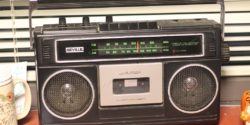
When was the last time that you tuned in to AM radio to listen to music?

Although I’m a huge evangelist for the ongoing importance of terrestrial radio (especially non-commercial radio), the AM slice of the radio band is a place that I only turn when I’m in my car looking for news, weather, and traffic information. But back when I was a kid, AM radio was huge and was the home to some of my favorite DJs and music shows. So, what happened?

In a fascinating essay, “The Day the (AM) Music Died,” in the PopMattersRetroactive Listening: Perspectives on Music and Technology” series, Jay Somerset provides some historical perspective about how and why AM radio moved away from music to talk programming. He also discusses how the mono sound of AM contrasts with FM stereo and why certain styles of music were more suited to AM. He writes:

“Welcome to 1982, the oldies endpoint; the year the music froze, on the AM dial at least. Nowadays it seems ridiculous, but there was a time, before the fragmented niches offered by Internet and satellite radio came along (third-wave psychobilly radio, anyone?), the music dial was divided into two camps: contemporary hit music — almost exclusively AM’s domain — and older, or classical, or college, or jazz on newfangled, niche FM.

If you wanted a hit single, you produced it to sound good on AM radio, which meant eschewing deep bass and the low end for something that would sound best on the treble-heavy, tinny sound of an AM receiver, such as Phil Spector’s Wall of Sound production… To sound good on mono AM, you needed a dense, reverberant, everything-at-once sound rather than a dynamic, stereo recording that only sounded good on FM, which the majority of people never even listened to.”

He goes on to make the point that when music programming left AM for the cooler realm of FM radio around 1982, AM radio became the home for talk radio, sports, weather, and news. Despite the dominance of talk radio today, there are some holdout AM oldies stations that are mostly playing hits from 1965 to 1982.

As he wraps up his essay Jay talks about the trend for some modern musicians to simulate lo-fi, AM-friendly sounds and he wonders if any of these artists will ever actually get played on AM radio. He speculates that with changes to the terrestrial radio landscape, AM music radio could transform into a place that embrace these indie artists (he mentions Kurt Vile, Best Coast, and Neon Indian) who now find their homes on satellite, Internet and college radio: (more…)


Record Store Day 2010 Radio Guide

Record Store Day 2009 at Aquarius Records in San Francisco

The 3rd annual Record Store Day is taking place tomorrow (Saturday, April 17, 2010) in independent record stores all over the world. In honor of the event, stores will be hosting live performances, meet and greets with artists, and will be selling and giving away exclusive releases on both CD and vinyl.

It’s a wonderful celebration of record stores and of physical music in a day and age when both are being threatened by online alternatives.

Since radio and record stores are part of the same mission to expose new music to the masses, here’s a short guide to some of the radio stations planning special programming or events for Record Store Day 2010:

WRXP (New York City):

WRXP DJ Rich Russo has put together a limited edition LP full of performances by local bands (including Dramarama) recorded on his show or at live events. It’s only available on Record Store Day and is limited to 500 copies. Proceeds will go directly to indie record stores.

Additionally, Rich and fellow WRXP DJ Brian Phillips will be traveling to a number of the participating record stores to host live performances by some of the bands featured on the LP. WRXP DJ Paul Cavalconte (of the Sunday morning Vinyl Experience show) will also be on hand at Passout Records in Brooklyn on Saturday afternoon. Paul geared up for Record Store Day by playing some of the exclusive releases (he pulled some strings) on his show last Sunday. He’ll play more Record Store Day material on this Sunday’s show.

NME Radio (UK):

NME Radio aired a special focused on Record Store Day earlier this week.

The Current (Minneapolis, MN):

Minneapolis public radio station The Current is running a contest, airing Record Store Day-themed shows this Saturday, and posted a listing of events happening at record stores in Minneapolis on their website.

East Village Radio (New York City):

Online-only community radio station East Village Radio (EVR) is helping to promote Record Store Day in the New York City-area (and London!) and has a nice run-down of events listed on their website. Record store Fat Beats (which also hosts a show on EVR) will be featuring in-store performances all day.

WXRT (Chicago):

Today WXRT DJ Terri Hemmert shared some thoughts about the importance of record stores and how a record store employee in Chicago actually helped get the first Elvis Costello record played on WXRT back in 1977. The WXRT website also has a nice post from Terri about Record Store Day 2010.

WGN (Chicago):

WGN aired a lengthy interview with Steve Kay of Evanston, Illinois record store Vintage Vinyl (featured in High Fidelity). In their discussion they talk about the resurgence of vinyl and Record Store Day in which he says it “introduces people to the world of records.” In the interview he reveals that Vintage Vinyl will be the only store in the world selling a limited edition Smashing Pumpkins single (only 250 copies available) on red vinyl starting at 11am.

KUVO and Radio 1190 (Denver and Boulder, Colorado):

DJs from public radio jazz station KUVO and college radio station Radio 1190 will be spinning music at Record Store Day events in Denver, Colorado at Twist and Shout Records.

If there’s something going on at your local radio station for Record Store Day, let me know in the comments.


Let the Music and Radio Conference Frenzy Begin: First Up- SXSW

Experience Music Project in Seattle

Last week’s Intercollegiate Broadcasting System conference (IBS for short) kicked off the music and radio convention season and there appears to be no end in sight for broadcasters and music lovers over the course of the next few weeks.

If you’re hoping to immerse yourself in music, bond with broadcasters, or geek out about the intricacies of specific music genres; then there’s at least one conference or festival for you in the next 4 weeks.

Here are some options:

SXSW in Austin, Texas (3/12-3/21/10):

This massive music festival in Austin has expanded in recent years to include a film festival and interactive conference. If you want to see tons of bands, sessions about music, and hear about the latest in technology, then you’ve got to get to Austin. Radio stations from all over the country also flock to Austin to do live broadcasts and to host showcases, including college station Radio K (Minneapolis) and community radio station WFMU (New Jersey).

From March 17-20th, 7 different college/public radio stations (KCRW, The Current, KEXP, KPFT, KUT, KXT, and WXPN) will be participating in live daytime music showcases at The Day Stage Cafe. You can even catch a short film, Peter in Radioland, in which old-school radios have a starring role.

College Broadcasters, Inc. (CBI) Convention in NYC (3/14-3/16/10):

If you are working in any form of college media, from radio to television to journalism, then this is the convention for you. It’s held in conjunction with College Media Advisers (CMA). To get the full scoop about what’s in store, take a look at my interview with the folks behind CBI and the conference.

International Association for the Study of Popular Music (IASPM) Conference in New Orleans (4/9-4/11/10):

This is THE conference to hit if you are a music academic or simply enjoy dissecting the intricacies of music, musicians, or genres. Over the years I’ve seen fascinating presentations about Japanese noise, the history of turntablism, and the connections between metal and classical music. Usually there is a paper or two related to radio.

The NAB Show in Las Vegas (4/10-4/15/10):

The big National Association of Broadcasters event in Las Vegas includes a number of mini-conferences as well as an exhibition floor. There’s a Broadcast Management Conference, radio luncheon, as well as sessions geared towards digital media professionals. If you want to be a fly on the wall for free, take a look at Spinning Indie for a complimentary pass to the exhibition floor.

Experience Music Project (EMP) Pop Conference in Seattle (4/15-4/18/10):

This annual conference (which is FREE) is a chance for academics and music journalists to bond over their love of popular music. This year’s theme, “The Pop Machine: Music and Technology” lends itself to discussions of radio; with far more papers about radio (including a few topics related to radio history, a paper on Mexican radio, one on radio as an instrument, another about radio commercials) being presented this year than I’ve ever seen at this conference. There will also be presentations about Lady Gaga, girls’ rock camps, cassettes, vinyl, Pandora, auto-tune, and the Vocoder (to name a few).

Broadcast Education Association (BEA) Convention in Las Vegas (4/15-4/17/10):

A conference for broadcast media educators and practitioners, this definitely has an academic slant to it. This year’s research symposium focuses on papers about the intersections between sports and media. They also have a Festival of Media Arts, which includes a student media competition. Here are some of the winners in the “audio” category. There are also panels related to student radio, sessions geared towards careers in radio, and some that look at specific stations both in the U.S. and abroad.


Radio Survivor’s Top 5 Commercial Radio Stations: #3 San Francisco’s KQAK-FM

Long gone, but not forgotten station "The Quake"

I am a college and community radio loyalist and these days I never listen to commercial radio unless someone else has put it on and I have no way to control the radio (during cab rides, in doctor’s office waiting rooms, and perhaps via cheesy hold button music, etc.).

Since coming up with a list of my favorite commercial radio stations is VERY difficult for me, I’ve had to turn to the last commercial radio station that I can proudly declare myself to have been a fan of: KQAK-FM out of San Francisco in the 1980s.

I’ve heard that people are most passionate about the music of their youth and that many never get past that period musically, becoming permanently stuck in the sounds of their teen years. Well, for me, I was a teenager smack dab in the 1980s and my favorite commercial station helped me transition from the heavier rock sounds that I listened to in the late 1970s (on KSJO and KOME) to the emerging new wave sounds of the 1980s.

“The Quake” was on the air from 1982 to 1985 and is most known for its “Rock of the ’80s” format (which they launched in April 1983 after an initial stint as an album rock station). The station went off the air in June 1985, just a few months before I headed off to college. Many of us were saddened about its demise and tearfully sat by our stereos tape recording its final hours of programming. Somewhere in a shoebox is my tape of the last hours of The Quake and tidbits from recordings by others can be found online.

The station played a mix of new wave, punk, rock, reggae, ska, pop and goth sounds. On “The Quake” I heard bands like Depeche Mode, Book of Love, Strawberry Switchblade, X, The Cure, Elvis Costello, Talking Heads, and Siouxsie and the Banshees for the first time.

I also enjoyed Alex Bennett’s morning show (take a listen to his first show on The Quake here) and found him to be much more entertaining and intelligent than his counterparts on other stations. He also introduced me to the Bay Area comedy scene, with his multitude of guests.

Quake DJs in general were a lot of fun, from the comedic Tim Bedore (with his segments like “The Bible According to Tim”) to the approachable, music-loving Big Rick Stuart. On his website, Rick Stuart shares some memories about The Quake, including the program director’s philosophy about adding music to the station. Rick writes, “I would sit in with Oz sometimes at music meetings and he would add weekly current songs with a nice theory. One for the boys, one for the girls, one for the older rock fans, and sometimes a weird song.”

For me, one of the lasting influences of the Quake was that it brought me to college radio. It opened my ears to a wider range of sounds and when it ceased broadcasting in June 1985 I switched my listening to the left side of the dial, becoming a college radio fan. I discovered all of the amazing stations at colleges south of San Francisco and started listening to KFJC, KZSU, KSJS, and KSCU. A few months later I was off to college near Philadelphia and became a fan of the student stations at University of Pennsylvania (WXPN) and Drexel (WKDU) and started DJing at my campus station WHRC.

Another “modern rock” station, Live 105, appeared on the commercial radio scene in San Francisco in 1986. Attempting to replicate some of The Quake’s adventurous programming, Live 105 caught my attention periodically from about 1989 to 1995 (when I couldn’t get college radio reception in my San Francisco apartment). But, my heart still belonged to the long-departed Quake and increasingly to college radio.


RadioSurvivor’s Top 5 Commercial Radio Stations: #5 WDHA, Dover, NJ

Each month the Radio Survivors will count down our most (or least) favorite radio things. Last month we covered our favorite radio programs. This month we’re sharing our favorite commercial radio stations. As regular readers might expect, coming up with this list proved to be more of a challenge. All three of us tend to be big listeners to community, college and public radio…. commercial radio, not so much. Beyond the quality and variety offered by noncommercial radio these days, I think we’ve all been turned off by the homogenization and delocalization of commercial radio brought on by consolidation. Nevertheless, we put our heads together and came up with five stations we can safely call favorites, even if some of them are no longer around.

I’m starting off the rundown with a station that was my favorite as a high school and college student in Northern New Jersey in the late 80s and early 90s. Dover’s WDHA-FM bills itself as “The Rock of New Jersey,” and continues to stand out by refusing to give in to the trends that have ruined so many other rock stations. In an area dominated by New York City stations serving the nation’s largest radio market, WDHA survives by remaining steadfastly local in its outlook.

Where other stations would have brought in voice tracking and more syndicated programming, WDHA is staffed with live local DJs and produces its own specialty programs, like Friday night’s Metal Mania. The metal show has been in that time slot since I was in high school, only then it was hosted by Eddie Trunk who is now the host of VH1 Classic’s That Metal Show and has a show on Sirius/XM. Looking at WDHA’s current air staff I see names I still remember like Terrie Carr, who apparently left to do stints on Sirius and VH1 Classic before returning to DHA. You don’t see that too often in commercial radio anymore.
(more…)


Radio Survivor’s Top Radio Shows – Jennifer’s #4: Dr. Demento Show

Dr. Demento (image from www.drdemento.com)

Celebrating its 40th anniversary this year, the Dr. Demento show began in 1970 on Los Angeles freeform station KPPC as a “rarities” show.

By 1974 the popular radio program, which specializes in a mix of music and comedy, moved into syndication all over the country.

Hosted by former college radio DJ (at the Reed College station), music historian, and record executive Barret Hansen (aka Dr. Demento); the show has celebrated not only novelty recordings, but also rare musical and comedic gems.

When I was a kid my sister and I used to spend hours and hours listening to the Dr. Demento show, cracking up over the silly comedic songs that were aimed at just our level of maturity. (more…)


RadioSuvivor’s Top Radio Shows – Paul’s #5: Little Steven’s Underground Garage

For as much as I love radio I have to admit that there’s very few programs that I might consider appointment listening. Sure, I tune in to NPR daily to catch up on the news with Morning Edition and All Things Considered, but they’re pretty interchangeable to me. If, for some reason, the BBC News Hour were on instead I’d notice the difference, but I wouldn’t turn off the radio.

My #5 is not appointment listening. However, that doesn’t mean I don’t like it. I do know when it’s on, and if I happen to be in a radio listening mood at that time, I will be sure to tune it in. In fact, when it comes to commercial radio–especially syndicated commercial radio–it’s my favorite program currently on the air.

Little Steven's Underground Garage logoLittle Steven’s Underground Garage stands out from most commercial music radio because it still shows the idosyncratic touch of its namesake host. Focused on the somewhat ill-defined subgenre of garage rock, the program plays rough-edged rock and roll that finds its roots with 1960s bands like the Troggs who went on to inspire early punks like the Ramones and later rockers such as the White Stripes. While this sort of rock is a mainstay of the Underground Garage, Little Steven takes a kind of “I know it when I see it” approach to the show, including a healthy does of Motown and other early rock nuggets alongside the more catholic selections. But his approach is not a hodge podge, like any real music DJ he draws connections between the songs he plays, often explaining why he deems an unorthodox choice worthy of inclusion.

Host Little Steven Van Zandt is otherwise known as a member of Bruce Springsteen’s E Street Band, but in his off time has dedicated himself to the promotion and preservation of garage rock. While I certainly like most of the music labeled garage rock, I would never have considered myself a particular fan, as such. I first became aware of Little Steven’s campaign for the subgenre when a band local to Champaign-Urbana, IL, where I used to live, The Blackouts (now The Living Blue) won his first Underground Garage Battle of the Bands. That’s when I first tuned in to the program Sunday nights on the local classic rock station.
(more…)


Radio’s Starring Role on New TV Series “Life Unexpected”

Portland DJ Cate of K-100

Last night I checked out the premiere of a new television series on the CW called Life Unexpected, largely because one of the main characters is a radio DJ. Additionally, it’s a teen-centric drama, so right off the bat the show is hitting at my pop cultural sweet spots.

[If you're planning to watch the show and haven't caught the first episode yet, then you may want to read this post later, as I reveal plot details below.]

The show opens with a shot of VU meters ticking away as we hear the sounds of a morning talk radio show in Portland, Oregon.

We eventually see the innards of the studio and get to spy on DJs Cate (played by Shiri Appleby of the long-departed teen show Roswell) and Ryan (Dawson Creek’s Kerr Smith), as they entertain listeners with their banter about relationships and marriage. Interspersed with scenes of the studio are shots of teenage Lux listening to the show on her radio (see…teenagers really do still listen to terrestrial radio!) as she gets ready for her day.

We soon learn that nearly 16-year-old Lux is in foster care, and we watch her as she tracks down her birth father. In hopes of becoming an emancipated minor, she asks her newly-found dad Nate for details on her mother. She’s surprised to find out that it’s Cate, the host of her favorite radio show.

In an effort to get in touch with Cate, Nate calls in to the morning show and his call works to reveal the sordid details of his Zima-fueled hookup with DJ Cate back in high school. Embarrassed by the on-air revelations, Cate leaves the studio to meet Nate in the station parking lot where she ends up becoming reunited with her daughter Lux.

The family reunion is not without its drama and after some not-so-unexpected twists, we witness a touching scene that actually reveals the power of radio. Lux tells Cate,

“You don’t realize you were there. On the radio. When everything else in my life kept changing. I could count on you every day. People are just…so scared…to tell the truth…You…you just put it all out there. You say the truth.”

In the opening episode, Cate’s radio shtick is that she’s a commitment-phobic, cynical thirtysomething. She and her co-host relentlessly tease each other on-air while never revealing to listeners that they’ve been in a romantic relationship for 2 years. Yet by the end of the hour we see Cate taking Lux in to her home and accepting a marriage proposal from her radio show co-host Ryan. As clips from the upcoming episodes hint at; the morning talk show may end up being the place where Cate begins to reveal more and more personal truths.

It’s not surprising that often TV depictions of DJs are in the form of talk show hosts (vs. music DJs) since this can become an easy way for writers to reveal the feelings and motivations of their characters. We’ll have to wait and see if this particular glimpse of the radio world on Life Unexpected catches on with viewers. I’ll also be curious to see if radio retains its starring role as the series progresses.