Clear Channel spent almost $1.4 million in lobbying in Q2

wikimedia commons

wikimedia commons

It’s always a treat to check in with the House Office of the Clerk’s lobbying disclosure database and see what broadcast radio’s big boys are spending on Congress these days. Needless to say, the top roller is usually Clear Channel Communications, which forked over $1,370,000 in the second quarter of this year.

And what did that wascally wadio company use the money for? According to its disclosure form, Clear Channel educated our nation’s representatives on the Fairness Doctrine, “broadcast decency enforcement,” satellite stuff, various bills relating to the proposed Performance Rights Act, which would require radio stations to pay royalties to artists as well as copyright holders, the Radio Spectrum Inventory Act, and H.R. 5175/S. 3295, aka the (hold your breath) “Democracy is strengthened by casting light on spending in elections act.”

That last bill’s summary says it amends the Federal Election Campaign Act of 1971 to prohibit foreign entities and government contractors from “making expenditures with respect to such elections.” The bill treats payments of “coordinated communications” as “contributions.” And that includes

any communication that republishes, disseminates, or distributes, in whole or in part, any broadcast or any written, graphic, or other form of campaign material prepared by a candidate, an authorized committee of a candidate, or their agents. [italics added]

That’s probably what has Clear Channel’s attention in this bill.

According to the Open Secrets database, Clear Channel isn’t tossing out quite the level of moolah that it did back in 2008, when it spent over $4.0M on Congress. But $1.37 million in one quarter isn’t turkey feed.

CC’s nearest competitors don’t even come close to this figure. The runner up as far as I can tell is CBS Corporation, which has its hands in lots of broadcast and online radio ventures (eg, Last.fm). CBS spent $800,000 on Congress in Q2, mostly talking up the same issues. It doesn’t appear that Cumulus has done any lobbying in years.

This is all on a company level, of course. On a trade association level, nobody outdoes the National Association of Broadcasters when it comes to lobbying. Last quarter the organization spent $3,020,000 making sure its positions on Capitol Hill were perfectly clear.


Broadcasters union to FCC: don’t change your radio ownership rules

The union that represents what’s left of the radio broadcasting workforce has told the Federal Communications Commission to keep its current restrictions on how many radio stations an entity can own. The filing by the American Federation of Television and Radio Artists (AFTRA) is a reminder of how dramatically broadcast radio ownership has consolidated over the last 14 years:

“In 1996, the two largest U.S. radio group owners owned 62 and 53 stations, respectively. Today, Clear Channel Communications (Clear Channel) owns more than 800 stations, down from a high of about 1,100 in 2007. The second largest group, Cumulus Media, Inc. (Cumulus), owns about 400 stations today. The Clear Channel-Cumulus oligopoly represents a nationwide trend; the largest two radio station owners in a given market, on average, control 74 percent of the revenue. The largest one, on average, controls 46 percent.”

AFTRA adds that for radio, between the passage of the Telecommunications Act of 1996 and 2010, the number of commercial radio stations jumped by around 10 percent, while the number of station owners dropped by 40 percent.

The FCC is once again reviewing its media ownership rules. The present rule for radio is a bit complicated, but basically says that in big markets like New York or Los Angeles (45+ stations), an entity can own up to eight commercial licenses. Then the allowed number tapers down for lesser markets. In regions with 14 or fewer stations, an entity can own no more than five. The kicker is that there’s no limit on the number of commercial stations a company can own nationally. That’s why Clear Channel and Cumulus are what they now are. (more…)


FCC ponders the future of radio consolidation

The Federal Communications Commission is reviewing its media ownership rules again. That ordeal took up quite a bit of public bandwidth over the last decade, especially after former FCC Chair Michael Powell proposed scotching most of them. Now we’re back to square one, with the Commission launching a Notice of Inquiry about its current ownership limits, including its Local Radio Ownership Rule, which reads as follows:

“a person or entity may own, operate, or control: (1) up to eight commercial radio stations, not more than five of which are in the same service (i.e., AM or FM), in a radio market with 45 or more radio stations; (2) up to seven commercial radio stations, not more than four of which are in the same service, in a radio market with between 30 and 44 (inclusive) radio stations; (3) up to six commercial radio stations, not more than four of which are in the same service, in a radio market with between 15 and 29 (inclusive) radio stations; and (4) up to five commercial radio stations, not more than three of which are in the same service, in a radio market with 14 or fewer radio stations, except that an entity may not own, operate, or control more than 50 percent of the stations in such a market unless the combination of stations comprises not more than one AM and one FM station.”

(more…)


Randy Michaels Solidifies the Clear Channelization of Tribune

Randy Michaels becomes the master of the big media mash-up.

With ace-consolidator Randy Michaels at the helm of Tribune Company it looks like he’s having a jolly good time installing his old Clear Channel pals into top positions at the bankrupt newspaper and broadcast company. On Monday Tribune announced that ex-Clear Channel CFO Jerry Kersting is now president of Tribune’s broadcasting division. This was followed today by the news that Clear Channel’s old VP of programming Sean Compton would be Tribune Broadcasting’s new president of programming.

Kersting replaces Ed Wilson, who Robert Feder notes,

was one of the few Tribune Co. execs without Clear Channel on his resume, having previously run Fox Television Network, NBC Enterprises and CBS Enterprises. By several accounts, he didn’t kowtow to Michaels, who moved up to CEO of Tribune Co. last December. “Ed was probably too strong for Randy,” one insider surmised. “Randy runs the show.”

Tribune has much bigger investments in TV than radio. In fact, it owns only one station, the news/talk station WGN-AM in Chicago, where back in March Michaels banned 112 words and phrases from being uttered on the station. Nevertheless it already looks like the plan is to perform some of the old Cheap Channel radio tricks on TV. The company is getting ready to give conservative talk radio host Bill Cunningham his own syndicated program on Tribune stations. And who do you think syndicates Cunningham’s radio program? Why, yes, that would be Clear Channel-owned Premiere Radio Networks. (Way to keep it in the family, Randy!)

As the Clear Channel mafia readies to work its magic on Tribune Broadcasting they have a head start since the company’s already in bankruptcy. It got there the same way Clear Channel drove itself into debt — buying up stations–and newspapers–left and right using borrowed money. Only a private equity sale payday would complete the circle.


Tribune CEO Randy Michaels Boosts Morale at WGN-AM

Randy Michaels loves the WGN staff THIS much!

Last week I told you how former-Clear Channel Charm School president and current Tribune CEO Radio Randy Michaels identified 119 words and phrases that are no good for his company’s flagship station WGN-AM. Well, this week Radio Randy’s follow-up was to double-down and confront the station’s staff about how the list got leaked outside the station.

Once again Chicago media blogger Robert Feder has his ear to the ground:

On the subject of leaks, Michaels asked individual staffers: “What do you think should happen to people who do that?” He directed much of his ire at Charlie Meyerson, the WGN news director who circulated the memo, blaming Meyerson for mishandling his directive.

You can take the boy out of Clear Channel…


What is a Radio Survivor? Paul’s P.O.V.

Paul (a/k/a mediageek) behind the mic

So, I guess now it’s my turn. What is Radio Survivor (the blog)? It’s all about the idea that radio is a hardy, useful, practical and proven medium with a lot of life left in it. A Radio Survivor (the person) is someone who continues to believe in the medium. A Radio Survivor is not a luddite clinging to her transistor radio while eschewing iPhones and netbooks, nor is he a retro fetishist stuck in the past. Rather, a Radio Survivor recognizes the simple power inherent in broadcast audio, which can be done inexpensively and bring people together in a community.

I’ve been a radio broadcaster working in college, community and public radio since 1989, with just one year off from May 1993 to May 1994. And while I’ve had some sporadic work in radio, most recently as a college station adviser, as Matthew emphasizes, my approach is more as a listener and enthusiast rather than an industry insider. Much of what is written about radio is for the industry insider, and is therefore concerned more with profits, ratings and staffing changes than with the place of the medium in our society and everyday lives. Also often missing from insider coverage is critical analysis that challenges the business orthodoxy.

I write for Radio Survivor because I wish to challenge myself and others to consider what radio can be, not just be content or discontented with how it is. We can recognize the damage wrought by consolidation without giving in and leaving the medium for dead. We can highlight the stations and places where innovation is happening and 21st century is in the making. We can encourage new or lost listeners to give radio a new chance.

Radio, as a medium, has a great chance to survive because of the internet, iPods and mobile phones, not in spite of them. Just because Clear Channel and its mostly bankrupt consolidating brethren were too busy buying up stations, firing staff and elminating local service to notice the internet revolution doesn’t mean that the internet has to kill radio. I believe that there is still an audience that pines for local news, information and culture that is still hard to find on the internet, that doesn’t require a monthly broadband bill or data package and is there in the car, in the home or a hundred miles away from the nearest wi-fi hotspot. And as internet access becomes more ubiquitous and less costly radio can still be a complementary part of our information environment.

That’s Radio Surviving.


Clear Channel offers contextual advertising for radio, but where’s the context?

Clear Channe;Clear Channel has announced what the commercial radio giant calls a major step forward for radio advertising: technology that can “automatically and reliably insert any length of audio spot immediately after specific programming or commercial spots based entirely on content.” In blogoland that’s called “contextual,” or sometimes “semantic” advertising. Google Adsense and various Amazon widgets, which we use here at Radio Survivor, can scan the rest of our site and come up with relevant advertising content, based on what we’ve written.

This has its down sides. If you regularly read our site, you may have noted Google ads for the Survivor TV series on more than one occasion. Beyond the fact that that program uses the same title that we do, there’s not much similarity in context. But CA is generally regarded as a boon to the commercialized wing of the Internet. And CC is calling its innovation a big breakthough.

“We just leveled a very lucrative playing field,” declared Clear Channel CEO John Hogan. “This system took months to perfect, Clear Channel Radio is the only one who has it.”

The question is, in the Age of Clear Channel style terrestrial radio, where’s the context? I mean, we’re talking about radio stations that, with some notable exceptions, offer little variety in talk or music. Clear Channel’s press release gives some examples of how this contextual radio thing has already worked. Here’s number one:

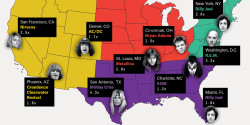
“To support Wal-Mart’s exclusive retail sales contract for AC/DC’s highly anticipated Black Ice album last Fall, MediaVest and Clear Channel Radio devised a program where a Wal-Mart ad for the album would run immediately after an AC/DC song was played on a selection of 106 Rock AC and Album-Oriented Rock stations in 91 markets. If no AC/DC song was currently on the station’s playlist, the 30-second spot appeared after a song by a similar artist.”

Ok, but what’s not similar to AC/DC on a Clear Channel Adult Contemporary or Album-Oriented rock station? So basically the contextual ad will run when it hears “It’s a long way to the top,” or it will probably run to almost anything else on the schedule. That’s context? Here’s example number two: (more…)


Wrapping up the decade in radio and looking forward to the decade ahead

Wrapping up our decade in review.


As I said in my introduction to our subjective and opinionated review of radio in the 2000s, I still think it was darn near impossible to predict how the medium of radio would end up at the beginning of 2010. Sure, the seeds for satellite radio, HD radio, low-power FM, internet radio and MP3s were already planted by the turn of the century. But home broadband–nevermind wireless or mobile–was a relatively exclusive luxury. MP3 players were lucky to sport enough memory to hold about a hundred minutes of music and weren’t integrated into cell phones. Satellites for Sirius and XM were launched, and HD Radio was being experimented with, but no stations were on the air. Clear Channel was flying high for more than $90 a share.

Anyone taking a broad view of the radio industry in 2000 could certainly see a lot of balls being thrust up into to the air, but it would have taken a psychic to predict where they would land. Nevertheless, for all of the churn we can say very safely that audio-focused content is alive and well.

It’s become clear to me that we Radio Survivors do consider radio to be greater than just the traditional electromagnetic broadcast medium. While we included the RF-based college radio, pubic radio, LPFM, HD Radio and satellite radio in our review, we also touched upon internet radio, Pandora and digital downloads. I believe we are first and foremost fans of terrestrial broadcast radio, but that does not cause us to ignore or discount new audio media. Nor does it cause it us to claim that they are not, in essence, radio services.

The homogenization and delocalization of the broadcast dial caused listeners to seek alternative places to hear more interesting and diverse content. At the same time the popularity of MP3 players and Pandora shows that people were also looking for customization.
(more…)


The decade’s most important radio trends #10: Clear Channel Goes Private Equity

#10 in our series on radio trends of the decadeAt the start of the decade the nation’s largest owner of radio stations, Clear Channel Communications, was flying high with a stock price over $90 a share in January, 2000. While public interest advocates and media reformers continued to batter the company with criticism over its tactics, Wall Street was still in love with the profits the company was generating. But the love affair wouldn’t make it through the rest of the decade.

Indeed, by the standards of the 1980s and 1990s acquisition and merger-driven economy, Clear Channel’s formula looked like genius. Aggressively search the country’s radio markets looking for clusters of stations ready to be snatched up. In each market buy as many stations as you can, up to the legal limit. Then fire redundant staff, combine studios and other business departments–into the same building if at all possible. Replace as many on-air hosts as possible with syndicated or voice-tracked programming. Finally, sell ad packages for groups of stations at market-beating prices that smaller groups or mom-and-pop operations can’t possibly match.

The method was so successful that the nation’s other largest radio companies followed the pied piper down that same path.

To anyone who didn’t actually listen to radio, especially commercial radio, the Clear Channel way looked like a sure bet. But radio listeners knew better, and voted with their ears. More commercials per hour, no local requests, nationwide playlists, radio contests that sound local but covered the whole nation — it all added up to stations that just didn’t sound as good as they used to. So listeners went elsewhere: iPods, satellite radio, internet radio. (more…)


Greed and Consolidation Trigger Another Bankruptcy in Radioland

On Friday the Wall Street Journal reported news that’s no surprise to radio industry watchers, that the third largest radio owners in the country, Citadel Communications, is about to declare bankruptcy in a deal pre-arranged with its creditors. The loudest critic of Citadel has been industry-insider Jerry Del Colliano who predicted last week that the company would declare Chapter 11 ahead of a January debt hearing.

Citadel's 5-year Stock Price Performance

Citadel's 5-year Stock Price Performance

Citadel used to be a player in small and mid-size markets–which are comparatively healthy–until buying the ABC radio network from Disney in 2006. That enormous purchase was worth $2.7 billion, with $1.6 billion of it in cash. The deal made it a much bigger nationwide player, especially in the largest markets, along with saddling the company with massive debt just before the commercial radio industry peaked and the economy tanked.

Various reports attribute responsibility to the overall decline in the radio industry, combined with the loss of two major personalities: Paul Harvey, who died in March, and Sean Hannity who was lured to Clear Channel’s Premiere Radio Network. Certainly these events didn’t help Citadel along. But I side with Del Colliano in attributing the true responsibility to the disease of consolidation. Well, that and lame-brained business practices, like cutting off non-Citadel stations from carrying ABC network news, and the typical consolidator practice of firing local personnel and moving to voice tracking.

At this point in the economic crisis I am having a much harder time swallowing the line that radio is a uniquely dying business than I did even in 2006. Instead, the largest radio owners were a perverse type of innovator, way ahead of the curve in hollowing out their own companies by taking on mammoth quantities of debt based on the pipe dream that the industry–and the economy–would only continue on a steep upward climb. They weren’t alone, as we all know, since real estate, banking, insurance and other industries would follow in their tracks some 12 – 18 months later.
Frankly, the situation isn’t that different for newspapers–where the owners of companies like Tribune took on massive crippling debt in order to acquire and consolidate. Different industries with slightly different modus operandi, but otherwise the same disease of greed and consolidation.

Without a doubt the loosening of radio ownership rules in the Telecomm Act of 1996 provided the perfect storm for the creation of Clear Channel and Citadel, but that is not the only impetus. Indeed, the same investors and financial managers taking tokes off the same pipe filled with greed who created radio’s consolidated wasteland are those who who also engineered the financial collapse of 2008. Each had their own set of wet-kisses from Washington in the form of relaxed regulations, lax regulators and overheated enthusiasm. But the root cause is the same.

Unfortunately there’s nothing unique about the Citadel bankruptcy; it might as well be Chrysler. The radio lover’s best hope is a fire sale that might return some of these stations to local ownership.