FCC Warning to Worcester Unlicensed Station Is Indicator of Big New England Pirate Scene

Flava 105.5

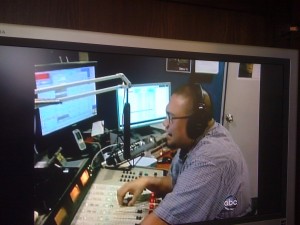
Worcester, Massachusset’s unlicensed Flava 105.5 has received some mostly positive press coverage recently for its focus on underserved Caribbean populations in the area. Probably not coincidentally, about two weeks after it appeared in the local newspaper the FCC issued the station a Notice of Unlicensed Operation (NOUO) ordering it to cease broadcasting immediately.

In a follow-up story reporting on the Commission’s action that appeared in the News Telegram on Saturday the station’s general manager said that “We’re no longer on the air. … We’re not in business.” However, the paper’s reporter noted that the station was still on the air as of Friday night.

Every FCC field office prioritizes unlicensed stations differently. Sometimes a station operating as openly as Flava 105.5 might go unbothered for months. Other times the Commission will act quickly once a station gets noticed. A significant variable in this is how loudly local licensed broadcasters complain and bug the FCC.

In this case it looks like the Boston field office has been hitting unlicensed stations all over its geographic area of responsibility since February. Scanning over the Enforcement Bureau’s recent field actions it looks like quite a few Massachusetts stations were on the radar. The Boston field office issued NUOUs to another Worcester station, along with stations in Hartford, Webster, Boston, Norwood, Boxford, two stations in Mattapan(1, 2) Springfield and three stations in Brockton (1, 2, 3). Additionally, the Boston field office sent NUOUs to four stations in Rhode Island and three in Connecticut over the same period.
(more…)


Website Campaigns to Keep the Public in Public Radio

Keeping the Public in Public Radio

My pal John Anderson at DIYmedia.net alerts us to a new group blog written by some fellow radio survivors who intend to hold public radio’s feet to the fire, called Keeping the Public in Public Radio (KTPIPR). Featuring the contributions of public radio supporters, authors and broadcasters, the site is covering the changing landscape of public radio which often mirrors commercial radio in emphasizing national programming and ratings over local service.

The site’s bloggers hailing from Boston and Austin are focusing on changes happening at the public stations in those cities, WGBH and KUT, respectively. Concerns over KUT, owned by the University of Texas, stem from July 2009 changes in which three long-time DJs had their roles reduced while the station’s playlist became more “structured.” More recently the site has been critically following plans for the station to take over the university’s on campus bar and music venue, the Cactus Café.

For WGBH complaints arise from the station’s December, 2009 decision to go all-talk, canceling long-running folk and blues programs. A growing priority on news and information programming has been happening at public radio stations nationwide for well over a decade, with many long-running local music programs coming to an end. Even back in 1997 when I attended the CPB’s Public Radio Program Directors conference the emphasis was on research indicating that moneyed listeners valued keystone syndicated programs like All Things Considered more than local programming, especially music. Since then the trend has only grown.

KTPIPR isn’t only focusing on Boston and Austin, it’s got at least four other stations on its radar for regular coverage, along with keeping a wide angle lens on the national scene. The site also takes aim at NPR for the network’s support of HD Radio, calling it the “Huge Debacle.”

KTPIPR has been going strong for about a month and a half. I’m always supportive of informed and critical coverage of radio issues, so I’m hoping the site’s authors can keep it up.


One of the Last “Progressive” Rockers Goes Digital-Only

When it comes to commercial radio, I’d argue that true progressive rock radio died somewhere in the early 80s, as tighter playlisting, more frequent rotations and shorter music sets became required, and DJs by-and-large no longer picked their records. Nevertheless a handfull of stations in the top major markets held onto the progressive moniker by keeping their rotations less repetitive, being a tad bit more experimental with the songs they added andretaining DJs who seem to know and care about the music, all while giving a more believable appearance of artistic integrity.

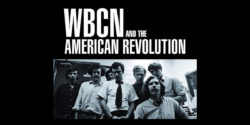
For rock music fans over the age of 30 the call letters are often drilled into memory: WNEW in New York, WMMS in Cleveland, KSAN in San Francisco, WBCN in Boston and WXRT in Chicago. At the beginning of 2009 only WBCN and WXRT remained on air in a form with any semblance to their former glory. As of last Thursday WBCN had joined the off-air list.

WBCN's last analog FM logo

WBCN's last analog FM logo

Well, it’s not entirely accurate to say that WBCN has gone off-air. While the station’s analog signal at 104.5 FM has been replaced with an all-sports format, the rock station has found a new home on a digital-only 98.5 FM HD channel 2 along with retaining its webcast.

WBCN DJs from the late 80s

WBCN DJs from the late 80s

As recent press reports on the station’s move–which read like obituaries–tirelessly note, WBCN was the first station in the US to play a once obscure little band from Ireland called U2, along with pioneering the introduction of many former “alternative” rock bands on commercial radio, like the Red Hot Chili Peppers and Pearl Jam. Of course, the station was much more progressive during album rock’s heyday in the late 60s and early 70s, when such future rock luminaries as J. Geils Band’s Peter Wolf did DJ stints.
(more…)


Garrett Wollman’s Radio Tower Quest

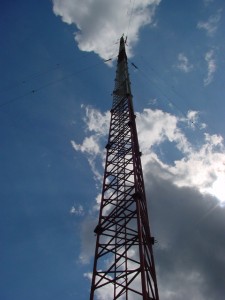
WLS Radio Tower Photo by Garrett Wollman

WLS Radio Tower Photo Copyright 2004, Garrett Wollman from The Archives@ BostonRadio.org.

Fandom is an amazing thing and thanks to the Internet it’s easier and easier to find like-minded obsessives who share one’s passion for the most obscure objects, idols, and idiosyncrasies. Radio is no exception. Loads of websites document radio history, with nostalgic archivists collecting ephemera, airchecks, and reminiscences from San Francisco to Boston. Various forums also exist, like those on Radio-Info.com, allowing listeners and industry types to talk shop and share current radio gossip.

And then there’s Garrett Wollman. I recently ran across some of his photographs of radio towers and was fascinated. As part of his work with The Archives @ BostonRadio.org, he’s been traveling around the country meticulously photographing every radio tower that he can find. Sometimes he even ventures into radio and television stations; but for the most part it’s the outside architecture and landscapes that he finds so compelling.

In order to learn more about this project, I contacted Garrett to get the scoop about his love for radio towers and his work to help document the history of radio and television. I was surprised to find out a couple of things: 1) Garrett’s a young guy—a rarity in radio history circles and 2) He’s not a big fan of current radio offerings. After chatting with Garrett, I also was made aware of pursuits like DXing and county counting, making me realize that there’s so much more to the radio scene than I ever realized. On to the interview: (more…)


Corporate Radio Gets a Little More Life after Michael Jackson’s Death

TV Coverage of Michael Jackson's International Radio Airplay

TV Coverage of Michael Jackson's Radio Airplay

I’ve been combing through the web trying to get a handle on how radio has responded to the death of Michael Jackson on Thursday. There’s much anecdotal evidence to suggest that radio listenership was up, as fans sought out his music and news about his death from the radio. However, as listeners turned on their radios and TVs (and the Internet) to hear the sounds and see the images of the pop icon at his best, not all stations were able to deliver great programming from the outset. As Matthew pointed out on Thursday, many commercial stations with automated programming weren’t in a position to provide Jackson-themed music and commentary as the news broke.

However, an article in the Boston Globe today, “Live Radio Takes the Lead: Canned Programs are Set Aside as DJs and Fans Celebrate Michael Jackson,” points out that the Boston airwaves did have some success in terms of satisfying fans. According to the piece: (more…)