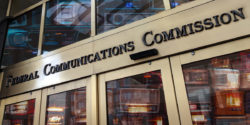
Archive for the ‘LPFM’ Category

San Francisco’s Newest Radio Pirate: Radio Valencia

Radio Valencia

Of course I’m biased, but San Francisco seems to have always been ground zero for radio innovators, back from the early days of pioneering technologists, to the freeform FM era, to punk and new wave stalwarts in college and commercial radio in the 1980s, to pirate radio champions like Free Radio Berkeley in the 1990s, to the web radio entrepreneurs of the 2000s and beyond.

Although the lure of Internet-only radio is turning the focus away from terrestrial radio for many; there are compelling reasons why radio enthusiasts continue to launch licensed and unlicensed AM and FM stations in 2010.

In San Francisco, a brand new unlicensed community radio station, Radio Valencia, is about to get off the ground, with a hoped-for launch date of early July. Housed in artist/musician/activist/former San Francisco mayoral candidate Chicken John’s warehouse “Chez Poulet” in the Mission District, it’s being envisioned as not only an underground radio station, but also as part of a larger non-profit community resource.

Named by Chicken John, Radio Valencia will probably evoke memories for many San Franciscans of the former restaurant of the same name (known for its well-crafted playlists of music) that met its unfortunate demise after several fire engines crashed into its corner storefront on Valencia and 23rd Streets. Although Chicken John says that the radio station is not meant to be an homage to the old Radio Valencia, it will no doubt appeal to some of the same folks who frequented the place back in the 1990s.

John Hell in the work-in-progress studio at Radio Valencia

When I visited the station last Thursday, I got to see the beginning stages of the studio that had been built by Chicken John in a week’s time. One of the founding members of the station, John Hell, talked to me about the collective vision for Radio Valencia and how it will be different from his numerous other radio endeavors.

Ironically, it was just about a year ago that John Hell chatted with me about his then-new radio project, FCCFree Radio. Although enthusiastic about the possibilities of that particular station at the time, John Hell recently parted ways with FCCFree Radio after having philosophical differences with the station owner.

Because of his strong passion for and commitment to radio, it was clear that it wouldn’t be long before he landed at another radio start-up. John Hell is no stranger to radio, having worked at college stations KCSM and KFJC, pirate stations San Francisco Liberation Radio, Pirate Cat Radio, and FCCFree Radio, as well as on the crew that founded the LPFM station Radio Free Burning Man that operated out in the Nevada desert during the annual arts festival from 1994 to 2008.

When John Hell was approached by his long-time friend Chicken John (they met at Burning Man and soon after began doing events like “The Church of the Burning Ulcer” together), the initial idea was to start up an Internet radio station. As they discussed things further, the concept for Radio Valencia developed even more and the hope is that eventually it will be a community center with an open-door policy and a full schedule of events. Chicken John, John Hell, and other early participants (including Evolution Control Committee’s Trademark Gunderson and PhotoBoof’s Wrybread) presented the idea of this new station to other like-minded folks in their social networks and reached out to former college and pirate radio DJs and friends with deep connections in various arts and culture scenes in San Francisco. (more…)


FCC Commissioner Clyburn Suggests Channels 5 & 6 for Radio

FCC Commissioner Mingon Clyburn

The National Federation of Community Broadcasters just wrapped up its annual conference this past weekend in St. Paul, MN. The NFCB has been a true anchor in the community radio movement, both supporting individual stations and advocating on their behalf in DC. This year the FCC actually graced the conference, with Commissioner Mingon Clyburn giving a speech on June 10.

Commissioner Clyburn certainly let loose quite a few surprises, starting with suggesting that TV channels 5 and 6 could be reallocated for non-commercial FM radio, low-power FM or AM broadcasters. While she said that she wasn’t suggesting an immediate change, Clyburn said that, “it is time for us to take a serious look at
where these services fit within the overall spectrum plan, and that Channels 5 and 6 maybe a good home.”

The spectrum allocated to analog channels 5 and 6 sits just below the FM band’s lower limit of 88 MHz. Before the digital transition you might remember being able to hear channel 6 TV audio at the bottom end of your FM dial. Although the transition meant full-power stations lost their analog audio signal, low-power TV stations were permitted to remain analog. As I’ve reported before, there are several low-power channel 6 stations taking advantage of their proximity to the FM dial to function effectively like radio stations rather than TV.

Any reallocation of channel 5 and 6 spectrum would require dealing with the few full-power stations that chose to stay put rather than move to different spectrum space. It would also have to deal with the LPTV stations on channels 5 & 6. My guess is that these stations could be offered to move into spectrum allocated for digital, though it might take some horse trading. It’s also likely that those few LPTV stations on channel 6 are going to be very reluctant to move and give up their radio-like business, although it’s just a matter of time before the FCC kills that business model by forcing all LPTV to go digital.

Commissioner Clyburn also suggested that community stations consider the charms of HD Radio. She acknowledged that, “limited receiver penetration and the cost of digital transmission equipment may make owning an HD Radio station an unappealing option for community radio groups.” However, she also proposed that “HD can provide yet another way to promote broadcast diversity and expanded programming option.” She even suggested that community stations or groups seeking stations could partner with other commercial or non-commercial stations to program their secondary HD-2 and HD-3 channels.

It’s pretty rare for community radio to get such a courtesy call from an FCC commissioner, and all the more rare for a commissioner to drop so many bombshells. I’m cautiously optimistic to hear such support for community radio and an apparent willingness to consider an expansion of the FM band in order to accommodate more non-commercial stations. I do have to note, however, that there’s no indication that an expanded band would be only for community radio. Nevertheless, it will be interesting to see if the idea gains any traction with the full Commission.


Hudson valley to get new full power community radio station

WGXC barnraisingThe Prometheus Radio Project will run its 12th community radio barn raising by launching a new station: WBXC in Hudson, New York on September 24-26.

This is the first such event, however, that will involve setting up a full power station—3,300 watts as opposed to the usual 100 watts of low power FM.

“This new station will be uniquely decentralized with three main studios spread out across the listening range, allowing broader participation from residents of New York’s Greene and Columbia counties,” says Prometheus. “Partnerships are already forming with schools, music venues, and town halls to create live feeds from various locations, furthering the scope of the station. WGXC: Hands-On Radio will be much more than just a radio station, with regular exhibitions and events, ongoing media trainings, a news blog, and community meetings.”

The station already streams at www.wgxc.org. We tuned in and, no big surprise, got a Gamelan tune from the composer Pauline Oliveros and the Berkeley Gamelan Ensemble.

If you want to help out and live in Greene, Columbia, Dutchess, Ulster, Albany, Rensselaer, or Delaware counties in New York or Berkshire counties in Massachusetts, click here to register. Otherwise click here.


LPFM Restoration Closer than Ever

More Local Radio Now!

While health care reform has seemed to dominate the Congress for all of 2010 thus far, community radio enthusiasts have been waiting for action on the Senate version of the Local Community Radio Act. The House passed its version back in mid-December and now the full Senate is set to take up their bill during the spring term, although the exact date is still up in the air.

If passed the Act would restore low-power community radio to the standards the FCC originally set for the service when it was created. These standards were made stricter by Congress at the behest of the National Association of Broadcasters via a last-minute addition to an omnibus budget bill at the very close of 2000. As a result many of the country’s largest radio markets with dials too full for new full-power stations were also deprived of the chance to have new low-power community stations. Now the hope to realize the full potential of LPFM is greater than it’s been since December, 2000.

Because the Local Community Radio Act has the support of several high-ranking senators, the LPFM advocacy group Prometheus Radio Project predicts “quick movement to pass this bill through Unanimous Consent.”


14,420 Radio Stations in the US

At the end of last month the FCC released its tallies for the total number of broadcast stations in the US as of Sept. 31, 2009 and Dec. 31, 2009. When you see the big number of 14,420 full-service radio stations it’s a big reminder that radio is still an enormous media presence in this country. This total represents an increase of 23 stations just from the end of September.

Here’s the breakdown for all radio types:

Full-power stations

  • AM stations – 4790
  • FM commercial stations – 6479
  • FM educational stations – 3151
    TOTAL 14,420

    FM translator and booster stations – 6155

    Low-power FM stations – 864

    Grand total: 21,439

Note that FM translators and boosters are low-power stations that may not originate their own programming. They may only retransmit the signal of a full-power station. I’m pretty sure that a very large percentage of translators are non-commercial, thought I don’t have the exact number at hand. This is because the rules for non-comm translators are much looser than for commercial ones. A non-comm translator may be located any distance away from the station it retransmits, whereas a commercial translator must be located within its mother station’s expected broadcast range.

Educational stations encompass all non-commercial stations that have NCE licenses, including college, school, religious, community and public stations. The FCC does not distinguish between them.

Even though many observers have tuned out of radio, it’s going to be a long time before 21,439 broadcast stations are going to be abandoned and forgotten.


FCC Awards Full-Power Licenses to 5 LPFMs, Plus 52 More Orgs

The FCC opened up an important licensing window for new noncommercial FM stations in 2007, announcing the first round of license winners in 2008. However another 59 licenses remained up in the air due to the Commission needing to pick a winner amongst competing applications. The FCC announced those winners on Tuesday [PDF].

The Commission uses a point system to judge which group should receive a noncommercial FM license amongst multiple competitors. The system awards points with preference to candidates that are locally headquartered with an “established” presence, do not have a controlling interest in another nearby station and which propose to serve the largest number of people.

For the first time the FCC had to contend with applicants who are currently running low-power stations. Because the operators of LPFM stations cannot also operate full-power stations, the Commission will require these operators to give up their LPFM licenses before signing on with their full-power stations. In order to make sure their communities are not deprived of service any longer than necessary the Commission is allowing the LPFM stations to petition to maintain broadcasts until they are ready to begin test broadcasts with their full-power stations.

Radio Free MoscowA total of nine LPFM station operators were in competition for licenses nationwide, and of these five won. Two winners are stations that have been operating as traditional community radio stations: Radio Free Moscow in Moscow, Idaho and Berkshire Community Radio in Great Barrington, MA.

Radio Free Moscow (RFM) edged out Fire Media Corporation and Country Roots Preservation Group based upon RFM demonstrating that it is an “established local applicant,” which neither of the other contenders claimed. Berkshire Community Radio (BCR) won out over the University of Massachusetts and Home Improvement Ministries. BCR and UMass both scored the same number of points, which required the FCC to use “tie breaker” criteria. The first tie-breaker criterion prefers the organization that has fewer licenses in other communities. UMass operates WBCR in Boston, while BCR, as a LPFM, operates no other, which resulted in BCR winning this competition.
Berkshire Community Radio
Amongst the rest of the licensees [PDF], seventeen appear to be obviously religious groups, three are universities or colleges, two are primary or secondary schools, two are established public broadcasters and one is a Native American group. The nature or affiliation of the other licensees can’t be easily discerned from their names.

These awards are considered tentative because will be an opportunity for the filing of petitions to deny a license to any of the winners. However, in practice, such denials rarely occur.


FCC OKs Increase in HD Radio Power. Increased Interference Ahead?

On Friday the FCC’s Media Bureau quietly announced that it adopted an order to allow FM stations broadcasting a digital HD signal to increase their power levels up a maximum of 10% of the power of their main analog signal. While the National Association of Broadcasting and iBiquity have been agitating for this change for quite some time, it’s the backing of National Public Radio and its engineering report on the matter that was the likely tipping point.

But, as radio researcher John Anderson points out, this change is also likely to produce more interference complaints from listeners trying to tune in weaker stations adjacent to these higher power digital signals. There have already been significant complaints and concerns about digital HD signals interfering with adjacent analog stations with the previous power limit set at 1% of a station’s analog power.

The Prometheus Radio Project, in particular, questioned NPR’s support for the increase based on NPR’s own engineering data (PDF). Prometheus noted that listeners asked by NPR Labs to rate HD interference to analog signals at the new power levels gave the quality of the resulting audio a score of 2.7 on a 5 point scale, which is below a rating on “fair” on that scale. Prometheus further argued that,

The NPR Labs Study represents a “best case scenario” test of interference to analog. … Although the NPR Labs Study showed troubling levels of interference, the decision to use a single, highly selective receiver dramatically limited the extent to which these results can be extrapolated.

For its part, NPR responded to Prometheus and other critics [PDF], contending that they “generally misapprehend or ignore the [HD] testing methodology, the test results, or the results of NPR Labs’ prior [HD] testing.”
(more…)


Chicago Independent Radio Project hits the ‘net, waits for an FM

I first heard about the Chicago Independent Radio Project (CHIRP) when I moved to Chicago in the spring of 2008. For all intents and purposes the project grew out of the former incarnation of Loyola University’s WLUW-FM which operated as a community radio station from 1997 to June 2008. In 2001 Loyola announced that it would no longer fund the station and called in Chicago Public Radio (CPR) to operate it. During this time it featured eclectic indie-rock focused programming, supplemented by local specialty shows of type familiar to community radio listeners. But at the end of that run the university took back full control of the station with plans to make it more student-run and student-focus as part of Loyola’s revitalized School of Communication.

Chicago radio veteran Shawn Campbell was WLUW’s program director during the CPR days, and after the hand-over became a prime mover behind the effort to create CHIRP as a true community radio station serving the city. I interviewed Shawn on my former radio program back in Oct., 2008 just as the organization was getting off the ground.

After more than eighteen months of organizing and fund raising CHIRP finally went online this past Sunday, Jan. 17. Although it’s online-only right now, CHIRP plans to operate like a regular broadcast stations with live DJs spinning indie-rock oriented programming focused on the particular taste and music scene in Chicago. The approach is not unlike a Chicago version of Seattle indie-rock powerhouse KEXP, especially since public affairs programming is not currently in the plan.

But in many ways an online station is a stopgap measure for CHIRP while its volunteer staff waits for the Senate to get to work on the Local Community Radio Act, which passed the House in December. You see, there are no open spots for new FM stations of any kind in the greater Chicago dial. But there’s hope that if LPFM is restored to its original specifications there will be an opportunity for some new low-power community stations in and around the city. When and if that happens, CHIRP will be poised to apply for its own space on the FM dial.

While the station’s volunteers worked hard to build its studios in Chicago’s North Center neighborhood, they also helped lobby on behalf of LPFM expansion alongside groups like Free Press and the Prometheus Radio Project. As a result the project received attention from the New York Times back in December.

With a real studio, a staff of volunteer DJs and an online presence it looks like CHIRP will be in a good position to hit the air running if it’s able to get a LPFM license. In the meantime it will be interesting to see if an online station can be regarded as a community station even without a broadcast signal. CHIRP has made a very good start of it, maintaining a strong public presence at cultural events across the city over the past year. The station is starting off with an unusual amount of momentum for an online station, so it will be interesting to see how it grows and develops during its first year.

I’m not aware of any other online-only stations operating as a fully human-staffed community stations elsewhere in the US. If any of our readers know of any, please tell us about them in a comment to this post.


Wrapping up the decade in radio and looking forward to the decade ahead

Wrapping up our decade in review.


As I said in my introduction to our subjective and opinionated review of radio in the 2000s, I still think it was darn near impossible to predict how the medium of radio would end up at the beginning of 2010. Sure, the seeds for satellite radio, HD radio, low-power FM, internet radio and MP3s were already planted by the turn of the century. But home broadband–nevermind wireless or mobile–was a relatively exclusive luxury. MP3 players were lucky to sport enough memory to hold about a hundred minutes of music and weren’t integrated into cell phones. Satellites for Sirius and XM were launched, and HD Radio was being experimented with, but no stations were on the air. Clear Channel was flying high for more than $90 a share.

Anyone taking a broad view of the radio industry in 2000 could certainly see a lot of balls being thrust up into to the air, but it would have taken a psychic to predict where they would land. Nevertheless, for all of the churn we can say very safely that audio-focused content is alive and well.

It’s become clear to me that we Radio Survivors do consider radio to be greater than just the traditional electromagnetic broadcast medium. While we included the RF-based college radio, pubic radio, LPFM, HD Radio and satellite radio in our review, we also touched upon internet radio, Pandora and digital downloads. I believe we are first and foremost fans of terrestrial broadcast radio, but that does not cause us to ignore or discount new audio media. Nor does it cause it us to claim that they are not, in essence, radio services.

The homogenization and delocalization of the broadcast dial caused listeners to seek alternative places to hear more interesting and diverse content. At the same time the popularity of MP3 players and Pandora shows that people were also looking for customization.
(more…)


The decade’s most important radio trends #9: The FCC Authorizes Low-Power FM

#9 in our series on radio trends of the decadeToday there are close to 1000 more noncommercial, locally-programmed community radio stations on the air in the US than a decade ago. The reason for this is the low-power FM radio service created by the Federal Communications Commission in 2000. While Congressional intervention cut the new service off at the knees at the end of that year, the creation of LPFM is an important event that provided crucial recognition for the value of hyper-local community radio.

By the end of the 1990s the FCC was feeling a lot of heat about radio. From one side were complaints about the steep decline in local service brought on by the great loosening of ownership restrictions in the 1996 Telecom Act. On the other side broadcasters were haranguing the Commission about the rise in unlicensed “pirate” broadcasters.

The unlicensed broadcasters–who often preferred the moniker “microbroadcasters”–justified their actions as civil disobedience. Using power levels well under the 100 minimum the FCC set for the lowest class of broadcast station, the microbroadcasters correctly cited the fact that the Commission refused to provide licenses for this class of stations.

A perfect storm for microbroadcasting was created by the availability of inexpensive transmitters and a unifying raison d’etre. Besieged by as many as a thousand unlicensed stations nationwide, the Commission’s Enforcement Bureau had no real hope of keeping up. Yet the Commission had to defend its own legitimacy in the face of critics upset about the spike in unlicensed activity. So the FCC kept up enforcement actions, with the apparent hope that some high profile busts would keep both critics and would-be pirates at bay.

That was the scene set for the emergence of LPFM. The idea for LPFM did not arise fully-formed from the mind of then-Chairman William Kennard. Rather, several proposals for an LPFM service had been floated to the FCC in the late 90s. Furthermore, a real movement had grown behind LPFM, with the Prometheus Radio Project leading that organizing effort.

For Chairman Kennard LPFM offered a ripe opportunity to release some of the pressure by offering would-be unlicensed community broadcasters a shot at a real license. LPFM also looked good politically. Who would oppose inexpensive low-power noncommercial stations intended to serve small, local communities? Well, the NAB and NPR, for starters, under the reasoning that any competition is bad for business.

Nevertheless Chairman Kennard’s FCC moved forward and emerged in January, 2000 with a full-fledged service. There were two real innovations with LPFM. The first was permitting low-power stations to be spaced closer on the dial than full-power stations. The second innovation–often overlooked–is that it created a simplified and expedited licensing process. Obtaining a full-power station license is often a long, laborious and expensive endeavor that requires pricey engineering surveys and legal assistance. With LPFM the Commission did the engineering work in advance, identifying every possible LPFM frequency nationwide. It then set licensing windows during which all applicants would submit their paperwork.

The hitch in the program came at the end of 2000 when the NAB finally succeeded in convincing Congress that close-spaced LPFM posed an interference threat to their full power stations. That resulted in a rider attached to an omnibus budget bill which forced LPFM stations to obey the same spacing as stations broadcasting at thousands of watts. But, importantly, the NAB did not succeed in killing LPFM altogether, and stations started going on the air by 2005 2002.

At the end of 2009 the House passed the Local Community Radio Act, intended to restore LPFM to the levels originally set by the FCC. Now we wait for action by the Senate. When passed, the shorter spacing allowances promise to add many more hundred LPFM stations, especially in the nation’s largest urban markets.

Although most of commercial radio is vaster wasteland than it was a decade ago, noncommercial stations continue to be a bright spot on the dial. Because of LPFM hundreds of communities that otherwise would never have a vibrant, locally-programmed noncommercial station enjoy the sort of community radio that was rarer commodity just ten years ago.