Archive for the ‘international’ Category

International Radio Festival Hits Zurich in September

International Radio Festival Banner for East Village Radio

With webcasting we all have the opportunity to sample radio stations from all over the globe, but it isn’t every day that there’s a chance to listen to a curated selection of international stations. The organizers of the International Radio Festival hand-picked more than 30 radio stations for inclusion in their festival taking place September 5 through 11th in Zurich, Switzerland.

During the festival, representatives from stations as far-flung as India, Paris, Moscow and New York City will be presenting programming over the Swiss terrestrial airwaves, online, and on cable throughout Switzerland. Among the 30 or so participating stations are three from North America: Canadian campus-community radio station CJLO AM (Concordia University, Montreal), online-only community radio station East Village Radio (New York City), and commercial radio station Wild 94.9 FM (San Francisco).

A few of the other stations slated to appear at the festival include Ghetto Radio (Nairobi), 102 FM (Tel Aviv), MotorFM (Berlin), and Obo & Hobos (Moscow). There will also be a keynote panel discussion about the state of radio internationally, music performances, and other events.


Regulated Musical Diversity on Canadian Airwaves

On July 22, the Canadian Radio-Television and Telecommunications Commission (CRTC) issued a revised version of their Broadcasting and Regulatory Policy (PDF) as it applies to campus and community radio in Canada. Amid all of the policy changes (and a nice promise of funding), which for the most part are meant to simplify the ways that the CRTC looks at and regulates stations; there were also some interesting tidbits about the ways in which the Canadian government seeks to promote diversity and local artists on its airwaves.

The CRTC requires radio stations to play a certain percentage of spoken word programming, special interest music, music of Canadian origin, and asks that campus stations limit the number of “hit” songs that they play. The weekly percentages of material from each category vary by type of station and have changed over the years based on evolving needs of radio stations and revisions to the CRTC’s definitions of the different musical categories and sub-categories.

I was fascinated to see that the latest policy included references to experimental music and a discussion of where turntablism fit into that category. The CRTC even conducted an investigation into turntablism, with their Turntablism and Audio Art Study 2009 outlining not only the history of turntablism, but also delving into the challenges of attempting to categorize turntablism, DJ mixing, and audio art. According to the study:

“Turntablism and audio art are becoming more common forms of expression on  community and campus stations. Turntablism refers to the use of turntables as musical instruments, essentially to alter and manipulate the sound of recorded music. Audio art refers to the arrangement of excerpts of musical selections, fragments of recorded speech, and ‘found sounds’ in unusual and original ways…”

Stemming in part from this report, the July 22 policy change introduced a new experimental music sub-category of music for Canadian broadcasters, with its definition as follows:

“The unconventional and non-traditional uses of instruments and sound equipment to create new sounds and an orchestration of these sounds. This includes audio-art, turntablism, musique actuelle, electro acoustic and sound ecology. While it may involve the use of previously recorded sounds to create new sounds and orchestrations, it does not include spinning or beat mixing where the alterations of previously recorded tracks are limited to mixes between two or more pieces or samples.”

They further found that if a turntablist or sound artist is Canadian, then the piece of experimental music will also meet the requirement for music of Canadian origin (known as the MAPL designation). More details about these programming requirements are outlined in the previous Campus Radio Policy document from 2000 and in the related policy document Revised Content Categories and Sub-Categories for Radio.

It’s encouraging to see that Canada works to encourage musical diversity on radio and I would imagine that the Canadian broadcast system is unlikely to see the ever-shrinking playlists that have become so commonplace in the United States. Yet at the same time, the complexities in categorizing music and determining what constitutes a piece of Canadian music under the MAPL system must be time-consuming projects for radio stations. I’d be interested to hear if DJs and stations (particularly those on college campuses) feel that these policies help to support their missions to expose unheard music and local artists, or if they feel that the rules hamper their creative freedom.


Ghost Story with Physics: Radio Drama Explores Wireless Pioneer

A ghostly wax figure at the Cork Gaol (Jail) and Radio Museum, Ireland

Coming up this weekend on the evening of Sunday, July 25th, BBC Radio 3 will be airing a 90 minute radio drama that explores the life of wireless radio pioneer Sir Oliver Lodge.

British physicist Sir Oliver Lodge transmitted radio signals in 1894 (before Marconi), studied wireless transmissions and also investigated psychic phenomena such as life after death.

This weekend’s radio drama is in part drawn from transcripts of seances in which Lodge communicated with his deceased son. According to the drama’s co-author, media historian David Hendy, the radio play “Between Two Worlds” is:

“…about Oliver Lodge, one of the ‘inventors’ of radio, and focuses on the  links between his work on wireless and the ‘ether’ and his personal interest in spiritualism: it’s a kind of ghost-story with physics - plus a bit of media history!”

There is something so magical and mystical about radio and the way it transmits voices from afar. It’s not surprising that a radio scientist would also be fascinated by the possibility of communicating with loved ones through the ether after they have passed on.


Spies still using radio

Could this be a tool of international espionage?

Numbers stations have been part of radio lore for decades. If you’ve ever listened to much shortwave radio at some point you would have come across an unidentified station broadcasting only a person reading off numbers, like an endless lotto feed: “21 99 36….” Sometimes this is in English, and often in Spanish or other languages.

The origin and purpose of these stations has been the subject of much debate amongst radioheads. In recent years there has been a growing consensus that at least one purpose was to communicate secret information, probably to foreign agents or spies. However, it the age of email and cell phone you’d think that would make listening to sequences of numbers on a shortwave broadcast obsolete. Apparently not.

A recent Slate article reports that the ten alleged Russian spies arrested two weeks ago–recently swapped in exchange for US agents in Russian custody–were indeed listening to shortwave numbers stations in order to receive information from home. According to the FBI’s complaint against the alleged spies, those arrested

To further the aims of the conspiracy, Moscow Center has arranged for the defendants clandestinely to
communicate with the Russian Federation. In particular, the conspirators have used, among others, the secret communications methods described below – steganography and radiograms.

As evidence that such “radiograms” were received, the complaint goes on to state that

Furthermore, during the 2006 Seattle Search, law-enforcement agents entered the Seattle Apartment and observed there a radio that can be used for receiving short-wave radio transmissions. In addition, agents observed and photographed spiral notebooks, some pages of which contain apparently random columns of numbers. Based on my training, experience, and participation in this investigation, I believe that the radio in the Seattle Apartment was used by the Seattle Conspirators to receive radiograms – and that the spiral notebook contains codes used to decipher radiograms as they came in.

As someone who has tuned in numbers stations since getting my first shortwave radio as a kid at ten years old, I find this all incredibly fascinating. At the same time, using coded one-way radio broadcasts still makes sense if you want to communicate to a person without having to know exactly where he is or accidentally giving away his location. As Slate’s Brett Sokol observes,

even if you locate a spy station’s transmitter, you have no idea who’s tuning in across the hemisphere. Unlike telephone or Internet connections, receiving a radio signal leaves no fingerprint, no traceable phone connection, no IP address, and no other hint as to where the recipient might be.

In fact, according to the article Great Britain’s spy agency also has admitted to using numbers stations, and stations have been tracked down in Israel and the US, although the latter ceased broadcasting in the 1990s.

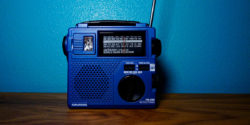
While I don’t necessarily endorse international espionage, this just provides another reason why the particular qualities of radio makes it so suited for one-way communication, often over long distances. While you can achieve this over the internet or over phones, radio still requires only the most basic equipment to receive messages, whether they’re secret codes or emergency information. No cell tower, ethernet port, or even power outlet required (if you have batteries or a crank radio).


75 or so words you really ought to think about before you say them on UK radio

source: www.kitschulike.com

source: kitschulike.com

Ofcom (the United Kingdom’s equivalent of the FCC) has just published a new survey of which words British radio listeners and TV watchers don’t like, or sort of don’t like, or really object to, depending on the circumstances.

The most important circumstance is whether the word was said pre- or post-”watershed”—post being the equivalent of our “safe harbor” period in the United States for “indecent” or, as British broadcasting code classifies it, “offensive” language.

Our’s is 10 p.m. to 6 a.m. Their’s is 9 p.m. to 5:30 a.m. Those are the hours when, here in the U.S., you can say those seven dirty words that George Carlin so famously used in 1972.

Guess they go to bed a little earlier than we do. If you don’t like reading nasty words, please click away from this page, NOW. Otherwise, here goes.

When it came to “strong language”: (more…)


“Cold Waves” – a must see for radio history fans

Anyone interested in how broadcast radio and international politics merged in the late 20th century should watch Alexandru Solomon’s masterpiece, Cold Waves, a documentary on Radio Free Europe’s role in Romanian society from the 1950s through the Cold War. LinkTV ran it over the weekend here in San Francisco.

“I grew up with it,” Solomon explains on the film’s page on BrightWide. “Every evening, in an underground atmosphere, my father listened to Radio Free Europe as anyone else did. It meant more than information. While Ceauşescu’s propaganda had less and less to do with reality, Free Europe’s Romanian section provided – apart from news – some hope. We had no idea it was a CIA operation. Simultaneously, in thousands of houses and blocks across the country, millions of people performed this daily ritual. And, the next day, the words of Free Europe were on everybody’s lips.”

That’s Nicolai Ceauşescu he’s talking about—Cold War Romania’s cunning dictator, who ran a police state while to some degree convincing the international community that he was a “reasonable” communist leader. The film is strongest in conveying how important RFE was to Romania’s educated class. Listened to every night, the station offered them the only grain of hope they had for getting through those terrible years. The documentary is full of fascinating, candid interviews with RFE’s passionate hosts who, from their station in Munich, Germany, poured their hearts out to their country.

Cold Waves is also a beautifully produced work—complete with dark “new wave” stage sets designed to set the mood of the times, and compelling footage from the era creatively mixed in with the film. (more…)


Less “specialist jazz” for London “smooth” radio?

Lynn Parsons of Smooth Radio London

Lynn Parsons of Smooth Radio London

It will be interesting to see what Ofcom, the United Kingdom’s broadcast regulatory agency, says about GMG Radio, aka “Smooth Radio” of London and North West’s request to pare down its jazz format. Here’s the gist of the request for the stations (I’ve added the bold):

“Current Character of Service

AN EASY LISTENING STATION FEATURING EASY LISTENING MUSIC INCLUDING JAZZ, SOUL, BLUES AND R&B TARGETING A NORTH-WEST AUDIENCE AGED 50-PLUS, AND BROADCASTING 45 HOURS A WEEK OF SPECIALIST JAZZ PROGRAMMES

Proposed Character of Service

AN EASY LISTENING STATION FEATURING EASY LISTENING MUSIC AND LIFESTYLE ORIENTED SPEECH, TARGETING A NORTH WEST AUDIENCE AGED 50-PLUS, AND BROADCASTING 12 HOURS A WEEK OF SPECIALIST MUSIC PROGRAMMES

As you can see, it’s those “specialist jazz programmes” that GMG wants to retrench, scheduling what’s left before midnight and during weekend afternoons. (more…)


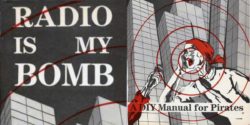
Spain Planning a Pirate Radio Crackdown

Radio Pirata

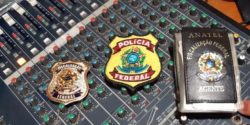
For Americans it may be hard to believe that Spain only this year passed a law that gives a new Spanish central radio authority the ability to pursue and shut down unlicensed radio broadcasters. Back in January the Spanish radio industry group AERC complained that 3000 pirate stations are operating in the country and need to be shut down.

For its part the government recently claimed to have opened 109 cases against pirate operators since 2007. With the recently passed law the secretary of the Media of the Generalitat says the job will become easier.

I know relatively little about radio broadcasting in Spain, although I have often heard that the radio dial is more chaotic than in other European countries. For instance, apparently 504 of the unlicensed stations are operated by municipalities. (Just imagine if your local city or town government ran its own pirate radio station!) Additionally, some 124 ostensibly licensed stations operate on a frequency other than the one they were assigned.

Given these kinds of stats I seriously doubt that the Spanish government is likely to make much of a dent in the country’s number of unlicensed stations. The FCC has been around for seventy-six years and I wouldn’t be surprised if there weren’t at least 3000 pirate stations operating in the US right now. At best the Commission does a pretty good job of keeping unlicensed operators more underground and less organized by playing a good game of cat and mouse. I reckon Spain has quite a way to go before it can even hope to have that level of success.


Radio Stations in Somalia Threatened Again over Music

As we reported last week, radio stations in Somalia have been pressured to cease playing music by militant Islamist groups. Under threat of violence, these stations opted to replace music with all-talk formats, punctuated by sounds of animals, nature, and machinery.

On Tuesday the government of Somalia actually ordered four Mogadishu radio stations to play music again and threatened to shut them down if they didn’t. Two stations began playing music after this order and two others shut down out of fear about how militants might react. In a bizarre twist, the government took back its order for stations to play music shortly after issuing it. According to an Associated Press report, the conflicting edicts from the government and insurgents are taking a toll on stations. The AP article states:

“A director of the Somaliweyn station, Abukar Mohamed Hassan Kadaf, said his station went off-air but resumed broadcasts 20 minutes later when the government appeared to change its mind.

Kadaf said he was not sure about the future of Mogadishu-based radio stations, ‘because each side is telling you to do his bidding.’

Radio workers said they felt trapped between violent insurgents who are known to stone people to death and an ineffectual government that controls only a few blocks of the capital city and cannot protect them.

‘We are confused. We don’t know what will come next,’ Kadaf said.”

It’s an unfortunate situation and although these recent government interventions may have been an attempt to protect media freedom, that clearly can’t happen unless the station owners and staff feel safe from violence.


Ofcom puts another nail in local radio’s coffin

OfcomCommercial radio broadcasters on both sides of the Atlantic are no doubt praising the United Kingdom’s move to allow licensed stations to cut down on their news and local fare.

“Changes in the advertising market, greater competition for audiences’ attention and technological developments mean that the radio industry is facing significant challenges and is having to change,” the UK’s regulatory agency Ofcom declared this week.  “So the way it is regulated also needs to adapt.”

Among other provisions, Ofcom will allow FM stations to “co-locate and share” their programming.  “This will allow the stations to merge to form larger, more financially viable stations.” And: “Stations may request to reduce the number of locally made programme hours from 10 a day to 7 a day, if they commit to providing local news bulletins throughout weekday daytime.”

Nick Clegg of the UK's Liberal Democrats

Nick Clegg of the UK's Liberal Democrats

The move was authorized by the UK’s controversial Digital Economy Bill, and goes into effect in June, unless the UK’s Liberal Democratic Party wins enough seats in the upcoming election to repeal the law.

As far as I can tell, even with these provisions UK commercial stations will still be much more locally oriented than their equivalents in the United States. But it’s the thought that counts. The cross Atlantic assumption seems to be that local broadcasting is an intolerable burden on commercial radio.

Here in the San Francisco Bay area, there are some commercial radio stations that, with the implicit approval of our Federal Communications Commission, offer almost no local coverage at all. For example, I’ve logged in many hours listening to Channel 92.3 FM, the Bay Area’s self-proclaimed alternative rock station, which supposedly loves indie rock so much that it almost never identifies the names of the songs. As for the Bay Area local scene, I rarely hear a live someone say anything substantial on the station, much less offer day time coverage of the region’s doings.

So the question is when we’re going to have a serious discussion not about how to relieve commercial radio stations of having anything to do with their immediate environment, but how to create the system of incentives and requirements that make local broadcasting on all platforms more viable.