Posts Tagged ‘U.K.’

High School Radio’s Star Stations

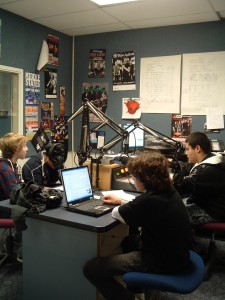
DJs at Glenbrook South High School Radio station WGBK

DJs at Glenbrook South High School Radio station WGBK

Last month I had the pleasure of visiting WGBK-FM, a high school radio station in suburban Chicago. This was my very first trip to see a station run by teens and I was thrilled to witness young people doing radio.

Not only were they working as DJs on standard music shows, but they were also producing documentaries, PSAs, restaurant reviews, and covering sports events. In the future they will also be hosting live bands in their studios. During my visit to the station, I was amazed and excited to see that kids as young as 13 were getting the opportunity to experience the magic of radio.

WGBK, which airs programming from two different radio stations run by students at Glenbrook South High School and Glenbrook North High School, is one of the handful of high school radio stations in the United States that is regularly recognized with accolades at the John Drury High School Radio Awards.

Both schools that air programming over WGBK offer broadcasting classes, so the experience for these radio students is much like one might get from working at a college radio station.

[Similarly, the U.K. has their Sony Radio Award for Schools competition highlighting excellence in student radio. Recent winners include Radio Roseland and ISCA College Radio.]

For a refreshingly different take on radio, it might be worth your while to seek out a high school radio station in your town. If you can’t find one, then perhaps take a listen to some of these John Drury award-winning stations:

WLTL 88.1 FM – Lyons Township High School, La Grange, Illinois (Won “Best High School Station” 2009)

WBFH 88.1 FM- Bloomfield Hills High School, Michigan (Won 2nd Place for “Best High School Station” 2009)

WGBK 88.1 FM- Glenbrook South High School, Glenview, Illinois (Won 3rd Place for “Best High School Station” 2009)

WGBK 88.1 FM- Glenbrook North High School, Northbrook, Illinois

KDPS 88.1 FM- Central Campus, Des Moines, Iowa (frequency is also shared with a college station)

WWPT 90.3 FM- Staples High School, Westport, Connecticut

WRHS – Reavis High School, Burbank, Illinois

KASB 89.9 FM- Bellevue, Bellevue, Washington

WXBA 88.1 FM- Brentwood High School, Brentwood, New York


Young People and Radio: Listening and Participating

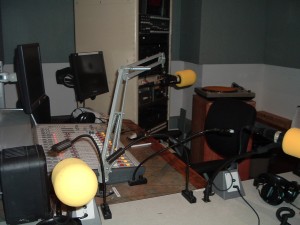
ONe of the studios at KALX

One of the studios at KALX

There’s been some chatter this week about whether or not the youth of today are listening to radio.

The standard cliche is that youth have abandoned radio and Monday’s Boston Globe article “Young Listeners Tune Out Radio in Search of New Music” repeats that refrain, quoting teens and folks in their 20s who report that they listen to music mainly online and on iPods using services like Last.fm and Pandora to discover new music.

The article states:

“While its viability hasn’t yet reached endangered species status, music radio does face many of the same challenges other mass media – including newspapers, magazines, and network television – are up against. New technologies and delivery options, more choices tailored to individual consumers, fragmented audiences that can find music they enjoy while bypassing glib-talking DJs and annoying commercials – all are factors driving programmers and station owners to retool themselves for the digital media age.”

In response to this article, Radio Ink shares Southern California Broadcasters Association President Mary Beth Garber’s reaction. Here’s a tidbit of that:

“Granted, younger people have iPods/MP3s (about 7 out of 10, although the number goes down as the age goes up over 17, according to Edison Research), most use the Internet, and many have cell phones with texting capabilities. But radio still outreaches all of that.

‘Real music,’ to tens of millions of young people, is on the radio. As long as its content remains relevant, radio is likely to remain the leading choice of audio entertainment for young people. It’s free and it’s remarkably easy to use. It airs tens of thousands of new songs and new artists every year. With the right app, it’s even available on your iPod or MP3 player and it doesn’t require hours to download and program songs in order to listen to it.”

Other radio defenders chimed in by commenting about non-commercial radio’s ongoing relevance (which I discuss on Spinning Indie), particularly in Boston which is blessed with numerous college radio stations.

Meanwhile, there’s another trend going on that I’d like to point out. In the same week that the Globe was writing about young people turning away from radio, I ran across several articles talking about teen radio camps and new radio stations cropping up that are staffed by teen DJs.

A Chicago magazine published by high school students called True Star is planning to branch out by creating accompanying web programming and a radio show this fall, college radio station WGMU is running a radio summer camp for teens this week, a summer camp in Canada has teens creating podcasts with plans to launch a community Internet radio station, and teens at a school in the U.K. will have their own online station in September.  One of the 14-year-olds involved with the new U.K. station is quoted as saying, “We’ll provide up-to-date music which will appeal to many young listeners.”

Although radio’s delivery method is evolving, it’s nice to see that there is still youthful energy surrounding the idea of radio, even as a way to broadcast new music.