College Radio Barely Present Amid New “Educational Radio” Licenses

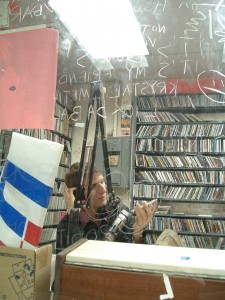
Actual students doing college radio

It was some pretty exciting news from the FCC on Tuesday, when they announced the list of 59 organizations who won the non-commercial educational radio license lottery. Although I was thrilled for some of the winners, as a college radio observer, I was saddened and surprised to see that very few colleges or educational institutions applied for these coveted licenses.

As Paul reported on Wednesday, the largest percentage of new licenses went to religious groups (at least 17), whereas only a handful were awarded to educational institutions (colleges, primary or secondary schools). In some cases college radio applicants lost the race against religious groups due to the complex point system (looking at local ownership, population served, etc.) that the FCC uses in its decision-making.

Scanning through the FCC’s grid of groups who applied and won, it’s often quite difficult to figure out which are actually affiliated with educational institutions. For example, Central Florida Educational Foundation (which won a new license) operates a whole network of 10 non-commercial Christian radio stations in Florida.

A closer look at the 7 winners in the college/primary/secondary school category reveals that only a few are likely to have any sort of student involvement in the resulting radio stations. Two of the groups already run networks of religious stations, one runs a LPFM community station, and another runs a public radio station. Of the remaining three institutions, one has both public and student radio stations, another has a broadcasting program, yet no station, and a third currently owns the license for a student station.

So, the question from me is, why didn’t more colleges/universities/high schools go for it back in 2007 and apply for these new radio licenses? It’s clear that religious groups are organized and have the funding to pursue radio expansion, but it saddens me that college radio for the most part sat on the sidelines while these licenses were doled out to groups with a very different take on educational radio. The Future of Music Coalition has a great fact sheet that gives a bit of perspective on the process for obtaining these licenses and it’s a good reminder that financial considerations are probably a key reason why college stations might have been scared off from applying.

Here are the college radio groups who won: (more…)


Bay Area Radio Museum’s Uncertain Future

Bay Area Radio Museum

I think it’s extremely important to honor radio’s history, so I’m always impressed when there are folks out there who are actively working to support that cause.

The Bay Area Radio Museum has been a labor of love for its Executive Director David Ferrell Jackson for the past 5 years. This online museum is an amazing place to learn about the history of radio in the San Francisco Bay Area. You can check out profiles of DJs from days gone by, peruse station histories, and look at vintage photos. Previously there were also links to old airchecks, but due to the high cost of bandwidth, Jackson has decided to scale back until he obtains outside help.

As Ben Fong-Torres reported in his “Radio Waves” column in the San Francisco Chronicle today, Jackson will continue to maintain the website, but has taken down media-rich material (like audio archives):

“Beyond volunteers – ideally skilled radio and broadcasting students at local schools – Jackson wishes the museum could attract a chief executive officer ‘to run it and get volunteers and financial help.’ And, he said, to develop a plan ‘to assure that these recordings, photographs and documents will be collected, stored and displayed in a manner befitting a world-class media museum.’”

In addition to the online museum, Jackson also spearheaded the “Bay Area Radio Hall of Fame,” whose most recent inductees were honored at a ceremony on September 29th.

It’s sad to think that this might be a sign of radio’s decreasing relevance to not only listeners, but also to museums, funders, and cultural institutions. I’m hopeful that someone will step up (another museum? a broadcasting-oriented university’s library?) to help out so that this history is properly preserved. With such a rich history, the San Francisco Bay Area deserves a Radio Museum.

But I guess the question remains: if it opens (even online), will people come?

For those of us who do care about radio, it’s important to support efforts like this; so I’d encourage you to take a look around the museum and see how you can help.

My dream is that the museum will survive and that it will expand into non-commercial territory, doing more extensive profiles of some of the amazing college, community, low-power, pirate and public radio stations that are also on our jam-packed radio dial in the San Francisco Bay Area.