New iPhone OS to bring background online radio listening

Soon you can listen to This American Life and tweet about it at the same time. How will you get anything else done?

As an iPhone user I can say with full knowledge that one of the things that holds the device back when it comes to listening to online radio is the lack of multitasking. While the iPod app allows you to play your audio files in the background while surfing the web or using other apps, you can only use third-party apps one at a time. Since listening to online radio, Pandora, last.fm or Slacker requires a third-party app, there’s no reading facebook or playing video games.

This restriction is sort of tolerable on a small mobile device like the iPhone, but it’s far more annoying on the iPad. Imagine if your laptop or netbook wouldn’t let you listen to streaming stations while word processing or web browsing. In fact, for work I use a Palm Pre which does permit multi-tasking. I do occasionally listen to Pandora on the Pre while answering emails, even though it kills the battery more quickly.

Wired’s Gadget Lab has a sneak preview of a beta of the forthcoming iPhone OS version 4. Top on the feature list is real multitasking. When the new OS drops later this summer iPad and iPhone 3GS users finally will be able to run their favorite streaming audio app in the background while using other apps. You might even be able to run two audio apps at the same time to test your bandwidth and tolerance for cacophony.

Unfortunately multitasking will not be available for first generation iPhones or the 3G. I guess our puny little processors can’t handle it.


The decade’s most important radio trends: #2 The growth of Internet radio

#2 in our series on radio trends of the decade

Although today’s New York Times claims that “Internet Radio Stations are the New Wave,” a look back at the past decade makes it very clear that Internet Radio’s growing influence is hardly revolutionary news. In fact, it’s hard to overstate the importance of the Internet and Internet Radio during the last 10 years.

The radio landscape has changed tremendously and much of that had to do with the adoption of both the Internet and streaming media by the mainstream.

According to the decade-spanning report, The Infinite Dial 2009: Radio’s Digital Platforms, by Arbitron and Edison Research, in 1999 only 50% of Americans had online access compared with 85% in 2009.

Beginning in 2006, the majority of Americans with at-home Internet access had a broadband connection; making it easier to download and stream audio content. By 2009, approximately 42 million Americans listened to online radio weekly (twice the number who did in 2005).

Although this massive growth of Internet radio happened in this decade, the first attempts at streaming radio started in the early 1990s. The very first terrestrial radio stations to begin broadcasting online were college radio stations WXYC (University of North Carolina at Chapel Hill) and WREK (Georgia Tech University) in 1994.

Always ahead of the curve, many college radio stations embraced webcasting, online playlists, blogging, podcasts and broadcast archives well before these technologies were adopted by their commercial counterparts. Tech-savvy students were often the instigators and developers of the technology (as was the case at WREK). Commercial station KPIG claims to be the first commercial radio station to broadcast online with its first webcasts in 1995. (more…)


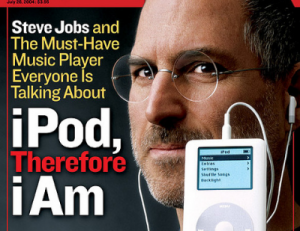
The decade’s most important radio trends #3: iPod and iTunes lure listeners away from terrestrial radio

#3 in our series on radio trends of the decade

Music listening has changed dramatically in the past decade in large part because of the rise of digital music. Following the explosion and shut down of illegal file sharing service Napster (1999-2001), a variety of digital music companies attempted to profit from the burgeoning interest in music delivery via the Internet.

Some focused on music subscription services (such as Rhapsody and eMusic), others turned toward music recommendations (like my former employer Uplister, which had hoped to turn the playlist into the “next unit of global music consumption”), and the legal descendants of Napster (from Apple to Amazon.com) became purveyors of MP3 downloads.

The timing of the digital music explosion couldn’t have been better; as many radio listeners were turned off by the increasingly consolidated commercial radio landscape that appeared on the scene as a result of the Telecommunications Act of 1996 which reduced limitations on the number of stations that could be held by one owner.

A direct result of the reduction in the number of station owners was less diversity on radio, with shorter playlists and fewer artists represented. As a 2002 report by The Future of Music Coalition pointed out, music fans were not pleased by this and stated that they actually “want longer playlists with more variety,” flying in the face of commercial radio’s own survey results. (more…)


The decade’s most important radio trends: #4 Podcasting

#4 in our series on radio trends of the decade


August 13 of this year marked the fifth anniversary of podcasting. On that date in 2004 former MTV VJ Adam Curry began his Daily Source Code podcast, ushering the term into the popular consciousness.

Like so many innovative ideas, podcasting is quite simple. It’s not like there weren’t online radio programs prior to 2004. The A-Infos Radio Project has been providing free hosting for independent and grassroots radio programs since 1996. Live365 made live webcasting broadly available back in 1999. But what podcasting brought to the party was a way to make finding and downloading online programs easy and automatic.

Prior to 2005 if there was a online radio program you wanted to listen to you had to check its website on a regular basis to see if a new program was available. Or if it was a live program you had to make sure to tune in to the stream at the right time, just like conventional radio. If you didn’t check in with your program’s website, then you wouldn’t know if there was a new episode.

At its essence podcasting is just an extension to an earlier innovation known as RSS, which stands for Really Simple Syndication or Rich Site Summary, depending on who you ask. Developed in the late 1990s and finding popularity with the emergence of blogs in the early 2000s, RSS provides a site summary to a “feed reader” which allows you to know when blogs and other sites are updated, rather than having to check back.

Podcasting resulted from the simple addition of the “enclosure” tag which tells a feed reader or “podcatcher” to download an audio or video file. This little addition to the RSS specification meant that you could now use a piece of software to periodically check your favorite radio sites and download new programs as soon as they became available.
(more…)


Apple’s cutting edge tech? Radio!

Today’s highly anticipated 9/9/09 Apple product announcement brought the return of the Messiah (Steve Jobs) but not the band bigger than Jesus. Alas, the much hoped-for debut of the Beatles in the iTunes music store did not arrive, despite Yoko telling Sky News to the contrary.

iPod Nano, now with radio!

iPod Nano, now with radio!

The really big news today is a second coming of sorts. The new iPod Nano debuts a feature missing from all iPods so far: an FM radio! And not just any radio, but one with what Apple is calling “live-pause,” which is kind of like having a built-in mini TiVo for radio. Now, this isn’t quite a full-on PVR, in that the Nano doesn’t have the ability to schedule a recording. However you can pause the radio for up to fifteen minutes, or rewind back fifteen minutes. Seems like a feature aimed right at the mobile radio listener who might want to pause while taking a phone call, changing commuter trains or some other brief interruption. I can certainly recall many times when I was listening intently to the news or a talk show on my portable radio on public transport and had my sound drowned out by a loud noise or I needed to stop listening for a few seconds so I could hear an announcement. Being able to rewind a minute or so is a great boon for those annoying moments.

Apple's making sure the iPod Nano won't kill music like home taping.

Apple's making sure the iPod Nano won't kill music like home taping.

Not to look a gift-horse in the mouth, but it would be great if the pause and rewind would last for as long as you have memory left to store the audio stream. However, I’m sure the quarter-hour limit is there to keep “home taping” from taking a bite out of Apple’s lucrative Music Store business.

I think the radio in the iPod Nano was today’s biggest surprise since Jobs and other Apple spokespeople have scoffed at the idea in the past. Back in 2005, Apple’s iPod division head told the Apple Expo in Paris that,

in Apple’s experience, customers just don’t want radios on their iPods. “Believe it or not, we don’t get a lot of requests from customers” for a radio, he said. “We’re very hesitant to add new features unless we feel a significant portion of the customer base want it.”

It is true that Apple introduced the iPod radio remote back in 2006, although it seems no longer to be available. Perhaps it was killed in anticipation of the new radio Nano.

I’ll be curious to hear reviews and reports from radiophiles who get their hands on the new Nano and evaluate how good the reception is. A truly decent portable headphone radio is actually difficult to find. While $150 is a bit much to pay for one–especially one that only has FM–when combined with an 8 GB iPod and a video camera (!), it’s not a bad deal. I just wish Apple would have put the radio in my iPhone 3G, since listening to internet radio over the 3G data network kills my battery in about an hour. By comparison I have a ten-year-old RCA brand pocket radio that runs over 100 hours on two AAAs.

If we see radios with live-pause show up in the next generation iPhone or iPod Touch. Then we can anoint Mr. Jobs as St. Steve, savior of radio.


Forget XM/Sirius; give satellite radio to the listeners

Merger proposals are dangerous moments for the masters of our telecommunications sector. When two or three media moguls go hat in hand to the Federal Communications Commission, asking for permission to unite, they unleash a public comment cycle on the question. That always releases the dreamers and reformers, who come up with alternative scenarios for the future.

Sometimes the reformers even get their way. AT&T had to pledge to honor net neutrality rules for at least a couple of years to get their merger with BellSouth past the FCC in late December.

Now that XM and Sirius satellite radio want permission to marry, the reformers have returned. The good folks at Public Knowledge have filed comments with the FCC on the union. They want conditions for merger to include a requirement that the new entity reserve five percent of its resources for “non-commercial educational and informational programming over which it has no editorial control.”

It’s a very reasonable suggestion, but I’m going to play dreamer this time. I say let XM and Sirius die. Then turn all of satellite radio into a listener supported, non-profit service.

(more…)